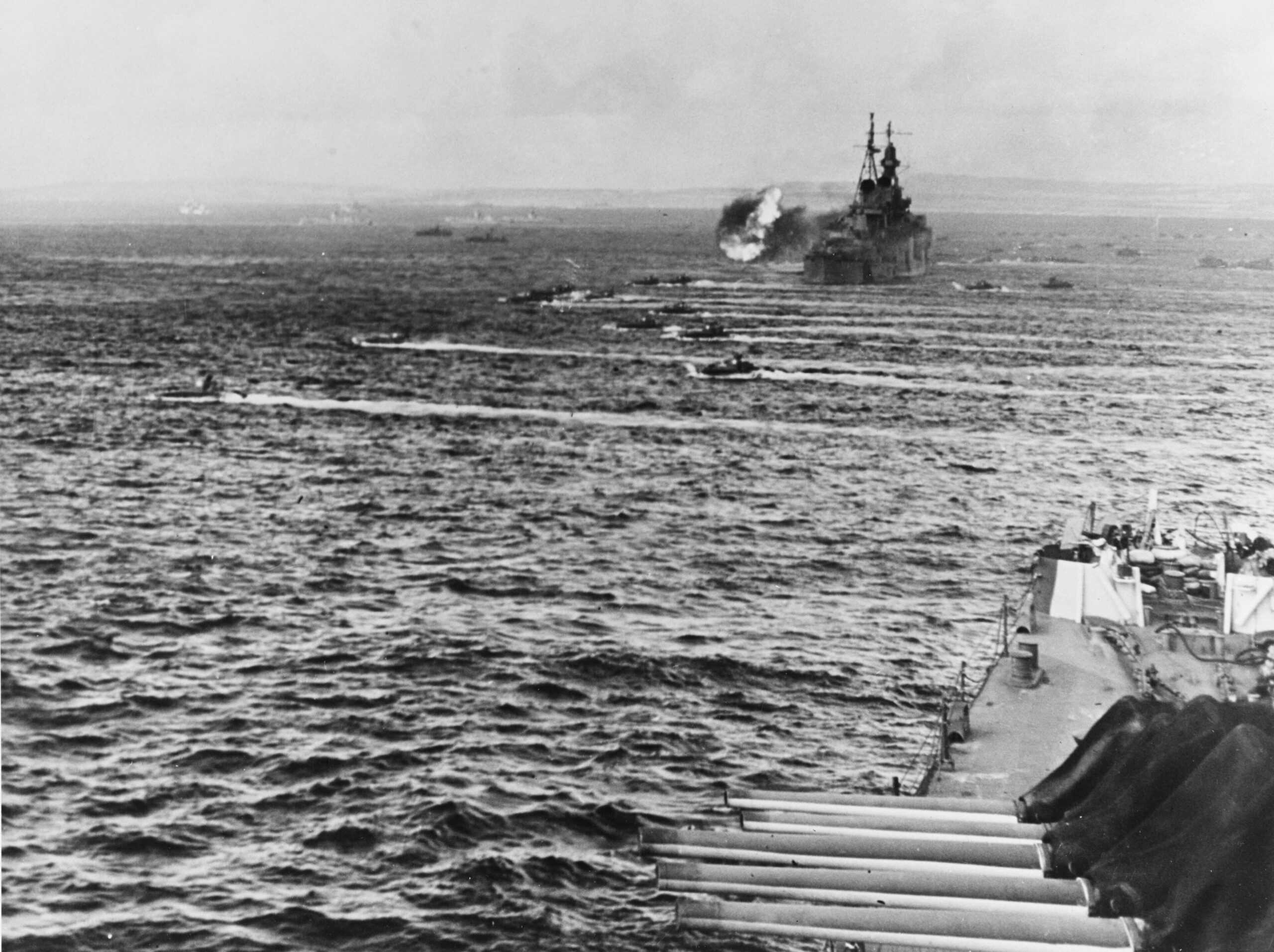
| 15 June 1944 · 08:40 · Initial assault waves | U.S. Marines Land on Saipan’s Southwest Coast | Charan Kanoa, Saipan | At 08:40 on 15 June 1944, American assault waves from the 2nd and 4th Marine Divisions began landing on Saipan’s southwest coast. Amphibious tractors crossed the reef and brought men toward beaches covered by Japanese artillery, mortar and machine-gun fire. By evening the Marines had established a connected, vulnerable beachhead. Sources 1, 7, 9, 15 |
| 16 June 1944 · Follow-on landing | The 27th Infantry Division Begins Landing on Saipan | Southwest beachhead, Saipan | The Army’s 27th Infantry Division began coming ashore on 16 June as the Marine beachhead expanded. The division had been retained as an operational reserve, but the scale and persistence of Japanese resistance made a substantial Army role necessary in the ensuing inland advance. Sources 1, 7, 15 |
| 19 June 1944 · Daylight carrier-air battle | Japanese Carrier Air Strikes Meet Task Force 58 | Philippine Sea west of Saipan | On 19 June Japanese carrier aircraft launched successive strikes against Task Force 58 in the Philippine Sea. American radar pickets, fighter directors and Grumman Hellcats intercepted the formations before most could reach their ships. The losses inflicted on Japanese aircrews were severe, and relatively few attacks achieved meaningful damage. Sources 2, 17, 7 |
| 19 June 1944 · Carrier losses to submarines | U.S. Submarines Sink Taihō and Shōkaku | Philippine Sea | While carrier aircraft fought overhead on 19 June, U.S. submarines Albacore and Cavalla torpedoed the Japanese carriers Taihō and Shōkaku. Damage and subsequent explosions doomed both ships, depriving the Japanese fleet of two major flight decks during its attempt to contest the Marianas landings. Sources 2, 17 |
| 20 June 1944 · Late afternoon and night recovery | U.S. Carrier Aircraft Strike the Retreating Japanese Fleet | Western Philippine Sea | Late on 20 June, Task Force 58 aircraft reached the Japanese Mobile Fleet far west of the Marianas. American pilots attacked carriers and escorts, sinking Hiyō and damaging other ships, but distance and fading daylight made the return hazardous. Many aircraft arrived back at the U.S. fleet after dark with little fuel. Sources 2, 17, 7 |
| 20 June 1944 · Airfield secured in stages | U.S. Forces Secure the Aslito Airfield Area | Aslito, southern Saipan | By 20 June U.S. Army and Marine troops had completed the seizure of the Japanese airfield at Aslito in southern Saipan. The capture removed an important source of Japanese local air activity and gave American engineers a runway that could eventually support land-based fighter operations. Sources 1, 8, 18 |
| 27 June 1944 · Late-June ridge fighting | American Troops Reach Saipan’s Central Heights | Mount Tapotchau region, Saipan | By the last week of June American formations fought through the ridges around Mount Tapotchau, Saipan’s commanding central high ground. Japanese troops used rocky outcrops, caves and reverse slopes to delay the advance. Taking the heights gave the attackers better observation and helped compress the remaining defensive area to the north. Sources 1, 4, 7 |
| 2 July 1944 · Urban approaches | Fighting Reaches the Ruins of Garapan | Garapan, Saipan | On 2 July American Marines attacked through the approaches to Garapan, Saipan’s principal town. Buildings and streets already damaged by shelling offered concealment to Japanese defenders. The urban fighting and nearby rocky high ground slowed the advance even after the U.S. had gained control of most of the southern island. Sources 1, 7, 14 |
| 7 July 1944 · Before dawn · Mass counterattack | Japanese Final Counterattack on the Tanapag Plain | Tanapag Plain, Saipan | Before dawn on 7 July, surviving Japanese forces launched a mass counterattack across the Tanapag Plain. The attack struck positions of the U.S. Army’s 27th Infantry Division and nearby Marine units, overrunning several outposts before American troops, artillery and reinforcements stopped the advance. Casualties were heavy on both sides. Sources 1, 12, 7 |
| 9 July 1944 · Secure declaration | Saipan Declared Secure | Marpi Point, northern Saipan | American command declared Saipan secure on 9 July 1944 after advancing to the island’s northern end. Japanese organized resistance had been broken, though isolated snipers and small parties remained. The conquest opened the Marianas to a major American airfield and base-building effort. Sources 1, 4, 7 |
| 10 July 1944 · 9–12 July · Civilian crisis | Civilian Deaths Continue at Saipan’s Northern Cliffs | Marpi Point cliffs, Saipan | In the days after 9 July, civilians continued to die on Saipan’s northern cliffs. Japanese military propaganda, intimidation and direct violence influenced the refusal of some families to surrender. Other civilians were killed during the fighting or while attempting to escape the contested area. Sources 4, 19, 1 |
| 21 July 1944 · Morning landing | U.S. Forces Land at Asan and Agat on Guam | Asan and Agat, Guam | American forces returned to Guam on 21 July 1944. The 3rd Marine Division landed on the northern beaches near Asan while the 1st Provisional Marine Brigade struck near Agat to the south. The two beachheads were separated by Japanese-held ground and overlooked by difficult ridges, making rapid consolidation essential. Sources 3, 5, 13 |
| 24 July 1944 · Morning landing · Northwest beaches | Fourth Marine Division Lands on Tinian’s Northwest Beaches | White Beaches, northwest Tinian | On 24 July the 4th Marine Division landed on two narrow beaches on Tinian’s northwest coast. Planners had chosen the small approaches because Japanese coastal defenses concentrated on more obvious landing sites near Tinian Town. Naval bombardment and demonstrations helped distract the defenders while amphibious tractors delivered men and equipment through the limited beach exits. Sources 3, 6, 10 |
| 25 July 1944 · Night of 25–26 July | Japanese Counterattack Breaks Against the Guam Beachhead | Fonte Plateau, Guam | On the night of 25–26 July Japanese troops descended from the Fonte Plateau against the U.S. 3rd Marine Division’s positions above Asan. The counterattack penetrated several sectors and produced fierce close-range fighting before the Marine line held. Japanese commanders had committed a large share of the remaining troops available near Guam’s western beachhead. Sources 3, 5, 13 |
| 26 July 1944 · Northern airfield seized | Ushi Point Airfield Captured on Tinian | Ushi Point, northern Tinian | By 26 July American Marines had captured the Japanese airfield at Ushi Point on Tinian’s northern end. The position gave the landing force a broader operational area and removed another Japanese air facility that might otherwise support counterattacks or reconnaissance against the Marianas operation. Sources 3, 6, 8 |
| 28 July 1944 · Orote secured; command loss | Orote Peninsula Falls as Guam’s Japanese Command Changes | Orote Peninsula and Fonte, Guam | On 28 July American troops secured the Orote Peninsula and its former airfield after the southern beachhead advance. On the same day Japanese commander Takeshi Takashina was killed during the retreat from the Fonte positions. The loss of the peninsula and the failure of the earlier counterattack left Japanese forces withdrawing toward Guam’s north. Sources 3, 5, 16 |
| 31 July 1944 · Capital entered | U.S. Marines Enter Hagåtña and Drive North | Hagåtña (Agana), Guam | U.S. Marines entered the ruins of Hagåtña, Guam’s capital, on 31 July 1944. The city had suffered extensive destruction under Japanese occupation, the preliminary bombardment and the ground advance. With Orote and Fonte secured, American columns were able to move onto broader routes leading into northern Guam. Sources 3, 5, 7 |
| 1 August 1944 · Secure declaration | Tinian Declared Secure After Nine Days of Fighting | Southern Tinian | Tinian was declared secure on 1 August 1944 after U.S. Marines reached the southern end and defeated the remaining organized Japanese defense. The northern-beach plan had allowed a steady flow of assault troops, artillery and supplies supported from neighboring Saipan. The island was seized in nine days. Sources 3, 6, 8 |
| 8 August 1944 · Northern-island advance | U.S. Forces Close on Northern Guam’s Final Defensive Areas | Yigo and northern Guam | By 8 August American Marines and Army troops had reached important points across northern Guam. The Japanese had withdrawn into smaller defensive areas after losing the southern and central portions of the island. American columns advanced through jungle and steep ravines where visibility and communications were limited. Sources 3, 5, 7 |
| 10 August 1944 · Secure declaration · 11:31 | Guam Declared Secure; the Marianas Invasion Phase Ends | Northern Guam and Hagåtña | On 10 August 1944 Major General Roy Geiger declared Guam secure after the destruction of remaining organized Japanese resistance. The declaration closed the principal invasion battles for Saipan, Tinian and Guam, begun on 15 June, and allowed the expanding U.S. base program to proceed with greater security. Sources 3, 5, 8 |