Skip to content
WW2 Theatres Theatres of the Second World War
Home / The Air War over Europe / The Blitz
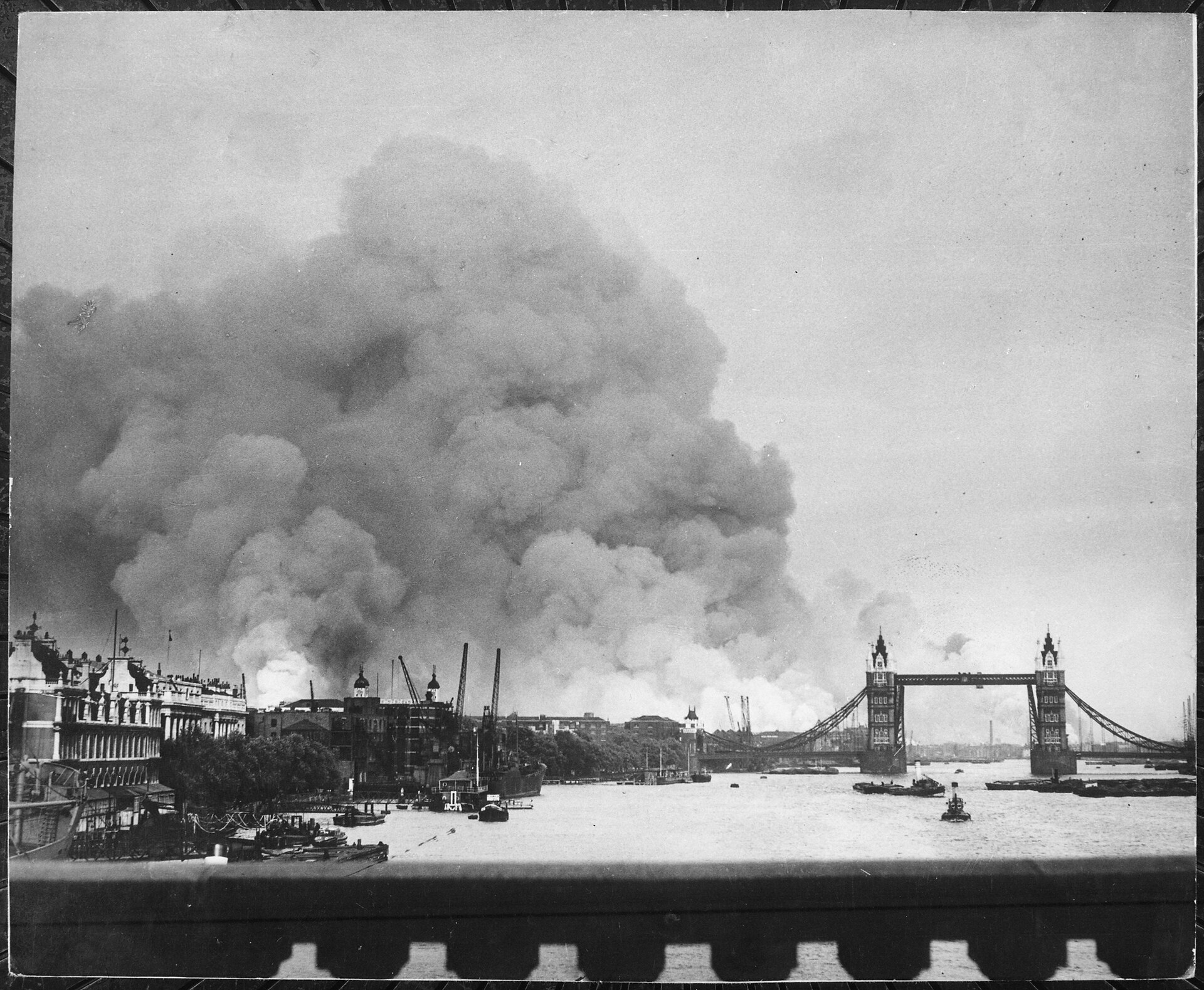
London, 7th September 1940 · London's dock area. Tower Bridge stands out against a background of smoke and fires. New York Times Paris Bureau Collection.

The Blitz

7 September 1940 to 11 May 1941 · Britain · 247 nights

Eight months of night bombing that killed around 43,500 civilians and destroyed or damaged two million homes. It failed at everything it was meant to do, and it began because the Luftwaffe stopped attacking the one target that was actually beating it.

U.S. National Archives and Records Administration (NARA 541917) · Public domain

CAMPAIGN
7 Sep 1940–11 May 1941An eight-month sustained bombing campaign; London was bombed on 57 consecutive nights at its opening
CIVILIANS KILLED
About 43,500Across Britain during the main Blitz period; published totals vary slightly with dates and accounting boundaries
LONDON
20,083 killedImperial War Museums figure for London during the 1940–41 Blitz
HOMES
About 2 millionDestroyed or damaged nationally in the official civil-defence accounting
LAST MAJOR LONDON RAID
10–11 May 1941507 bombers attacked; 1,436 civilians were killed
Marker affiliation Allied Axis Other / contested
Map layers

01 / 21

The Ground

The raids stretched from London and the Channel ports to industrial cities and shipyards across Britain.

The Blitz opened against London on 7 September 1940. For the next two months the capital remained the Luftwaffe's principal target, with raids arriving night after night from bases in France and the Low Countries. From November, the attack widened. Coventry, Birmingham, Bristol, Liverpool, Manchester, Sheffield and other industrial centres were struck in heavy raids. In February 1941 German orders placed greater emphasis on ports, bringing repeated attacks on Liverpool, Plymouth, Portsmouth, Swansea, Belfast and Clydeside.

Distance shaped every raid. Bombers leaving northern France crossed the Channel before spreading across routes that could extend hundreds of miles into Britain. At night, crews had few visible landmarks. Darkness, cloud and blackout obscured the ground, while navigation errors could carry a formation far from its intended target.

German radio-navigation systems helped crews find cities beyond the coast. Knickebein and later systems transmitted signals from continental Europe that gave bombers a line to follow toward the target. Those signals stretched across Britain long before the aircraft arrived.

Command & Decision

The campaign moved from daylight attack to sustained night bombing as the Luftwaffe searched for another way to break British resistance.

On 7 September 1940, German bombers turned in strength against London after weeks of attacks on Fighter Command's airfields and sector stations. German commanders expected the capital to draw RAF fighters into a large battle while attacks on docks and industry damaged Britain's ability to continue the war. The change relieved some of the pressure on Fighter Command's southern bases at a critical point in the Battle of Britain.

Daylight losses soon pushed the bombing campaign increasingly into darkness. Britain had warning from radar and the Observer Corps, but finding a bomber at night was much harder than detecting its approach. Early Blenheim and Defiant night fighters achieved little. During the winter of 1940–41, Bristol Beaufighters carrying airborne interception radar began entering service, while new Ground Controlled Interception stations guided them close enough to make contact.

Civil defence presented another set of decisions. The government had distributed more than two million Anderson shelters by September 1940, yet many Londoners sought deeper protection in Underground stations. Officials initially resisted widespread use of the Tube, fearing disruption to transport and the growth of what they called a "deep shelter mentality." Londoners continued going underground, and by October the government formally permitted night sheltering in stations while retaining them for daytime transport.

R. V. Jones
Assistant Director of Intelligence (Science), Air Ministry

R. V. Jones

Identifying and countering the German navigation beams

Jones helped assemble prisoner reports, signals intelligence, captured material and radio evidence into an explanation of German beam navigation. An RAF search flight confirmed Knickebein before the Blitz, and his scientific-intelligence section then helped define countermeasures against later systems. His role was important but institutional: Telecommunications Research Establishment staff, radio operators, aircrew and countermeasure stations had to turn analysis into an operational defence.

Central Intelligence Agency · Public domain in the United States · Source
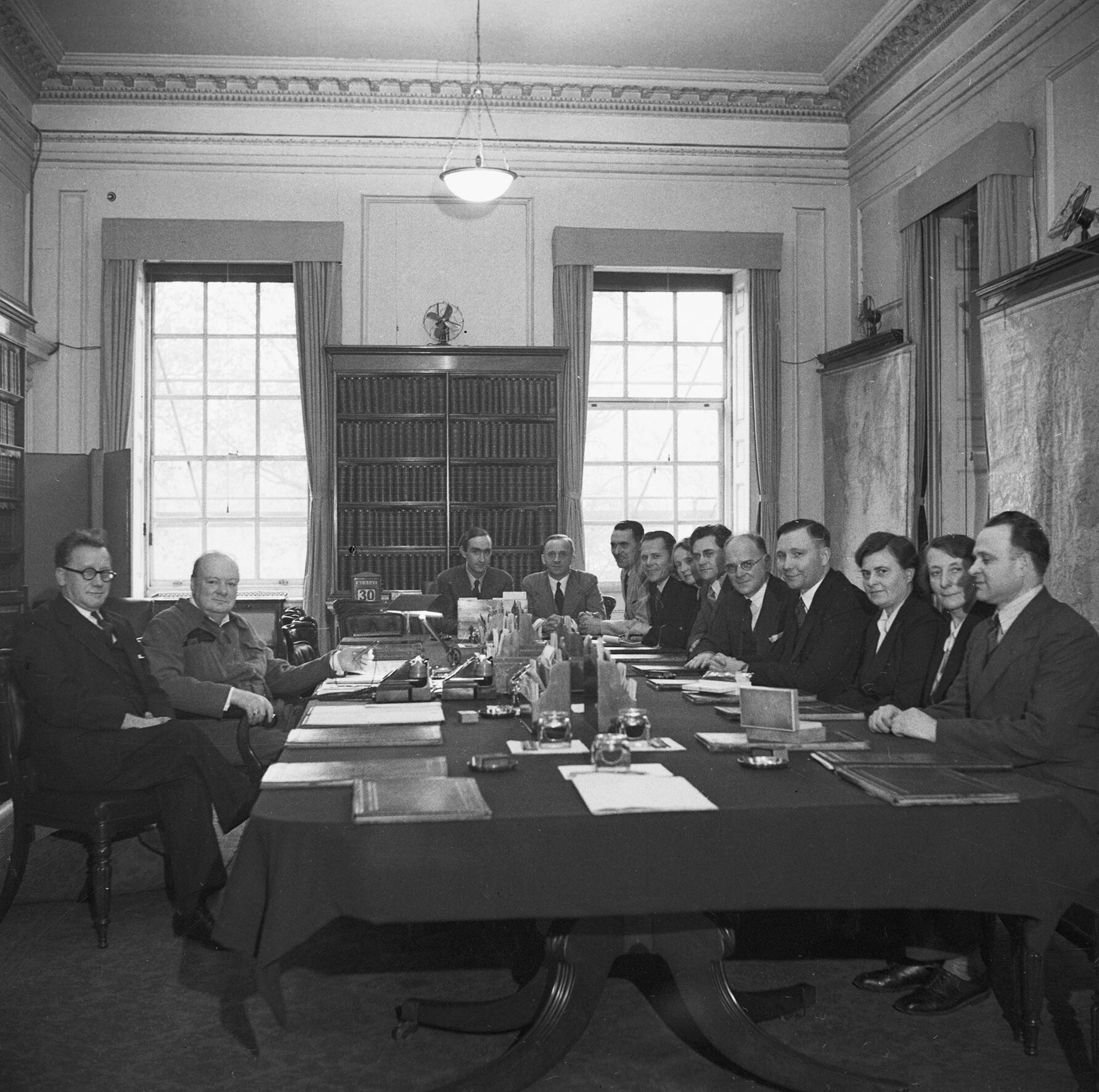
Winston Churchill
Prime Minister and Minister of Defence, United Kingdom

Winston Churchill

Retaliation, scientific intelligence and civil resilience

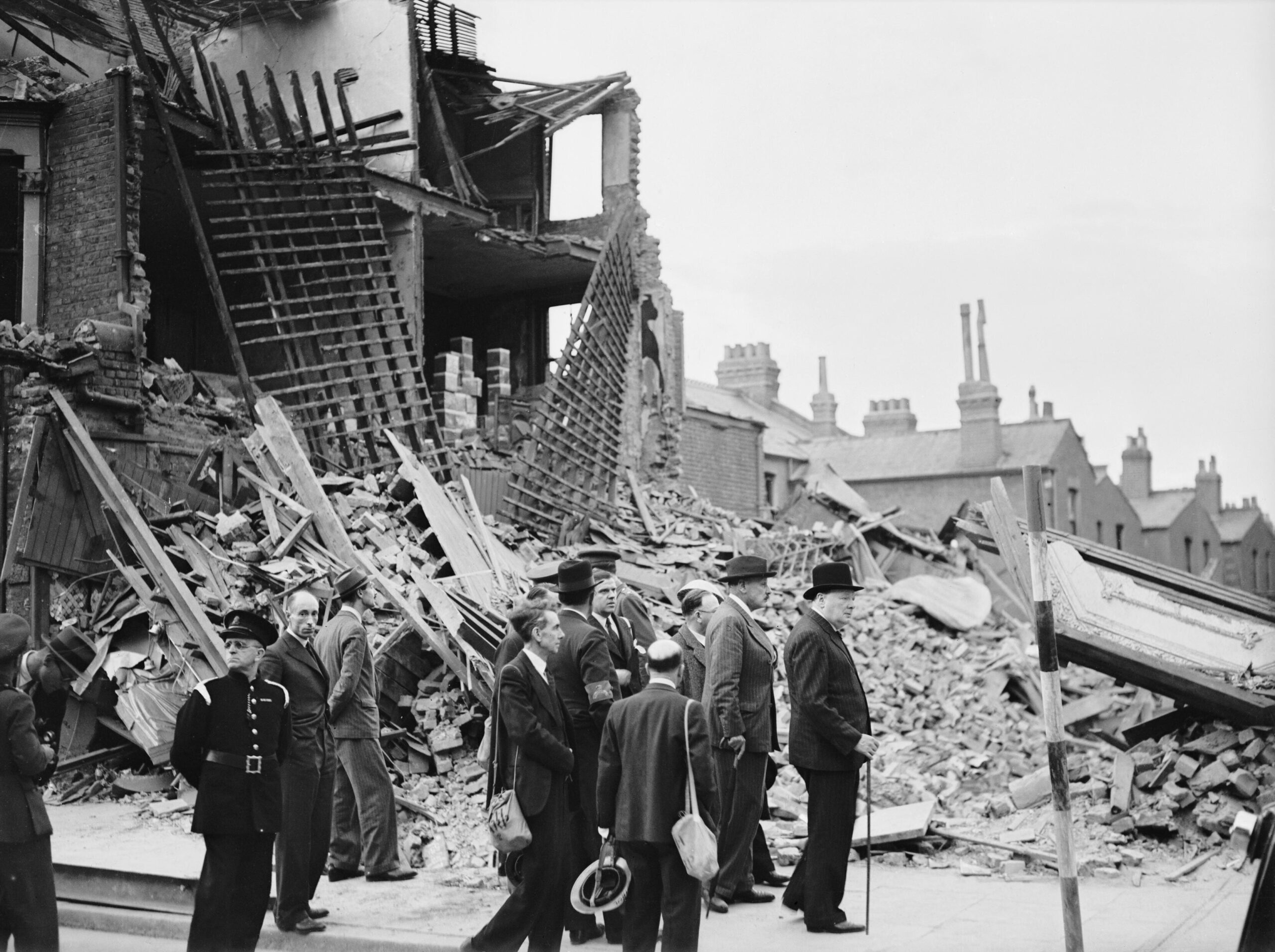
Authorised the first RAF raid on Berlin after German bombs fell on London in late August, a response that contributed to the political context of the German turn toward the capital without uniquely causing it. During the Blitz he backed scientific countermeasures, visited bombed districts and presided over a government repeatedly forced to revise shelter, fire-watching and civil-defence policy. His public rhetoric emphasised endurance; internal records reveal a more anxious assessment of morale and production.

Puttnam (Mr), War Office official photographer / Imperial War Museums, H 3978 · Public domain · Source
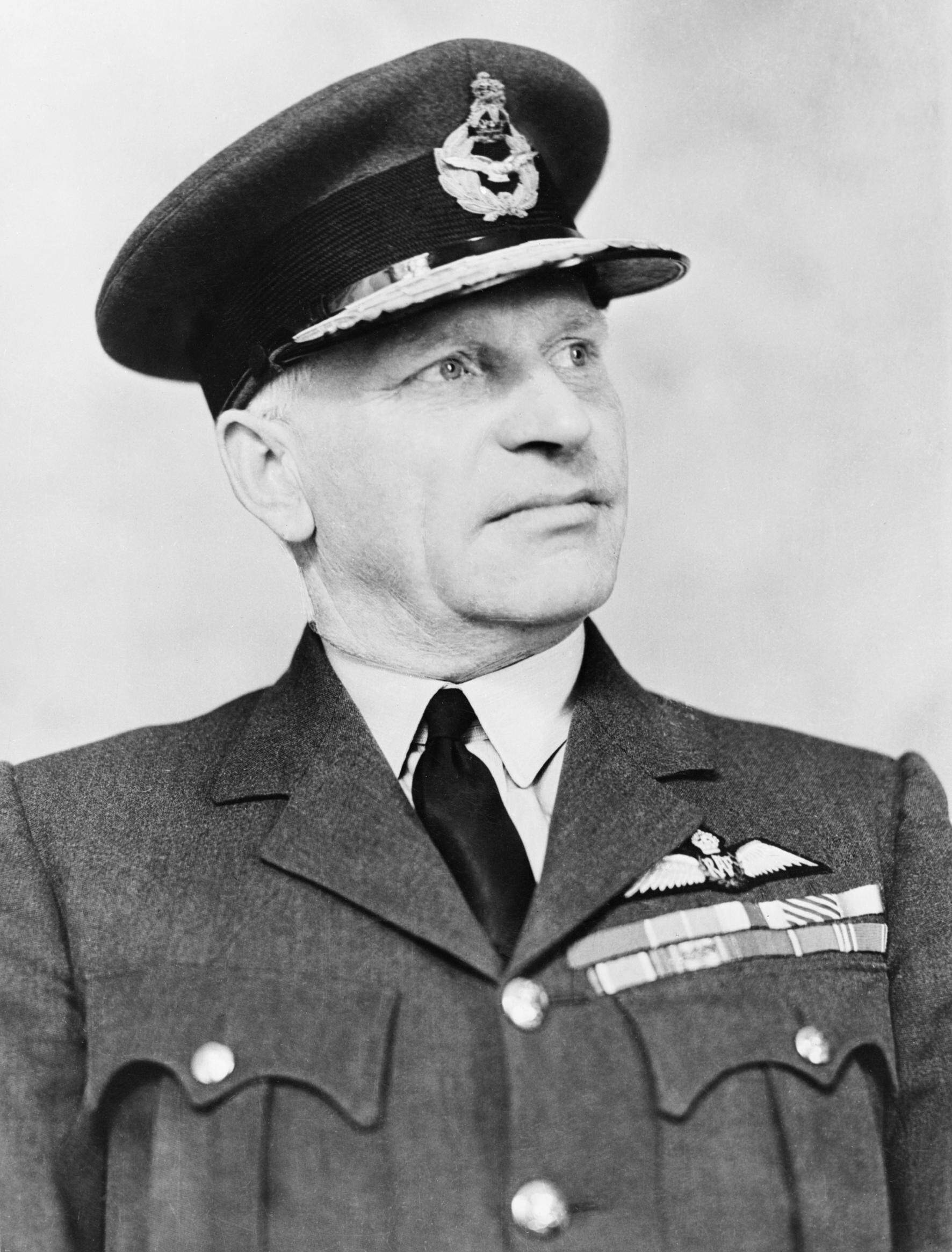
Hugh Dowding
Air Chief Marshal, United Kingdom

Hugh Dowding

Fighter Command through the daylight battle and the opening night raids

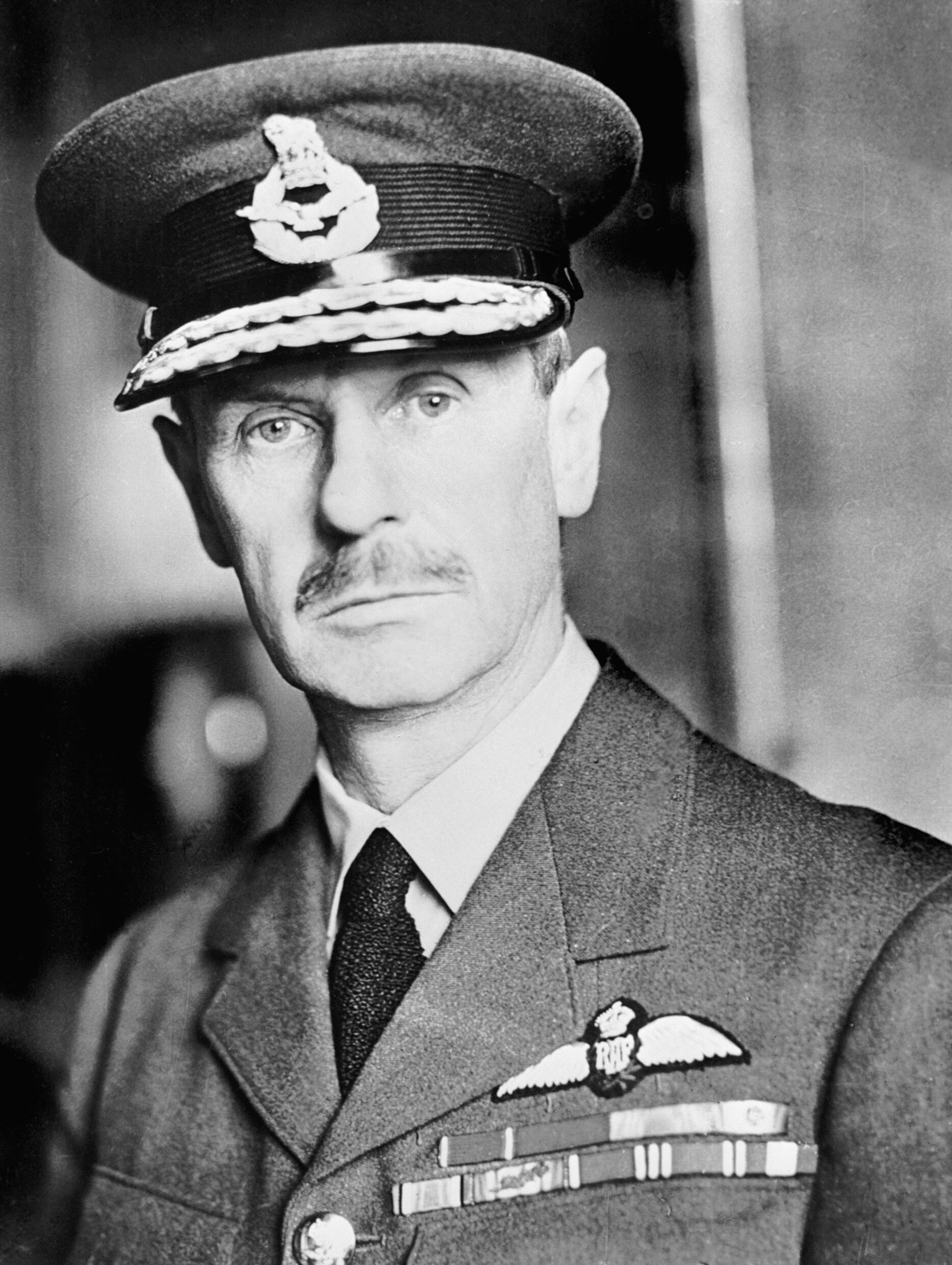
Commanded Fighter Command through the opening weeks of the Blitz. The integrated daylight-control system he had built could warn of night raids, but warning alone did not solve interception after dark. Dowding supported airborne radar and the development of night fighting while his command was still recovering from the Battle of Britain. He left Fighter Command in November 1940 before GCI, Beaufighters and AI radar matured into the system that finally improved night defence.

Ministry of Information official photographer / Imperial War Museums, D 1417 · Public domain · Source
Sholto Douglas
Air Marshal, United Kingdom

Sholto Douglas

Fighter Command from November 1940 as night interception matured

Succeeded Dowding in late November 1940 and inherited the unfinished night-defence problem. During his first months, Beaufighter squadrons expanded, airborne AI radar became more reliable and Ground Controlled Interception stations began guiding fighters close enough for their own radar to acquire a target. Douglas also pushed Fighter Command toward offensive operations over occupied Europe, but his importance to this page lies in the spring transition from improvised night patrols to controlled interception.

Ministry of Information Photo Division / Imperial War Museums, D 1418 · Public domain · Source
Herbert Morrison
Home Secretary and Minister of Home Security, United Kingdom

Herbert Morrison

Civil defence, fire watching and indoor shelter policy

Became Home Secretary and Minister of Home Security in October 1940, when the Blitz had already exposed weaknesses in shelter, firefighting and fire-watching arrangements. His department regularised Tube sheltering, strengthened fire-watching after the December City raid and introduced the indoor steel shelter that took his name. The Morrison shelter itself was an engineering solution developed by John Baker and his team rather than a personal invention by the minister.

Horton (Major), War Office official photographer / Imperial War Museums, H 40529 · Public domain · Source
John Anderson
Home Secretary to October 1940; Lord President of the Council thereafter

John Anderson

Pre-war shelter programme that shaped civilian survival

As pre-war Home Secretary, Anderson oversaw the civil-defence programme that distributed millions of corrugated-steel household shelters before and during the war. The shelter carrying his name was designed for houses with gardens and protected well against blast, splinters and collapsing debris short of a direct hit. By September 1940 Anderson had moved to another cabinet role; his importance to the Blitz lies in a preparedness decision made before the bombing began.

Imperial War Museums, HU 59483 · Public domain · Source
Frederick Pile
General, General Officer Commanding-in-Chief, Anti-Aircraft Command

Frederick Pile

Heavy anti-aircraft defence of Britain

Commanded Anti-Aircraft Command throughout the Blitz. Early heavy-gun fire at night consumed large amounts of ammunition for few confirmed kills because an unseen bomber was difficult to range and track accurately. Pile's command progressively integrated gun-laying radar, predictors, searchlights and improved control. The barrage also had a civil-defence effect because people under attack could hear a visible response, but morale value should not be confused with the later improvement in actual fire-control accuracy.

Lieutenant Smith / Imperial War Museums, H 7259 · Public domain · cropped · Source
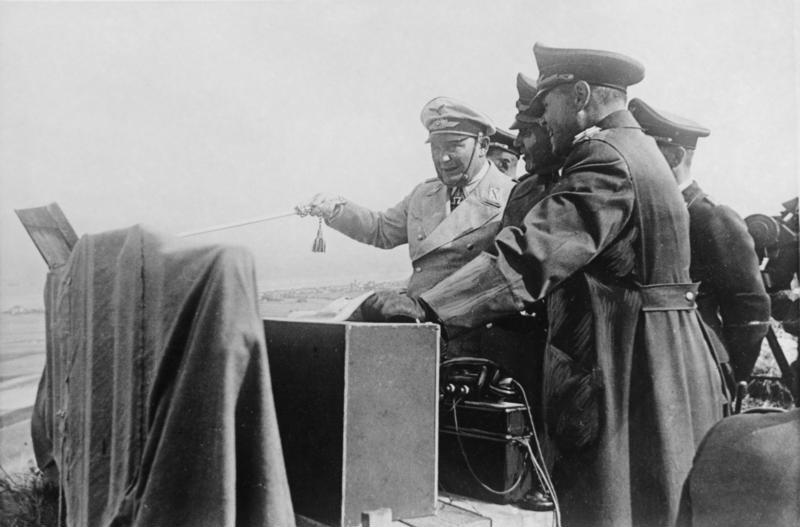
Hermann Göring
Reichsmarschall, Commander-in-Chief of the Luftwaffe

Hermann Göring

Setting and repeatedly changing Luftwaffe target priorities

As commander-in-chief of the Luftwaffe, Göring approved the concentration against London while accepting intelligence that Fighter Command was close to defeat. The capital was expected to combine military, economic and political effects and to draw RAF fighters into combat. When the daylight battle failed to produce air superiority, the bombing effort moved increasingly into darkness and later widened to provincial industrial and port targets. The changing emphasis reflected both strategic ambition and the Luftwaffe's difficulty in measuring what bombing had actually achieved.

Bundesarchiv Bild 183-R63872 · CC BY-SA 3.0 DE · Source
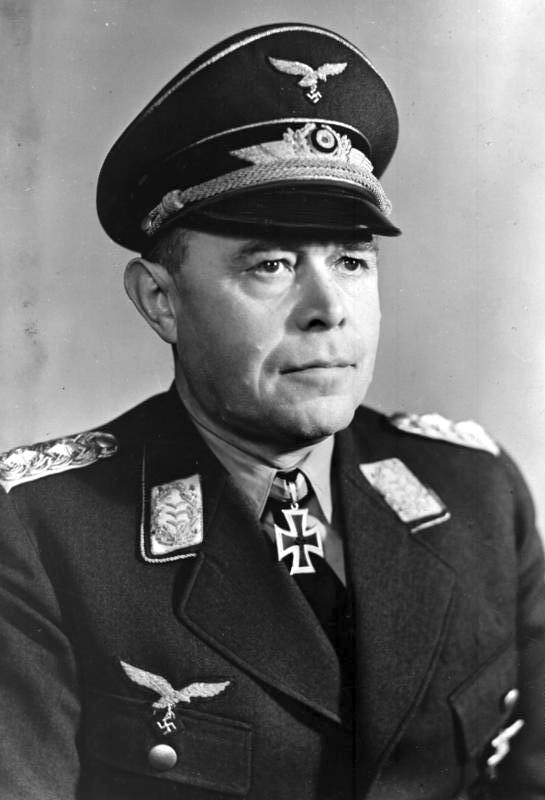
Albert Kesselring
Generalfeldmarschall, Commander, Luftflotte 2

Albert Kesselring

The main Luftflotte attacking London and south-east England

Commanded Luftflotte 2, whose bases in the Low Countries placed much of southern and eastern Britain within easy reach. Kesselring supported major attacks on London partly because he expected Fighter Command to rise in strength and expose itself to destruction. That expectation was based on an exaggerated estimate of British weakness. His formations continued to carry a large share of the bombing as the campaign became nocturnal, but the strategic object shifted faster than German intelligence could reliably measure results.

Bundesarchiv Bild 183-R93434 · CC BY-SA 3.0 DE · Source
Hugo Sperrle
Generalfeldmarschall, Commander, Luftflotte 3

Hugo Sperrle

Luftflotte 3 and the more pessimistic estimate of Fighter Command

Commanded Luftflotte 3 from France and was more sceptical than Kesselring about claims that Fighter Command had already been reduced to the point of collapse. His formations increasingly specialised in night operations and attacked London, western ports and provincial targets. The disagreement matters because the German command did not possess one reliable estimate of British fighter strength or one uncontested bombing strategy when the Blitz began.

Bundesarchiv Bild 183-H27492 · CC BY-SA 3.0 DE · Source

Ships, Guns & Machines

Bombers carried the attack. Radar, night fighters, shelters and civil-defence equipment shaped what happened when they arrived.

The Luftwaffe entered the Blitz with medium bombers developed during the rapid expansion of the 1930s. Heinkel He 111s, Dornier Do 17s and Junkers Ju 88s could strike Britain from continental bases, but their bomb loads and defensive armament imposed limits during a sustained strategic campaign. As daylight losses mounted, darkness offered greater protection and allowed the bombing to continue deep into Britain.

British night defence developed while the Blitz was already underway. The Bristol Beaufighter combined speed, heavy cannon armament and AI Mk IV airborne radar. Ground controllers using the new GCI network guided fighters toward approaching bombers, after which the aircraft's own radar operator could take over the interception. By the spring of 1941, these elements were beginning to form an effective night-fighter system.

Most civilians experienced the air war through much simpler equipment. Anderson shelters stood in millions of gardens. From January 1941, Morrison shelters provided an indoor alternative for homes without suitable outside space. Wardens enforced blackout regulations, rescue parties searched damaged buildings and firefighters worked through incendiary raids that could ignite hundreds or thousands of separate fires.

The machines of the Blitz ranged from bombers and radar sets to corrugated steel shelters, sirens, searchlights and fire pumps. Together they show how the campaign reached far beyond the aircraft overhead.

Heinkel He 111
A Heinkel He 111, the type that flew most of the raids.
Bundesarchiv Bild 101I-343-0694-21 · CC BY-SA 3.0 DE · Source

Heinkel He 111

Medium bomber · about 2,000 kg of bombs · the aircraft of most of the raids

Obsolescent by 1940 and still the backbone of the campaign. It carried a fraction of what a heavy bomber would carry three years later, and Germany had no heavy bomber because the programme had been cancelled in 1937 when its chief advocate died in an air crash.

Knickebein and X-Gerät
Diagram of a Knickebein transmitter antenna, the ground equipment used to form the navigation beam.
Bundesarchiv Bild 101I-228-0322-04 · CC BY-SA 3.0 DE · Source

Knickebein and X-Gerät

Radio navigation · intersecting beams · transmitters in Normandy, the Pas-de-Calais and Norway

Two beams laid across England from transmitters on the coast: one to fly along, one crossing it over the target. It let a crew bomb accurately through cloud at night in 1940, which the RAF could not do for another two years. Finding it, and then bending it, was the most important scientific work of the campaign.

The Anderson shelter
An Anderson shelter remains intact amidst destruction in Latham Street, Poplar, London during 1941.
IWM D 5949 · IWM Non-Commercial Licence · Source

The Anderson shelter

Corrugated steel arch · buried in a garden · about 2.5 million issued

Six curved steel sheets bolted together, sunk four feet into a garden and covered with earth. Cold, damp and frequently flooded. It could not survive a direct hit and it protected extremely well against everything else, which is what most bombs are.

The Morrison shelter
Morrison Shelter on Trial- Testing the New Indoor Shelter, 1941
Imperial War Museums, D 2299 · Public domain · Source

The Morrison shelter

Steel table · indoor · issued from March 1941 to homes with no garden

A steel cage the size of a dining table that a family slept inside. It was designed to hold up a collapsing house long enough for the people underneath to be dug out, and in that specific job it worked remarkably well. Around 500,000 were issued.

The Underground
Londoners sheltering on an Underground platform, 1940.
IWM D 1568 · IWM Non-Commercial Licence · Source

The Underground

Deep tube stations · about 150,000 sheltering at the peak · opened against government policy

The most famous shelter of the campaign was never provided; it was taken. The government refused on the grounds that people would not come back up. Londoners bought tickets and went down. Two of the stations used, Balham and Bank, were then hit, killing 122 people between them.

Bristol Beaufighter and AI Mark IV
Aircraft of the Royal Air Force 1939-1945- Bristol Type 156 Beaufighter.
Imperial War Museums, MH 4560 · Public domain · Source

Bristol Beaufighter and AI Mark IV

Night fighter · airborne interception radar · four cannon and six machine guns

The first British aircraft that could find a bomber in the dark and had the speed and weight of fire to destroy it once it had. Paired with ground controlled interception stations that could put it within radar range, it turned night defence from a gesture into a threat, in the last two months of the campaign.

De Havilland Dh.82 Tiger Moth
DH.82A Tiger Moth Mark II, R5130, in flight.
Imperial War Museums, ZZZ 11729 · Public domain · Source

De Havilland Dh.82 Tiger Moth

Gipsy Major engine and dual-control open cockpit training configuration · 29.4 feet

Primary two-seat biplane trainer aircraft utilized by the Royal Air Force to rapidly scale up pilot training pipelines amid intense wartime attrition rates.

Anti-aircraft artillery
A British 3.7-inch anti-aircraft gun in Richmond Park, London, in 1940.
Imperial War Museums, H 993 · Public domain · Source

Anti-aircraft artillery

3.7 inch guns · searchlights · barrage balloons · negligible kills in the first months

In September 1940 it took something in the order of 20,000 shells to bring down one aircraft. General Pile doubled the London barrage anyway, deliberately, because the noise of guns firing back was worth more to the people in the shelters than the aircraft it failed to hit.

The Cost

Figures as proposed by the sources named

The Blitz killed more British civilians than the British armed forces lost in any single year of the war until 1944. It also failed. War production dipped and recovered within weeks in every city attacked, and the campaign ended not because it was defeated but because the aircraft were needed in Russia.

The proportional figures matter more than the totals. London absorbed roughly half the dead across a population of eight million. Clydebank, a town of about 47,000, lost around 528 people in two nights and had perhaps 7 houses in the whole burgh left undamaged.

About 43,500

British civilians killed

Approximate national total for the main Blitz period; different published series vary slightly by dates and inclusion rules.

20,083

Londoners killed

Imperial War Museums figure for the 1940–41 Blitz in the capital.

23,602

Killed outside London

Imperial War Museums figure for the Blitz outside the capital, showing how widely the campaign spread after autumn 1940.

About 2 million

Homes destroyed or damaged

National civil-defence estimate; local concentration varied enormously, with Clydebank recording only seven of roughly 12,000 houses intact after two nights.

1,436

Killed on 10–11 May

London civilian deaths in the final major raid of the sustained Blitz.

Books & Relics

The authenticity of the relics is not verified by WW2 Theatres.

This collection is curated by WW2 Theatres and not affiliated with our website, with all site photographs licensed to their respective owners.

The Battle of the Beams

German bombers followed radio signals across the night sky. British scientists learned how to bend those signals away from their targets.

Night bombing created a navigation problem. A crew could cross the Channel accurately and still miss a city hidden beneath cloud and blackout. German systems answered that problem with radio beams transmitted from occupied Europe. Knickebein gave crews intersecting signals that marked the approach to a target. More elaborate systems followed as the bombing campaign continued.

British intelligence identified the transmissions and built countermeasures against them. Receivers located the signals, scientists established how the systems worked, and transmitters sent competing signals intended to distort the guidance received by German crews.

The contest continued as each side altered its equipment and methods. Bomber crews, radio operators, intelligence officers and scientists were fighting over the same patch of darkness long before an aircraft reached the target.

Sources & Archives

HMSO · Hamish Hamilton · The National Archives

The official record is Basil Collier's The Defence of the United Kingdom, in the British official history series, with Terence O'Brien's civil defence volume alongside it. R. V. Jones's Most Secret War is the account of the radio beam intelligence by the man who ran it, written from the papers and unusually candid about what he got wrong.

The Imperial War Museums hold the photographic and film record and the Mass Observation archive at Sussex holds the contemporary record of what people actually said, which differs in useful ways from what the newsreels reported. Local figures for Coventry, Clydebank, Belfast and Liverpool come from the city and county archives rather than from national totals.

Operation chronologyDates, locations and sourced event summaries
DateEventLocationSummary
Saturday 24 August 1940 · Two weeks beforeGerman bombs fall on LondonThe City of London

During the night of 24–25 August German bombs fell in central and east London while Luftwaffe formations were attacking targets around the Thames Estuary and elsewhere. The familiar story reduces the incident to one lost crew; the surviving operational picture is less neat, but London had not yet been selected for the mass attack that began in September.

Sources 1, 4, 12
Wednesday 4 September 1940 · Three days beforeHitler threatens retaliation against British citiesBerlin

On 4 September Hitler used a Berlin speech to threaten massive retaliation against British cities after the RAF raids on the German capital. The speech was political theatre as well as policy signalling; it did not constitute the whole operational explanation for what followed.

Sources 1, 10, 12
Friday 6 September 1940 · The day beforeFighter Command is strained, not destroyedFighter Command sector stations

By 6 September No. 11 Group and the southern sector stations had been under severe pressure. Keith Park later described damage to several forward airfields and six of seven sector stations as having a serious effect on fighting efficiency.

Sources 1, 12
Saturday 7 September 1940 · 16:43Black SaturdayThe London docks

On the afternoon of 7 September roughly 350 bombers, heavily escorted by fighters, approached London and struck the docks and industrial districts of the East End. Fires in warehouses, wharves and factories marked the target for the night force that followed.

Sources 1, 2, 5, 11, 12
Sunday 8 September 1940 · Night 2Londoners take the UndergroundLiverpool Street station

As the nightly raids continued, Londoners increasingly entered Underground stations with bedding and food whether or not the stations had been formally designated as shelters. The deep platforms offered psychological and physical protection that many surface shelters could not match.

Sources 2, 6, 11
Sunday 15 September 1940 · 11:30Battle of Britain DayOver London and Kent

On 15 September the Luftwaffe mounted two major daylight attacks toward London. Fighter Command met them in strength from No. 11 Group, reinforced by formations from neighbouring groups.

Sources 1, 11, 12
Night of 14–15 October 1940 · 20:02BalhamBalham Underground station

During the raid of 14–15 October a high-explosive bomb struck the roadway above Balham Underground station. The blast collapsed part of the tunnel and ruptured water and sewer mains, sending water, mud and debris into the station.

Sources 2, 5, 11
Autumn 1940 · Electronic warThe beam war becomes operationalAir Ministry scientific intelligence

British scientific intelligence had identified Knickebein before the Blitz began. By the autumn the contest had moved through successive German navigation systems, including X-Gerät, whose narrow beams and timed signals could place pathfinders over an inland target in darkness.

Sources 3, 4, 12
Saturday 2 November 1940 · After fifty-seven nightsFifty-seven nightsLondon

The night of 2 November closed the sequence of fifty-seven consecutive nights in which London had been bombed since 7 September. The frequency made air-raid routine part of the city's working life: sirens, shelter, fires, rescue, all-clear and morning travel repeated before damage from the previous night had been fully repaired.

Sources 1, 2, 6, 11
Thursday 14 November 1940 · 19:20CoventryCoventry

On the evening of 14 November roughly five hundred Luftwaffe bombers attacked Coventry in an operation guided by X-Gerät and pathfinder marking. High explosive opened buildings and damaged utilities before large numbers of incendiaries spread fires through the centre and industrial districts.

Sources 1, 7, 11, 12
Friday 15 November 1940 · AfterWhat Churchill knew about CoventryCoventry

The story that Churchill knew Coventry was the target and deliberately allowed the raid to proceed in order to protect Ultra has survived because it gives one secret decision a terrible human price. The surviving records do not support that version.

Sources 3, 4, 7, 12
November 1940 · NightlyThe offensive widens beyond LondonBirmingham

After Coventry the Luftwaffe increasingly attacked industrial and port cities beyond London. Birmingham, Bristol, Southampton, Sheffield and Manchester were among the major targets struck during the following weeks.

Sources 1, 2, 10, 12
Sunday 29 December 1940 · 18:15The Second Great Fire of LondonThe City of London

On 29 December 136 German aircraft attacked the City of London in a raid weighted heavily toward incendiaries. High explosive damaged roads and water mains before fires multiplied among offices, warehouses, churches and narrow streets.

Sources 2, 5, 11
Saturday 11 January 1941 · 20:00BankBank Underground station

On 11 January a high-explosive bomb struck the Bank Underground station area, collapsing road and station structures into the booking hall and platforms below.

Sources 2, 5, 11
March 1941 · Spring 1941Night interception becomes a systemNight fighter stations

The Beaufighter had flown operational AI-radar patrols since September 1940, and an AI-assisted kill was achieved in November. Those early successes did not yet amount to an effective national night-defence system.

Sources 1, 4, 12, 17
Thursday 13 March 1941 · 21:00ClydebankClydebank

On the nights of 13 and 14 March several hundred Luftwaffe bombers attacked the Clyde industrial complex. John Brown's shipyard, the Royal Ordnance Factory, Singer and other industrial targets lay beside a densely built burgh whose housing absorbed much of the bombing.

Sources 1, 8, 13
March and April 1941 · NightlyThe Plymouth Blitz intensifiesPlymouth

The Plymouth Blitz intensified during March and April against a city whose naval dockyard at Devonport made it a major military and industrial target. Seven particularly heavy nights devastated large areas of the commercial centre and housing.

Sources 1, 2, 6, 14
Tuesday 15 April 1941 · 22:40BelfastBelfast

On the night of 15–16 April about 180 German aircraft attacked Belfast. The city combined major shipbuilding and aircraft production with comparatively weak air-raid protection and limited experience of heavy bombing.

Sources 1, 9, 15
1 to 7 May 1941 · Seven nightsThe May Blitz on the MerseyLiverpool and Bootle

From 1 to 7 May Liverpool, Bootle and the Mersey docks endured a sustained sequence of raids aimed at one of Britain's most important Atlantic ports. Warehouses, docks, rail connections, housing and ships occupied the same narrow urban-industrial landscape.

Sources 1, 2, 5, 16
Night of 10–11 May 1941 · 23:02The last great raidWestminster and central London

On the night of 10–11 May 507 bombers attacked London in the heaviest final raid of the main Blitz. High explosive and incendiaries struck Westminster, the City, transport systems and residential districts.

Sources 1, 2, 5, 11
Sunday 11 May 1941 · After the raidThe sustained Blitz endsBritain

The all-clear after the May raid did not come with a German announcement that the bombing campaign had ended. Smaller attacks on Britain continued later in the war, and nobody on 11 May could know that the previous night had been the last mass attack of this particular campaign.

Sources 1, 10, 11, 12, 17

Image rights and editorial standard. U.S. federal archival photographs are public domain. British government photographs are used under the status stated on the individual Wikimedia Commons or holding-institution record; Bundesarchiv files retain their stated attribution licence. IWM collection material is used only according to the reuse status attached to the individual record. Herbert Mason's St Paul's photograph remains separately credited to the Daily Mail/IWM record. Dated event images are attached only when their date or immediate operational attribution is defensible. The Blitz is dated here from the mass attack on London on 7 September 1940 through the last major London raid of 10–11 May 1941; bombing of Britain continued afterwards at a lower and less sustained level.