| 23 October 1944 · Before dawn | Darter and Dace Break into Kurita’s Column | Palawan Passage | Early on 23 October, the American submarines Darter and Dace intercepted the Japanese Center Force in the Palawan Passage. Their torpedoes sank the heavy cruisers Atago and Maya and badly damaged Takao. Vice Admiral Takeo Kurita survived the loss of his flagship Atago and eventually transferred his flag to Yamato, while the remaining ships continued toward the Sibuyan Sea. Sources 2, 5, 7 |
| 24 October 1944 · Morning | Japanese Aircraft Hit USS Princeton | East of Luzon | Japanese land-based aircraft attacked American fast-carrier forces east of Luzon on 24 October. A bomb struck the light carrier Princeton and started fires that spread through the ship. Explosions later made her loss unavoidable; American ships rescued survivors and scuttled the damaged carrier. The attack demonstrated that Japanese aircraft on Luzon could still threaten the carriers protecting the Leyte landing. Sources 1, 2, 5 |
| 24 October 1944 · Morning to evening | Carrier Air Strikes Sink Musashi | Sibuyan Sea | Throughout 24 October, aircraft from the American fast carriers attacked Kurita’s Center Force in the Sibuyan Sea. The battleship Musashi sustained repeated bomb and torpedo hits and sank that evening. Other Japanese ships suffered damage, and Kurita briefly reversed course before resuming his advance. The Center Force had lost a major unit, but its remaining battleships and cruisers still presented a serious threat to the forces off Leyte. Sources 1, 2, 3, 5, 6 |
| 24 October 1944 · Evening | Halsey Orders the Third Fleet North | Philippine Sea north of Samar | On the evening of 24 October, Admiral William Halsey moved the Third Fleet’s fast carriers and covering surface units north to attack Vice Admiral Jisaburō Ozawa’s carriers. Halsey had received reports of heavy damage to Kurita’s force and believed the northern carriers offered a target that should be destroyed. The San Bernardino Strait approach was consequently left without the American fast-battleship guard that Seventh Fleet commanders expected. Sources 2, 3, 5, 6 |
| 25 October 1944 · Night and early morning | Oldendorf Destroys Nishimura’s Southern Attack | Surigao Strait | During the night of 24–25 October, Rear Admiral Jesse Oldendorf positioned American battleships and cruisers across the northern end of Surigao Strait. American patrol boats and destroyers made successive torpedo attacks against Vice Admiral Shōji Nishimura’s approaching ships. Radar-directed American gunfire then struck the surviving Japanese column. The battleships Yamashiro and Fuso were lost, and Nishimura was killed as the southern thrust collapsed. Sources 1, 2, 5, 8 |
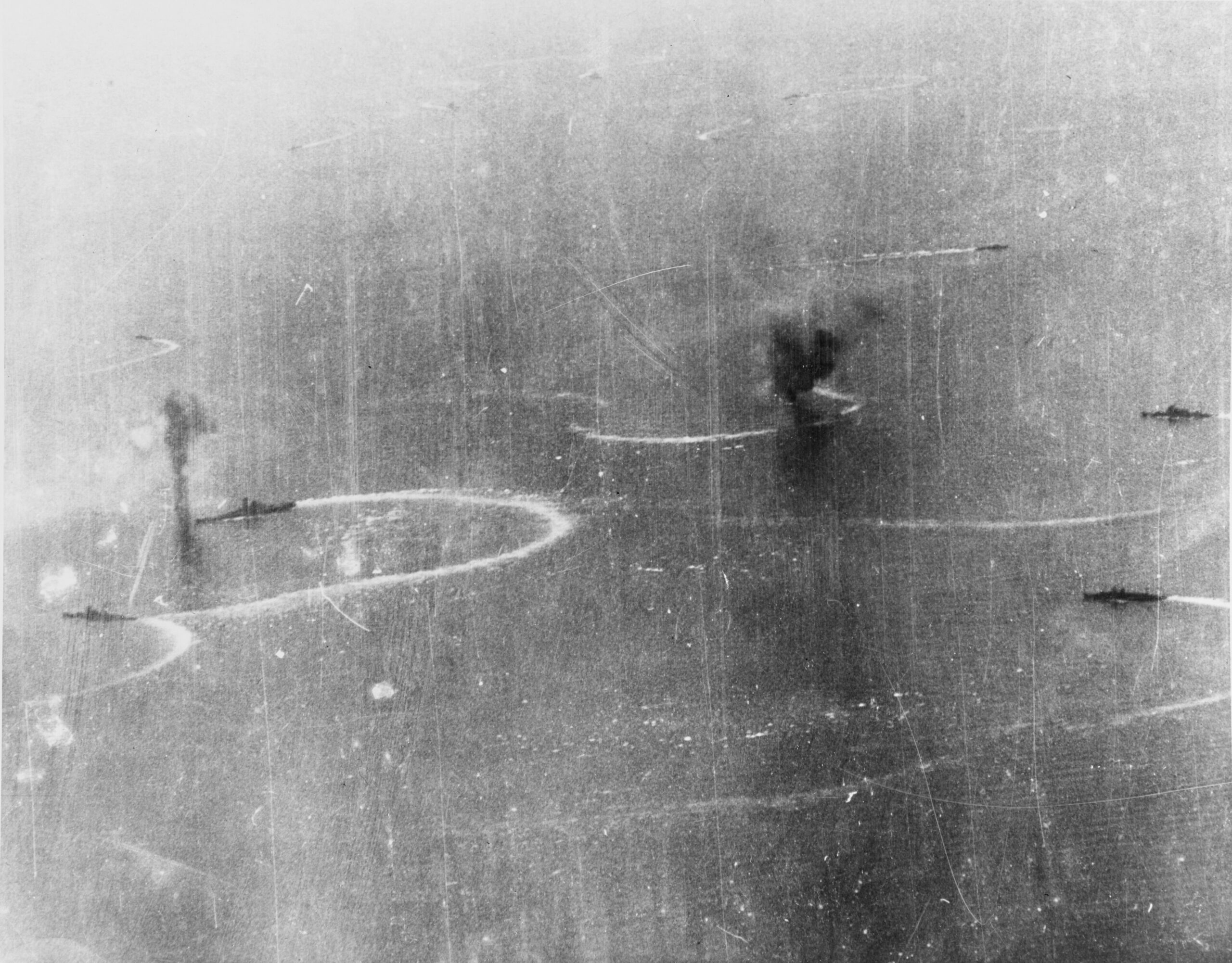
| 25 October 1944 · Dawn | Kurita’s Battleships Attack Taffy 3 | Off Samar | Soon after dawn on 25 October, Kurita’s Center Force emerged from San Bernardino Strait and sighted Rear Admiral Clifton Sprague’s escort carriers off Samar. The carriers of Taffy 3 were supporting the Leyte landing and lacked the speed and protection of fleet carriers. Sprague ordered smoke, evasive movement and aircraft launches as Japanese battleships and cruisers opened fire. American destroyers and a destroyer escort then charged the stronger force to disrupt its attack. Sources 1, 3, 4, 5, 8 |
| 25 October 1944 · Morning to afternoon | Third Fleet Aircraft Strike Ozawa’s Carriers | Off Cape Engaño | On 25 October, the Third Fleet’s carrier aircraft attacked Vice Admiral Jisaburō Ozawa’s Northern Force off Cape Engaño. Ozawa had placed his carriers where American search aircraft could find them, hoping to draw Halsey away from the approaches to Leyte. American air strikes sank all four Japanese carriers in the force, including Zuikaku, as well as other ships. The destruction was substantial even though the Japanese carrier force had served its diversionary purpose. Sources 1, 2, 3, 5, 6 |
| 25 October 1944 · Midmorning | Kurita Breaks Off the Battle | Off Samar | At about 09:11 on 25 October, Kurita ordered his surviving Center Force to cease the attack and regroup off Samar. His ships had inflicted serious losses on the escort carriers and their screen, but their own formation had become scattered under torpedo and air attack. Kurita withdrew from the immediate encounter and ultimately abandoned the intended attack on the invasion anchorage in Leyte Gulf. Sources 2, 3, 4, 5 |
| 25 October 1944 · Late morning | A Suicide Aircraft Sinks USS St. Lo | Off Samar | During the late morning of 25 October, a Japanese aircraft struck the escort carrier USS St. Lo off Samar. Fires and explosions followed, and the ship sank. The attack was among the first successful strikes by newly organized Japanese special-attack aircraft units during the Philippine operation, establishing a threat that would become increasingly prominent in subsequent fighting. Sources 1, 3, 4, 5 |
| 26 October 1944 · Morning | American Aircraft Pursue the Withdrawing Ships | Off southern Mindoro, Philippines | On 26 October, American aircraft continued striking Japanese vessels withdrawing through Philippine waters. These attacks followed the destruction of the Southern Force in Surigao Strait, Kurita’s retreat from Samar and the loss of Ozawa’s carriers to the north. Damaged Japanese ships faced further losses as the surviving formations sought safer routes away from Leyte. Sources 1, 2, 5, 8 |
| 26 October 1944 · Daytime | Rescue Ships Recover Survivors Off Samar | Off Samar | American search and rescue operations continued off Samar on 26 October for men from the ships sunk the previous morning. Many survivors had spent more than a day in the water after Gambier Bay, Johnston, Hoel and Samuel B. Roberts were lost. Destroyers and other vessels eventually reached groups of survivors, although exposure, wounds and the delay in locating them claimed additional lives. Sources 4, 5, 8 |