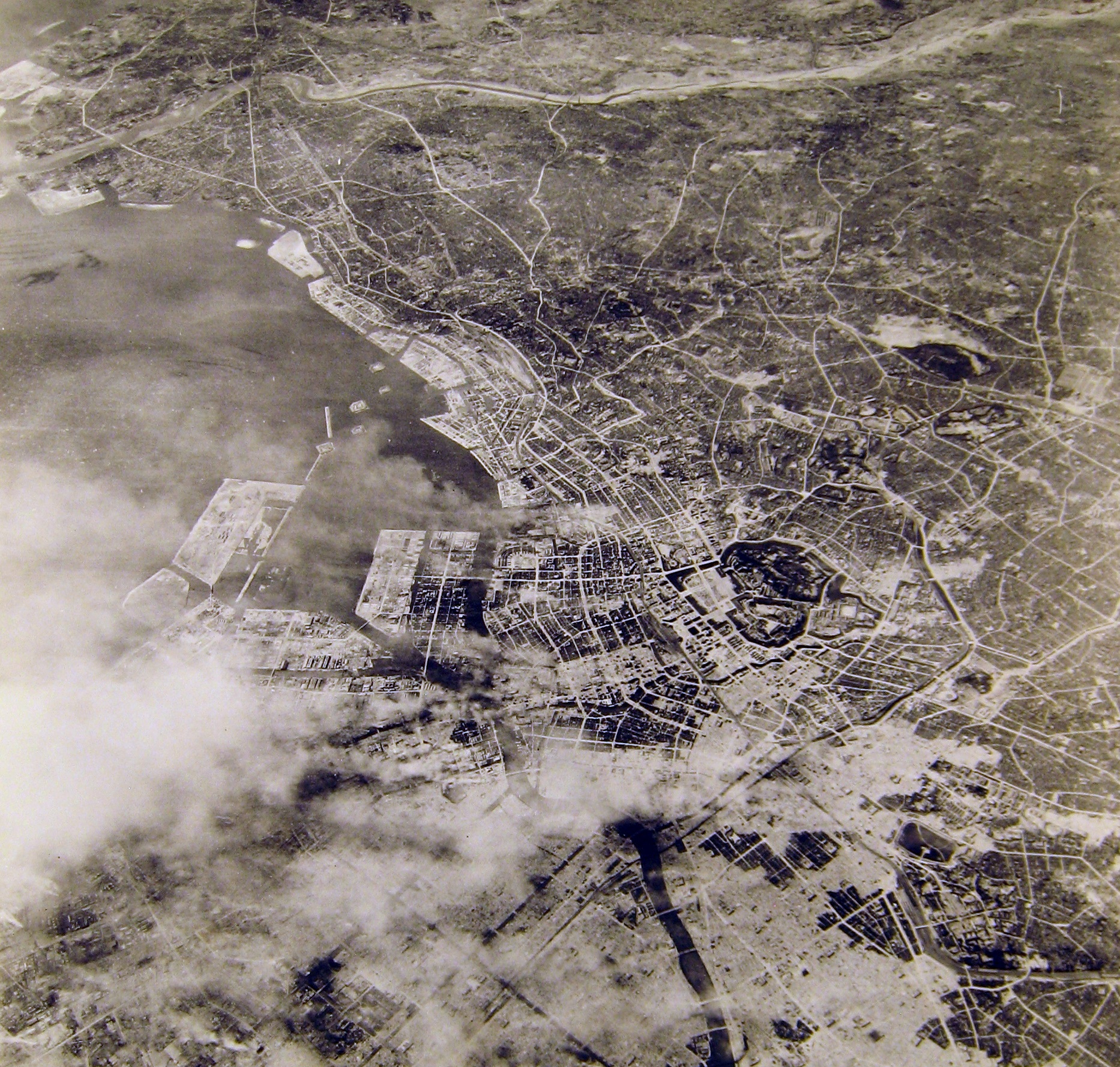
| 24 November 1944 · Daylight raid | B-29s from Saipan Strike the Nakajima Aircraft Plant | Musashino, Tokyo, Japan | On 24 November 1944, XXI Bomber Command dispatched B-29s from Saipan against the Nakajima aircraft-engine works at Musashino on the outskirts of Tokyo. The mission began sustained strategic bombing from the captured Marianas, with American airfields now close enough to reach central Japan and return. Sources 1, 2, 15 |
| 20 January 1945 · Change of command | Curtis LeMay Takes Command of XXI Bomber Command | Guam, Mariana Islands | Major General Curtis LeMay assumed command of the Marianas-based XXI Bomber Command in January 1945 after the initial precision-bombing effort had produced limited results. High winds over Japan made accurate bombing at altitude exceptionally difficult, and many missions consumed substantial resources without disabling their nominated plants. Sources 1, 2 |
| 25 February 1945 · Daytime incendiary raid | Large Incendiary Attack Tests New Methods Against Tokyo | Tokyo, Japan | On 25 February 1945, a large B-29 force attacked Tokyo with incendiaries as cloud cover frustrated the use of more selective bombing methods. The raid burned extensive parts of the city and showed the vulnerability of densely built districts to widespread fire. Sources 1, 2 |
| 10 March 1945 · Overnight, 9–10 March, Japan time | Tokyo Burns During Operation Meetinghouse | Shitamachi districts, Tokyo, Japan | During the night of 9–10 March 1945, hundreds of B-29s carried incendiary bombs over crowded districts of eastern Tokyo. The attackers flew at lower altitude than in earlier daylight precision missions, seeking to ignite the urban industrial and residential areas that supplied the Japanese war economy. Sources 2, 4, 5 |
| 14 March 1945 · Night of 13–14 March | Incendiary Attacks Spread to Osaka and Other Cities | Osaka, Japan | After the Tokyo raid, LeMay extended major incendiary attacks to Osaka and other industrial cities. In the night of 13–14 March, B-29 incendiaries struck densely developed sections of Osaka, causing widespread fires in an important manufacturing center. Sources 1, 2, 4 |
| 27 March 1945 · First phase of B-29 aerial mining | Operation Starvation Begins to Mine Japan’s Shipping Routes | Shimonoseki Strait, Japan | In late March 1945, B-29s of the 313th Bombardment Wing began the aerial mining operation known as Starvation. Navy-designed minefields targeted the Shimonoseki Strait and other maritime approaches that linked Japanese ports, inland-sea traffic and coastal shipping. Sources 3, 4 |
| 7 April 1945 · Midday and afternoon | U.S. Carrier Aircraft Sink the Battleship Yamato | East China Sea south of Kyushu | On 7 April 1945, U.S. carrier aircraft intercepted the battleship Yamato and its escort force while it sailed toward Okinawa. Japanese commanders intended to attack the invasion fleet and, under the mission’s desperate fuel constraints, bring the warship into an operation from which return was unlikely. Sources 5, 11 |
| 12 April 1945 · Presidential succession | Harry Truman Succeeds Roosevelt as U.S. President | Washington, D.C., United States | Franklin D. Roosevelt died on 12 April 1945 and Vice President Harry S. Truman assumed the presidency. Truman now had responsibility for the Pacific campaign, plans for the invasion of Japan and the secret program developing atomic weapons. Sources 7, 12, 18 |
| 26 May 1945 · Night of 25–26 May | A Renewed Night Raid Burns More of Tokyo | Tokyo, Japan | On the night of 25–26 May 1945, U.S. B-29s mounted another major incendiary raid on Tokyo. Fires spread through further urban districts after the earlier March devastation, extending the damage to factories, government buildings, housing and transport facilities. Sources 1, 2, 4 |
| 5 June 1945 · Large incendiary raid | Kobe Suffers Another Major Incendiary Bombing | Kobe, Japan | On 5 June 1945, B-29s carried out a major incendiary attack against Kobe, an important port and industrial city. The air offensive now covered multiple urban centers whose productive activities depended on workshops, warehouses and rail links embedded in residential districts. Sources 1, 2, 4 |
| 14 July 1945 · Naval bombardment | Allied Warships Bombard Kamaishi’s Steelworks | Kamaishi, northeastern Honshu, Japan | On 14 July 1945, Allied surface warships bombarded the industrial facilities at Kamaishi on Japan’s northeastern coast. The attack extended the pressure from the air and sea blockade to direct naval gunfire against the home islands. Sources 3, 5, 11 |
| 16 July 1945 · 05:29 Mountain War Time, 16 July | The Trinity Test Demonstrates a Plutonium Implosion Bomb | Trinity test site, New Mexico, United States | At 5:29 a.m. local time on 16 July 1945, the United States detonated the first nuclear explosive at the Trinity site in New Mexico. The device used a plutonium implosion arrangement developed at Los Alamos, confirming the principle behind the weapon intended for later use over Nagasaki. Sources 6, 7, 12 |
| 24 July 1945 · Daylight carrier strikes | Carrier Aircraft Attack Japan’s Remaining Warships at Kure | Kure Naval Base, Hiroshima Prefecture, Japan | On 24 July 1945, British and American carrier aircraft struck shipping, naval facilities and vessels anchored around Kure and the Inland Sea. Japan’s remaining heavy ships were already severely limited by fuel scarcity, but their presence still mattered to invasion planning and the threat of renewed operations. Sources 9, 11, 3 |
| 26 July 1945 · Allied declaration | The Allies Issue the Potsdam Declaration | Potsdam, Germany | On 26 July 1945, the United States, Britain and China issued the Potsdam Declaration, demanding Japan’s surrender and warning of severe destruction if its government continued the war. Truman and his advisers were simultaneously considering the military use of atomic weapons. Sources 6, 7, 18 |
| 6 August 1945 · 08:15 Japan Standard Time | The Atomic Bomb Little Boy Destroys Central Hiroshima | Hiroshima, Japan | At approximately 8:15 a.m. on 6 August 1945, the U.S. B-29 Enola Gay dropped the uranium bomb Little Boy over Hiroshima. The explosion devastated the central city, killed large numbers of civilians and military personnel and exposed survivors to severe burns and radiation. Sources 6, 8, 12, 13, 14 |
| 8 August 1945 · Evening in Moscow; already 9 August in East Asia | The Soviet Union Declares War on Japan | Moscow, Soviet Union | On 8 August 1945, the Soviet government declared war on Japan, ending Tokyo’s hope that Moscow could serve as a mediator in negotiations with the Allies. The decision fulfilled earlier Soviet commitments to enter the Pacific war after Germany’s defeat. Sources 5, 10, 16 |
| 9 August 1945 · Early hours, local time | Soviet Forces Begin Their Offensive in Manchuria | Manchuria, northeast Asia | In the opening hours of 9 August 1945, Soviet forces attacked the Japanese Kwantung Army across Manchuria and adjacent frontiers. The offensive rapidly widened the war and threatened Japan’s remaining forces and political position on the Asian mainland. Sources 5, 10, 16 |
| 9 August 1945 · 11:02 Japan Standard Time | Bockscar Drops Fat Man on Nagasaki | Nagasaki, Japan | At about 11:02 a.m. on 9 August 1945, the B-29 Bockscar dropped the plutonium bomb Fat Man over Nagasaki. Its first assigned target, Kokura, had not provided suitable bombing conditions. Nagasaki’s industrial districts and surrounding neighborhoods suffered catastrophic destruction, severe burns and radiation exposure. Sources 6, 8, 10, 14 |
| 10 August 1945 · Cabinet and diplomatic exchanges | Japan Signals a Conditional Acceptance of Surrender | Tokyo, Japan | After meetings through 9 and 10 August, Japanese leaders communicated willingness to accept the Potsdam terms if the sovereign prerogatives of the emperor could be preserved. The decision followed prolonged disagreement between ministers seeking an end to the war and army leaders demanding additional safeguards. Sources 5, 10, 16 |
| 14 August 1945 · Imperial conference and rescript | Hirohito Directs Acceptance of the Allied Terms | Imperial Palace, Tokyo, Japan | On 14 August 1945, after another prolonged dispute among Japan’s civilian and military leaders, Emperor Hirohito directed the government to accept the Allied surrender terms. The decision required officials and commanders to bring a war still being fought in several theaters to an end. Sources 5, 6, 10, 16 |
| 15 August 1945 · 12:00 Japan Standard Time | Japan Hears the Emperor’s Surrender Broadcast | Tokyo, Japan | At noon on 15 August 1945, Japanese radio carried Emperor Hirohito’s recorded announcement that Japan would accept the Allied terms and end the war. The broadcast marked the public termination of organized Japanese resistance under central government authority, although instructions still had to reach formations dispersed across Asia and the Pacific. Sources 5, 6, 10, 16 |