| Sunday 1 April 1945 · Planning | Berlin becomes the primary Soviet objective | Moscow | On 1 April Stalin replied to Eisenhower that Berlin had lost much of its former strategic importance and that Soviet main operations would resume later. The message did not describe what Soviet headquarters was actually doing. Sources 1, 2, 5 |
| Sunday 15 April 1945 · Night | The forward screen is withdrawn | Seelow sector | During the night of 15–16 April German troops in parts of the Oderbruch were pulled back from exposed forward positions toward the prepared main battle zone. Heinrici and Busse expected the Soviet offensive and wanted the opening bombardment to fall on ground that contained as little of Ninth Army's main strength as possible. Sources 1, 4, 6, 12 |
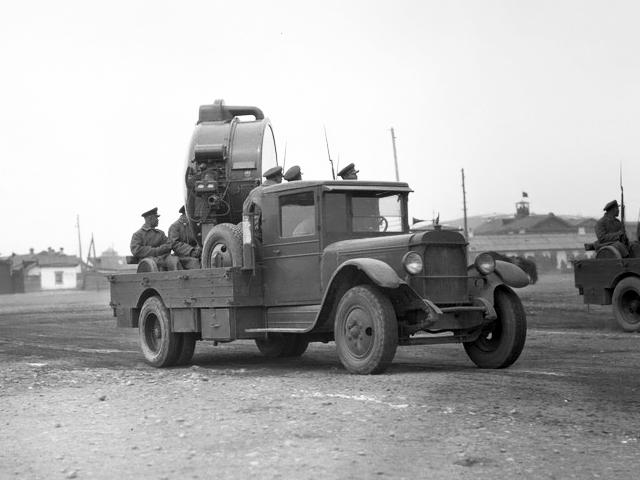
| Monday 16 April 1945 · Before dawn, local time | 1st Belorussian Front attacks | Oderbruch and Seelow Heights | Before dawn on 16 April, 1st Belorussian Front opened its attack from the Küstrin bridgehead with a massive artillery preparation. Searchlights were directed horizontally across the battlefield in an attempt to illuminate the route and disorient the defenders. Sources 1, 5, 6, 12 |
| Monday 16 April 1945 · Before dawn | 1st Ukrainian Front crosses the Neisse | The Neisse between Forst and Muskau | Konev's 1st Ukrainian Front attacked across the Neisse between Forst and Muskau under artillery fire and smoke. The German sector was less strongly held than the direct approaches at Seelow, and Soviet bridgeheads expanded during the first day. Sources 1, 5 |
| Monday 16 April 1945 · Afternoon | The tank armies enter before the breakthrough | 1st Belorussian Front | With the infantry still short of a clean break through the Seelow system, the 1st and 2nd Guards Tank Armies were ordered forward. Their columns entered roads and passages already carrying infantry, artillery, engineers and supply traffic. Sources 1, 5 |
| Tuesday 17 April 1945 · Second day | The defence still holds | Seelow sector | On the second day Soviet attacks narrowed onto the sectors around Seelow and south-east of Wriezen. German armoured reserves arrived late but helped prevent an immediate rupture of the principal line. Sources 1, 4, 5, 6 |
| Wednesday 18 April 1945 · Third day | The final defensive belt is breached | West of Wriezen and Seelow | By 18 April 1st Belorussian Front had broken ten to twelve miles into the German system in several sectors. Ninth Army still held fragments of a connected front, but the defensive belts were losing the depth that had made the opening resistance effective. Sources 1, 4, 5, 6 |
| Thursday 19 April 1945 · Fourth day | The Oder defence breaks | Seelow to Müncheberg | On 19 April the organised defence west of Seelow gave way. Soviet formations pushed toward Müncheberg and Fürstenwalde while Konev's armour continued north and west beyond the Spree. Sources 1, 6, 12 |
| Friday 20 April 1945 · Afternoon | Berlin comes under Soviet artillery fire | Eastern and northern Berlin approaches | From 20 April Soviet artillery began striking Berlin as 1st Belorussian Front approached from the east and north-east. The shelling marked the moment when the capital moved from the rear of the Oder battle into the ground campaign itself. Sources 1, 2, 7, 12 |
| Friday 20 April 1945 · Evening | 2nd Belorussian Front opens the northern battle | Lower Oder, north of Berlin | Rokossovsky's 2nd Belorussian Front attacked across the lower Oder after completing a rapid redeployment from the Baltic. Its start came later than the attacks by Zhukov and Konev because the front had farther to move and assemble. Sources 1, 5 |
| Saturday 21 April 1945 · Evening | Soviet troops reach the city | Berlin outer defence ring | On 21 April Soviet formations reached Berlin's outer defence belt and entered eastern and north-eastern districts. 2nd Guards Tank Army approached from the north while 3rd Shock, 5th Shock and 8th Guards Army formations pressed in from the east and south-east. Sources 1, 5, 12 |
| Sunday 22 April 1945 · Afternoon conference | The Steiner order collapses | Führerbunker | Hitler ordered Felix Steiner to attack south from the Finow Canal area and restore a front north of Berlin. The headquarters assigned to Steiner did not possess the divisions in the usable condition implied by the order: some units were tied down, others incomplete, and others still moving. Sources 1, 4 |
| Monday 23 April 1945 · Afternoon | Weidling is appointed | Berlin | On 23 April Hitler ordered LVI Panzer Corps into Berlin and placed its commander, Helmuth Weidling, over the eastern and south-eastern defence. He was subsequently made commandant of the entire Berlin Defence Area. Sources 1, 4, 11, 12 |
| Tuesday 24 April 1945 · Midday | The south-eastern ring closes | Bohnsdorf and the Teltow Canal | On 24 April forces of 1st Belorussian and 1st Ukrainian Fronts met around Bohnsdorf, closing the south-eastern side of the Berlin encirclement and isolating Ninth Army beyond the lake chain. Sources 1, 5 |
| Wednesday 25 April 1945 · Midday | Berlin is fully encircled | West of Berlin and Torgau | On 25 April Soviet spearheads met west of Berlin and completed the ring around the capital. The same day American and Soviet troops made contact on the Elbe near Torgau, physically dividing the remaining German-controlled territory. Sources 1, 2, 5 |
| Thursday 26 April 1945 · Morning | Ninth Army starts west | Halbe pocket | On 26 April Busse's Ninth Army began its breakout toward the Baruth–Zossen road and the routes leading toward Wenck's Twelfth Army. Artillery ammunition was close to exhaustion, and much of the promised air supply had been redirected to Berlin. Sources 1, 4 |
| Thursday 26 April 1945 · City battle | Assault detachments move inward | Tempelhof and the inner districts | From 26 April several Soviet armies pushed through the S-Bahn ring and into the built-up districts. 8th Guards Army advanced from the south, while 5th Shock and 3rd Shock Armies drove from the east and north toward the centre. Sources 1, 5, 11 |
| Thursday 26 April 1945 · Evening | Weidling proposes an organised breakout | Berlin Defence Area headquarters | As the defended area contracted, Weidling presented Hitler with a plan for the garrison to break west in organised groups rather than be destroyed in place. The proposal assumed that the remaining armour would lead the movement and that the troops would try to reach German forces outside the city. Sources 1, 4, 11 |
| Friday 27 April 1945 · Evening | The defended area contracts | Central Berlin | By the evening of 27 April Soviet armies had compressed the German-held area into a narrow east–west strip through the centre and western districts. Communications between sectors were increasingly unreliable and local ammunition shortages were becoming decisive. Sources 1, 4, 5, 7, 12 |
| Saturday 28 April 1945 · Late night | Heinrici is removed as the relief front collapses | Army Group Vistula | By 28 April the northern German front was disintegrating and the relief schemes around Berlin had lost nearly all operational substance. Heinrici and Manteuffel were withdrawing forces to prevent their commands from being overrun while Keitel and Jodl continued demanding counterattacks. Sources 1, 4 |
| Sunday 29 April 1945 · Before dawn | The Spree crossing | Moltke Bridge and the government district | Before dawn on 29 April assault units of 3rd Shock Army forced the Moltke Bridge area and fought through the Interior Ministry toward Königsplatz and the Reichstag. The Spree crossing brought the government district into the immediate ground battle. Sources 1, 5 |
| Sunday 29 April 1945 · Outside Berlin | Part of Ninth Army reaches Wenck | Beelitz and the Elbe approaches | By 29 April groups from Ninth Army had forced passages through the Halbe pocket and reached elements of Twelfth Army around Beelitz. The movement was fragmented and costly; much of Ninth Army had already been killed, captured or broken into smaller groups. Sources 1, 4 |
| Monday 30 April 1945 · Around midday | The last relief report leaves no army coming to Berlin | Führerbunker | By 30 April the answer to Hitler's repeated questions about Wenck, Ninth Army and the northern relief forces was unambiguous. Wenck's spearhead had stopped south of Schwielow Lake, Ninth Army was encircled and fragmenting, and the other proposed thrusts had made no progress toward Berlin. Sources 1, 11 |
| Monday 30 April 1945 · Afternoon | The Reichstag assault | The Reichstag | On 30 April the 150th and 171st Rifle Divisions attacked the Reichstag after fighting through the government district. Soviet troops entered the building during the evening, but German defenders remained in parts of the structure and surrounding positions overnight. Sources 1, 5, 9 |
| Monday 30 April 1945 · About 15:30 | Hitler dies | Führerbunker | Between about 15:00 and 15:30 on 30 April Adolf Hitler and Eva Braun died by suicide in the Führerbunker while Soviet troops fought in the government district. Their bodies were carried into the Chancellery garden and burned as far as the available fuel allowed. Sources 1, 4, 11 |
| Tuesday 1 May 1945 · 01:00 | Krebs asks for an armistice | 8th Guards Army command post | At about 01:00 on 1 May General Hans Krebs crossed the lines to Chuikov's 8th Guards Army command post with news of Hitler's death and a proposal for an armistice. The bunker leadership wanted negotiations that might allow the successor government to continue functioning. Sources 1, 4, 5, 11 |
| Tuesday 1 May 1945 · Night | The breakouts begin | Tiergarten, Spandau and northern Berlin | During the night of 1–2 May groups from the government district, Waffen-SS sectors and other isolated commands attempted to move west through the Tiergarten, across the Spree and toward Spandau. Sources 1, 4, 11 |
| Wednesday 2 May 1945 · Before dawn | Weidling crosses the lines | Tempelhof | At about 05:00 on 2 May Weidling crossed the Soviet lines and surrendered the city. He signed an order stating that further resistance was senseless and instructing the remaining German soldiers in Berlin to cease fighting. Sources 1, 4, 10, 11, 13 |
| Wednesday 2 May 1945 · Afternoon | The city battle ends | Berlin | By the afternoon of 2 May organised resistance in Berlin had ended as the remaining command posts, flak towers and isolated groups surrendered, dispersed or attempted to escape. Sources 1, 4, 7, 9, 10, 13 |




.jpg)

.jpg)


.jpg)
