Skip to content
WW2 Theatres Theatres of the Second World War
Home / The Battle of the Atlantic / The March Crisis and Black May
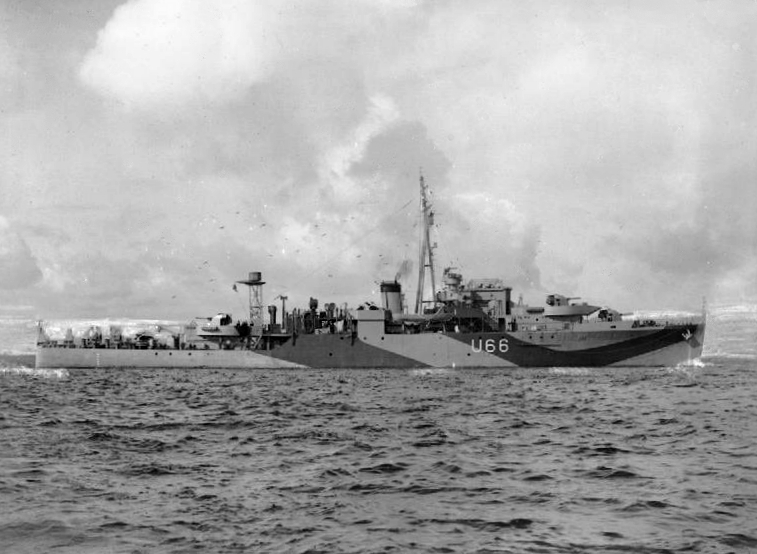
Royal Navy anti-submarine sloop HMS Starling operating in 1943.

The March Crisis and Black May

March to May 1943 · The North Atlantic convoy routes

March 1943 brought heavy losses to Atlantic convoys HX 229 and SC 122 as German submarines exploited intelligence and the mid-ocean air gap. Eight weeks later the battle around ONS 5 cost merchant ships dearly but inflicted serious losses on attacking U-boats. By 24 May, Dönitz had withdrawn the main submarine groups from the North Atlantic convoy lanes.

Royal Navy official photographer / Imperial War Museums FL 19299 · UK Crown copyright expired

This operation sits inside The Battle of the Atlantic, where it appears as a single entry. This page carries it in full.

BACK TO THE BATTLE OF THE ATLANTIC
SPAN
March–May 1943Convoy losses in March and escalating German U-boat losses in May.
MARCH CRISIS
HX 229 and SC 122Roughly twenty merchant ships were sunk in the related March running battles.
ONS 5
13 merchant ships lostThe convoy was attacked from 28 April through 6 May; several German U-boats also were sunk.
SC 130
0 merchant ships sunkGerman submarines suffered losses in the May battle.
GERMAN DECISION
24 May 1943Dönitz ordered the main U-boat concentrations away from North Atlantic convoy routes.
Marker affiliation Allied Axis Other / contested
Map layers

01 / 15

Why March 1943 Endangered the Atlantic Lifeline

Convoy HX 229 and SC 122 met concentrated U-boat groups in the central North Atlantic as Germany exploited intercepted routing information and scarce Allied air cover.

By early 1943, German submarines were converging against convoy routes that carried much of Britain’s food, oil, troops and war matériel. Allied defenses had improved since 1940, but escort vessels still had to cover immense distances, and air patrols could not reach every central-ocean convoy. German commanders worked to place many boats across the likely routes, keeping contact by radio so others could converge. When a convoy came into a patrol line, a single sighting could expose it to successive attacks over several nights.

For the Allied command the March battles arrived amid a widening war, with shipping committed to the British Isles, the Mediterranean and Soviet supply routes. A shortfall in escorts or a diversion that failed could leave freighters exposed for days. German naval intelligence was also reading some Allied communications. The attacks on HX 229 and SC 122 therefore joined a practical problem of distance and escort numbers to an intelligence contest in which the German side sometimes learned where to put its submarines.

How HX 229 and SC 122 Were Caught in March

The two convoy battles between 16 and 20 March exposed the limits of the escort screen in mid-ocean.

In the second half of March, the fast convoy HX 229 and the slower SC 122 entered neighboring waters of the North Atlantic. U-boats that had been positioned across their routes found both convoys. The attackers could shadow, radio their positions and close from several bearings; escort commanders were forced to divide their attention among defending the merchant columns, hunting underwater contacts and picking up survivors. Heavy weather and gaps in air cover made an already difficult task harder.

The surviving loss registers and official accounts differ slightly in how they allocate ships and dates, but agree on the scale of the defeat: roughly twenty merchant vessels were destroyed in attacks associated with the two convoys. During the following days RAF Coastal Command aircraft attacked submarines and helped relieve pressure on the approaches, yet aircraft operating at their range limits could spend little time over a convoy. German losses in that particular engagement were much smaller than the British and Canadian merchant losses. It was an alarming exchange rate rather than a simple failure of one escort officer.

What German Signals Intelligence Revealed About Convoy Movements

German B-Dienst decrypts helped position submarine groups, while Allied traffic analysis and direction finding improved escort warning.

German naval signals intelligence, generally called B-Dienst, intercepted and read portions of Allied traffic whose content or routing implications exposed convoy movements. Contemporary German operations used this information alongside U-boat sightings to shift patrol groups across the Atlantic. A decrypted diversion message influenced the intercept of HX 229, demonstrating that simply changing a convoy course could fail if the adversary understood the instruction.

The intelligence advantage changed repeatedly. Allied cryptanalysts recovered access to the German four-rotor naval Enigma traffic in December 1942, but intelligence could still arrive too late to move escorts across hundreds of miles of open ocean. High-frequency direction finding, radar contacts, aircraft sightings and decrypted communications acquired their full value when ships and aircraft could act on them. In 1943 the Allied network was beginning to join those clues into a more reliable moving shield for individual convoys.

How Long-Range Aircraft and Escort Groups Changed the Battle

Liberators, shipborne radar and trained close escorts brought pressure to the U-boats in waters previously difficult to patrol.

RAF Coastal Command used Liberator patrols to extend anti-submarine coverage westward from Britain and Iceland. Some aircraft could attack boats on the surface and force others to submerge, slowing the pursuit of a convoy even when no submarine was destroyed. Shipboard HF/DF could locate a transmitting boat, while radar and sonar helped an escort make and hold contact at night or in poor visibility. Training and the ability to distinguish a genuine attack from a diversion remained as important as the devices themselves.

Extra support groups gave the commanders a means of following a U-boat contact without stripping every merchant ship of its close defense. These groups could reinforce a convoy after an escort became short of ammunition or fuel, although bad weather could prevent replenishment. Technical advantages therefore accumulated through operational arrangements: the escorts had to be in the right place, communicate clearly, preserve enough fuel for a running battle and exploit aircraft when they reached the convoy.

ONS 5: How Bad Weather and Fuel Shortages Shaped the Battle

The slow westbound convoy left Britain in April and fought successive attacks through the first week of May.

Convoy ONS 5 sailed west into persistent gales. Commander Peter Gretton’s B7 escort group was equipped to screen the freighters and make underwater attacks, but strong winds scattered ships and increased fuel consumption. A convoy oiler could be of little help if the sea was too rough for a safe replenishment. On 3 May Gretton was obliged to take his destroyers away to refuel, leaving other escort vessels under the continuing pressure of German patrol groups.

Fog and darkness transformed the final attacks into a close contest. German submarines pursued and penetrated the merchant columns, and thirteen merchant ships were eventually lost. Yet the escorts were now destroying submarines at a rate that made the German attack increasingly expensive. Official post-battle reports credited a substantial number of effective anti-submarine actions near the convoy, while later compilations distinguish between submarines killed by the immediate escorts and aircraft or other ships in the broader area. The confidence that the convoy could be fought through had survived an exceptionally costly test.

SC 130 Showed the Changed Odds in Mid-May

In May, concentrated German attacks could be broken up before they inflicted merchant losses.

Convoy SC 130 sailed east across the North Atlantic in mid-May, passing through waters where German submarines still assembled in substantial numbers. Its escorts and supporting aircraft detected and attacked submarines that tried to shadow or intercept the merchant columns. The German boats lost several submarines during the operation, while the convoy passed without a merchant ship being sunk.

The change is clearer when the two battles are considered together. The U-boat groups could still find convoys, and their crews continued to take considerable risks on the surface and underwater. But locating a convoy no longer guaranteed that the boats could close, maintain contact and attack repeatedly. Convoy defense now imposed a higher cost on every stage of the German approach. Loss of trained crews and submarines made it difficult to keep the same concentration of attackers at sea.

The Commanders Who Directed the Atlantic Escort and U-boat Campaign

Decisions in Liverpool, Ottawa, Coastal Command and German submarine headquarters shaped the May battles.

The Allied system was distributed among the Royal Navy’s Western Approaches Command, Canadian ocean escort authorities, RAF Coastal Command and an expanding American anti-submarine organization. Close escort officers fought with the information and ships immediately at hand; headquarters made the larger decisions about reinforcements, air priorities and the routes to be defended.

Karl Dönitz directed the German submarine effort while field commands in occupied France managed boats near their bases. Flotilla officers prepared and dispatched replacements as the loss rate climbed. The widening struggle between maintaining a submarine concentration and keeping crews alive increasingly shaped the orders sent into the Atlantic.

Max K. Horton
Admiral, Royal Navy

Max K. Horton

Commander-in-Chief, Western Approaches

Horton directed the escort war from Western Approaches Command at Liverpool, allocating escorts and assessing the reports that arrived after each convoy battle. His July 1943 ONS 5 review acknowledged the hard limits of fuel and weather while arguing for strong close screens and supporting groups. The convoy battle reports show a headquarters concerned with usable tactics and scarce ships rather than a single dramatic encounter.

D. C. Oulds / Admiralty Official Collection · UK Crown copyright, public domain · Source
John C. Slessor
Air Marshal, Royal Air Force

John C. Slessor

Air Officer Commanding-in-Chief, Coastal Command

Slessor took command of RAF Coastal Command in February 1943 as the maritime air war entered a more offensive phase. His aircraft had to search very large stretches of ocean with limited endurance, particularly near the central Atlantic air gap. By coordinating long-range Liberators, radar and surface escorts, Coastal Command increasingly disrupted boats that needed to run on the surface to reach a convoy.

RAF official photographer, F/O Stannus / IWM · UK Crown copyright, public domain · Source
Peter W. Gretton
Commander, Royal Navy

Peter W. Gretton

Senior officer, Escort Group B7, ONS 5

Gretton commanded the B7 escort group that accompanied ONS 5 into the Atlantic. He fought repeated submarine contacts while trying to keep his destroyers adequately fueled in severe weather. The lack of an opportunity to refuel at sea forced him to detach with part of the escort before the final close battle. Contemporary Admiralty reports discuss that decision and the burden it placed on the ships that remained.

Royal Navy official wartime photograph / Imperial War Museums A 20147 · 1943 UK Crown photograph · Source
Leonard W. Murray
Rear Admiral, Royal Canadian Navy

Leonard W. Murray

Commander, Canadian Northwest Atlantic

Murray was responsible for the Canadian northwest Atlantic command through which convoys approached or departed the Canadian coast. His operational problem was to assemble and support escort forces, move convoys through weather and coordinate with the British and American sides of the ocean. The March and May actions demonstrated the need for continuity of escort coverage through the handover between national commands.

Department of National Defence, Canada · public domain · Source
Frederic John Walker
Captain, Royal Navy

Frederic John Walker

Commander of 2nd Support Group

Walker led an anti-submarine support group centred on HMS Starling. His group could be sent toward a suspected submarine contact without accompanying one convoy for the entire crossing, allowing it to hunt more persistently. Its spring operations formed part of the wider effort to make submarine approaches costly, complementing the close escort screen rather than replacing it.

C. H. Parnall / Admiralty official photographer, IWM A21313 · UK Crown copyright, public domain · Source
Karl Dönitz
Grand Admiral, Kriegsmarine

Karl Dönitz

Commander-in-Chief, German Navy; U-boat operations

Dönitz remained personally closely engaged in submarine operations after becoming commander-in-chief of the German navy in January 1943. His staff formed large patrol groups across convoy routes in March, seeking to concentrate attacks before Allied escorts could respond. May destroyed the premise of acceptable submarine losses, prompting his 24 May withdrawal of the main wolfpacks from the North Atlantic convoy routes.

German Federal Archives Bild 146-1976-127-06A · CC BY-SA 3.0 DE · Source
Hans-Rudolf Rösing
Kapitän zur See, Kriegsmarine

Hans-Rudolf Rösing

Führer der U-Boote West

Rösing served as commander of the submarine force in the western bases of occupied France, linking boats returning from the Atlantic with the German naval command structure ashore. His task involved deployments, readiness and the management of ports that supported the patrol cycle. Those bases faced a growing need to replace lost boats and experienced crews after the heavy submarine losses of May.

Friedrich Magnussen / Stadtarchiv Kiel · CC BY-SA 3.0 DE · Source
Heinrich Lehmann-Willenbrock
Korvettenkapitän, Kriegsmarine

Heinrich Lehmann-Willenbrock

Commander, 9th U-boat Flotilla, Brest

Lehmann-Willenbrock directed the 9th Flotilla at Brest during the March–May 1943 campaign. His work covered the practical cycle of fitting out submarines, dispatching boats and receiving survivors or damaged vessels. While the central decisions on wolfpack concentration were made at higher level, the flotillas bore the immediate consequences of the sharp decline in boats returning to their bases.

Schwich / Bundesarchiv Bild 101II-MW-3483-05 · CC BY-SA 3.0 DE · Source
Werner Henke
Kapitänleutnant, Kriegsmarine

Werner Henke

Commanding officer of U-515

Henke commanded the Type IXC submarine U-515, whose operations in spring 1943 showed that German attacks persisted beyond the central North Atlantic convoy routes. Around the turn from April to May his boat attacked convoy TS 37 off West Africa. That success occurred outside the main HX 229, ONS 5 and SC 130 battles and illustrates the geographic distinction between the May reversal in convoy fighting and the continued global submarine war.

German Federal Archives Bild 146-1980-115-23A · CC BY-SA 3.0 DE · Source
Herbert Schultze
Korvettenkapitän, Kriegsmarine

Herbert Schultze

Flotilla commander, 3rd U-boat Flotilla, La Rochelle

Schultze had commanded the 3rd U-boat Flotilla at La Rochelle since 1941 and was responsible for a major French Atlantic submarine base during the spring 1943 crisis. He coordinated the readiness and departure of submarines returning to patrol as losses at sea rose. The work of the flotilla was a different command burden from Dönitz’s at headquarters: damaged boats, supplies, trained crews and repair capacity determined how quickly German command could replace the submarines lost in convoy attacks.

Lothar-Günther Buchheim / Bundesarchiv Bild 101II-MW-3520E-26A · CC BY-SA 3.0 DE · Source

The Aircraft, Escort Ships and Submarines Fighting in 1943

Escorts and aircraft could keep a U-boat submerged long enough to lose a convoy; submarines sought brief surface opportunities to attack.

Victory depended on a combination of ships and machines rather than any one invention. Destroyers, frigates, corvettes and sloops had differing endurance and armament, while the newly useful escort carriers gave aircraft access to remote stretches of sea. The German Type VII boat was compact enough for North Atlantic patrols but exposed when surfaced under radar or air observation. Against a large escorted convoy, the U-boat commander had to weigh the prospect of a torpedo attack against the risk of immediate counterattack.

HMS Duncan (D99)
HMS Duncan photographed in March 1943.
Imperial War Museums FL 10161 / Royal Navy · UK Crown copyright, public domain · Source

HMS Duncan (D99)

Royal Navy D-class destroyer · 1,375 tons standard

Gretton commanded ONS 5’s B7 group from Duncan. Destroyers had the speed to rush to contacts but a long Atlantic chase used fuel quickly; rough seas could make the convoy oiler useless. Duncan and other destroyers left the convoy to refuel on 3 May, leaving the frigate and corvettes to face the final attacks.

HMS Starling (U66)
HMS Starling underway in 1943.
Royal Navy official photographer, Imperial War Museums FL 19299 · UK Crown copyright expired · Source

HMS Starling (U66)

Royal Navy Black Swan-class sloop · anti-submarine escort

Starling was a purpose-built escort and the leader of Walker’s 2nd Support Group. Its radar, sonar, guns and depth-charge weapons enabled persistent pursuit of submarine contacts independently of a merchant convoy’s route. This kind of reinforcing group became especially valuable once operational command could move extra escorts toward a threatened convoy.

USCGC Spencer (WPG-36)
USCGC Spencer, circa 1943.
United States Coast Guard · public domain · Source

USCGC Spencer (WPG-36)

United States Coast Guard Treasury-class cutter · ocean escort

Spencer was part of the American ocean escort effort and engaged U-175 on 17 April 1943. After a depth-charge attack the U-boat surfaced, and the cutter’s men also rescued German survivors. The engagement shows how an escort combining sonar prosecution, gunfire and survivor recovery could remove a submarine while remaining committed to convoy protection.

Consolidated Liberator Mk III
RAF Coastal Command Liberator Mk III of No. 120 Squadron at RAF Aldergrove, April 1943; the type helped extend coverage into the Atlantic air gap.
RAF official photographer / IWM CH 18031 · UK Crown copyright, public domain · Source

Consolidated Liberator Mk III

RAF Coastal Command long-range bomber · maritime patrol

Long-range Liberators helped reduce the exposed central-Atlantic air gap. A submarine that sighted an aircraft often had to dive and thereby lose time and speed needed to overtake a convoy. Radar-assisted search and depth-charge attacks also made a surfaced U-boat vulnerable at night or in poor visibility, provided patrol aircraft could reach the battle area.

U-175
German submarine U-175 surfacing under attack on 17 April 1943.
United States Coast Guard · public domain · Source

U-175

German Type IXC submarine · long-range patrol boat

U-175 had sufficient endurance for Atlantic convoy attacks but was exposed when caught near a defended convoy in April. USCGC Spencer used sonar and depth charges to force the boat to the surface on 17 April. Its loss and the recovery of many crew members left documentary and photographic evidence of submarine warfare at very close range.

U-569
U-569 under attack from USS Bogue aircraft on 22 May 1943.
United States Navy · public domain · Source

U-569

German Type VIIC submarine · North Atlantic patrol boat

U-569 represents the smaller standard German Atlantic submarine. Its crew relied on surface speed to approach shipping, yet the risk of an aircraft finding the boat had grown sharply. On 22 May an Avenger from USS Bogue attacked the boat, which was subsequently lost; the action offered visible evidence of a new kind of long-range escort-carrier air cover.

Hedgehog anti-submarine mortar
Hedgehog launcher fitted to HMS Westcott; period equipment photograph.
Admiralty official photographer / IWM A30999 · UK Crown copyright, public domain · Source

Hedgehog anti-submarine mortar

Royal Navy 24-spigot forward-projecting contact-charge weapon

Hedgehog gave suitable escorts a means of firing explosive projectiles ahead of the ship while maintaining a sonar approach, avoiding some of the disruption associated with dropping depth charges directly over a target. The illustrated launcher was photographed on HMS Westcott; it identifies the weapon type used in the wider Atlantic campaign, not the exact ship or date of an ONS 5 attack.

USS Bogue (ACV-9)
USS Bogue during trials on 3 November 1942; later used in Atlantic anti-submarine operations.
Lt W. O. Moore / U.S. Navy, Naval History and Heritage Command NH 106563 · public domain · Source

USS Bogue (ACV-9)

United States Navy Bogue-class escort carrier · aircraft escort

Bogue carried aircraft that could search ahead of convoys and attack surfaced submarines in waters beyond ordinary shore-based air patrols. On 22 May aircraft operating from her attacked U-569, demonstrating the risk a U-boat faced when carriers accompanied anti-submarine groups. The ship photograph dates from her workup in 1942, before the May 1943 patrol.

Why Dönitz Withdrew the North Atlantic Wolfpacks on 24 May

The German withdrawal concerned organized concentration against North Atlantic convoys, while other submarine operations continued.

The May loss returns made it difficult for Dönitz to continue mass attacks against defended North Atlantic convoys on the same terms. Escorts and aircraft were finding and destroying submarines before the attackers could inflict enough merchant losses to justify the mounting casualties. On 24 May he directed the withdrawal of the principal packs from those routes while seeking other waters and methods of attack.

That decision marked a change in the balance of the convoy war, not its end. German submarines remained active across the Atlantic and elsewhere, and Allied shipping still needed escorts. What had altered was the cost of a sustained concentration of U-boats in the ocean passages connecting North America with Britain. New vessels and trained crews would be required to recover an advantage the German command had expected to retain for longer.

Merchant Losses and the German Submarine Toll

March convoy losses and May submarine losses belong to different statistical categories and must be compared over matched periods.

British and American contemporary tallies sometimes separate convoy losses from independent ships, and they may assign a sinking to the date of attack or the date on which a vessel finally went down. For the HX 229 and SC 122 operations the most defensible summary is roughly twenty merchant vessels lost during the March running battle. The battle around ONS 5 cost thirteen merchant ships and several German submarines; published submarine totals depend on the geographic and operational boundary used.

For May 1943, authoritative histories report more than forty German U-boats lost across all operating areas, a sharp rise from the preceding months. The tally included boats destroyed far beyond the battles immediately surrounding ONS 5 and SC 130. Individual death and survivor totals are also incomplete or compiled from later prisoner records; the figures should be read as losses of ships or submarines within defined intervals, not a single interchangeable measure of human casualties.

About 20

Merchant ships lost around HX 229 and SC 122

March 1943 convoy-battle losses. Totals vary slightly with event dates and how nearby attacks are allocated.

13

Merchant vessels sunk from ONS 5

The slow westbound convoy lost thirteen ships in the running battle of 28 April–6 May 1943.

0

Merchant ships lost from SC 130

The mid-May eastbound convoy survived German concentration attacks without a merchant sinking.

More than 40

German submarines lost in May 1943

Across all operational areas in May, German U-boat losses rose sharply; the count should not be assigned solely to ONS 5.

24 May

German Atlantic withdrawal order

Dönitz pulled the principal groups from the heavily defended North Atlantic convoy lanes; the wider submarine war continued.

Contemporary War Diaries and Official Atlantic Campaign Histories

British escort reports, wartime RAF reviews, German naval signals records, and later official operational histories preserve different sides of the March–May campaign.

Admiral Horton’s 10 July 1943 report on ONS 5 examines close escort strength, the fuel limitations faced by Gretton’s B7 group and the use of supporting ships. Gretton’s HMS Duncan report of proceedings and the HMS Pink account preserve the difficulties of keeping station, tracking submarines and rejoining scattered convoy ships in heavy seas. The RAF’s March 1943 Coastal Command Review records contemporary patrols, sightings and aircraft attacks during the battles for HX 229 and SC 122.

The U.S. Navy’s History of Convoy and Routing (1945) provides convoy passages and loss tables; Stephen Roskill’s The War at Sea, volume II relates them to the wider escort effort. The U.S. Navy’s German Naval Communications Intelligence history establishes the importance of B-Dienst to the March intercepts. Contemporary action claims were later reconciled against losses from both sides, which explains some differences among published submarine tallies.

  1. History of Convoy and Routing, 1945, United States Navy, 1945Naval History and Heritage Command
  2. Coastal Command Review, Number 11: March 1943, Royal Air Force Coastal Command, March 1943RAF Air Historical Branch
  3. Report of Proceedings on Convoy O.N.S.5, Commander-in-Chief Western Approaches, Admiral Sir Max Horton, 10 July 1943U-boat Archive: British Admiralty report
  4. Report on Convoy O.N.S.5: Close Escort, Group B7, Commander Peter Gretton, 1943U-boat Archive: British escort report
  5. Report on Convoy O.N.S.5: Commodore (D) Western Approaches, Commodore (D), Western Approaches, 1943U-boat Archive: Admiralty dispatch
  6. Battle of the Atlantic, volume III: German Naval Communications Intelligence, U.S. Navy communications intelligence historiesNaval History and Heritage Command
  7. The Atlantic Continued, 1943, Naval History and Heritage CommandU.S. Navy, official historical summary
  8. Battle of the Atlantic: H-019-4, Black May, Samuel J. CoxNaval History and Heritage Command
  9. Convoy ONS-5: convoy and U-boat battle record, uboat.net editorial staffuboat.net, convoy database
  10. The War at Sea, 1939–1945, Volume II: The Period of Balance, Stephen W. Roskill, 1956HMSO, British official history
  11. RAF in the Maritime War, Vol IV: The Atlantic and Home Waters, Feb 1943–May 1944, Air Ministry Air Historical BranchRoyal Air Force official campaign narrative
  12. Convoy HX-229: convoy battle record, uboat.net editorial staffuboat.net
  13. Convoy SC-122: convoy battle record, uboat.net editorial staffuboat.net
  14. Battle of Convoy ONS5, 28 April–6 May 1943, J. Rickard, 2008History of War
  15. Convoy SC130, 17–20 May 1943, J. Rickard, 2008History of War
  16. U.S. Tenth Fleet: First Activation and the Atlantic Antisubmarine Campaign, U.S. Tenth FleetU.S. Naval Forces Cyber Command
  17. U-569: Patrol and Loss Documentation, U-boat ArchiveGerman and Allied naval record collection
  18. USS Bogue (ACV-9): Escort Carrier Photographic Record, NavSource volunteers, archival attributionsNavSource Naval History
  19. HMS Vidette and Convoy ONS.5: Contemporary Action Accounts, V and W Destroyer AssociationRoyal Navy destroyer association
  20. Convoy ONS.5: Appendix A, HMS Pink escort narrative, Commanding officer HMS Pink, May 1943U-boat Archive, original Admiralty report
  21. The Battle of the Atlantic, Royal Navy historical editorial officeRoyal Navy
  22. Convoy HX-228 and U-boats U-444 and U-432: March 1943 action, U.S. Navy Naval History recordsU.S. Navy photo collection
  23. Sinking of the German submarine U-175, 17 April 1943, USCG photo 26-G-1512, United States Coast GuardU.S. Navy National Museum collection
  24. Attack on U-569 in the North Atlantic, 22 May 1943, U.S. Navy photographerU.S. Navy photo collection
  25. The Battle of the Atlantic, 1942–43, Royal Canadian Air Force historical editorial staffCanadian Department of National Defence
  26. Seekrieg 1943, Mai: German naval warfare chronology, Jürgen Rohwer and collaboratorsWürttembergische Landesbibliothek Stuttgart
  27. Peter Gretton: papers and career record, Royal Museums GreenwichNational Maritime Museum Greenwich
  28. The War of Communications Intelligence against the U-boats, United States NavyNational Security Agency archival collection
  29. German U-boat Command and Commanders, 1943, uboat.net staffuboat.net biographical database
  30. Herbert Schultze: 3rd U-boat Flotilla command record, uboat.net editorsuboat.net
  31. HMS Vidette and B7 Escort Group: identified Royal Navy photograph A 20147, 7 November 1943, Royal Navy official photographer, 1943Imperial War Museums A 20147; V & W Destroyer Association collection
  32. Commander Peter Gretton, HMS Duncan: Report of Proceedings, Convoy ONS 5, April–May 1943, Commander Peter W. Gretton, Royal Navy, 1943Admiralty report preserved by U-boat Archive
Operation chronologyDates, locations and sourced event summaries
DateEventLocationSummary
1 Mar 1943 · North Atlantic campaignGerman Submarine Groups Assemble Against the Convoy RoutesCentral North Atlantic

The German submarine command concentrated boats across likely eastbound convoy routes in March 1943, seeking to turn a single sighting into attacks by many submarines. The Allied close escort system could defend individual convoys, but air cover remained thin in parts of the mid-Atlantic and spare escort vessels could take many hours to reach a threatened column.

Sources 1, 2, 6, 10
10 Mar 1943 · North Atlantic campaignHMS Aconit Destroys U-444 and U-432 as HX 228 Is AttackedNorth Atlantic, convoy HX 228

Convoy HX 228 fought German submarines on 10–11 March 1943. The escort destroyer HMS Harvester was lost during the battle, while the Free French corvette Aconit attacked and destroyed U-444 and U-432. The action showed how a convoy could suffer badly yet still inflict losses on attackers when escorts maintained contact.

Sources 2, 10, 22
16 Mar 1943 · North Atlantic campaignGerman Intelligence Helps Bring HX 229 and SC 122 Into RangeNorth Atlantic, southwest of Iceland

On 16 March the convoy routes of HX 229 and SC 122 drew German patrol groups toward neighboring parts of the Atlantic. B-Dienst interception and decryption of Allied messages contributed to the German commander’s understanding of convoy movements, while reports from boats on the surface fixed positions for others to follow.

Sources 1, 2, 6, 12, 13, 28
17 Mar 1943 · North Atlantic campaignU-boat Attacks Inflict Heavy Losses on HX 229 and SC 122Central North Atlantic

From 16 to 20 March U-boats mounted repeated attacks against HX 229 and SC 122, sinking roughly twenty merchant vessels across the two battles. Escorts fought while keeping their remaining merchants together, but submarines that kept contact could renew the attack after dark and force the defenders to divide their attention.

Sources 1, 2, 10, 12, 13, 25
20 Mar 1943 · North Atlantic campaignAircraft Attacks and Escorts Break Up the March PursuitWestern Approaches, east of the mid-Atlantic gap

By 20 March the Germans were forced to break off the sustained pursuit of HX 229 and SC 122. RAF Coastal Command aircraft increased their presence as the convoy movements approached more accessible waters, while escorts continued counterattacks on suspected submarine positions. The ships still afloat proceeded toward Britain with a substantial toll in crews and cargo.

Sources 1, 2, 10, 11
2 Apr 1943 · North Atlantic campaignEscorts Sink U-124 After Its Final Atlantic AttacksNorth Atlantic, west of Portugal

U-124, commanded by Johann Mohr, was sunk by the British escorts HMS Stonecrop and HMS Black Swan on 2 April 1943 after operating against convoy traffic in the eastern Atlantic. The destruction of an experienced U-boat and crew belonged to a growing sequence of losses that German submarine headquarters had to replace while continuing convoy operations.

Sources 7, 8, 10
17 Apr 1943 · North Atlantic campaignUSCGC Spencer Forces U-175 to the SurfaceNorth Atlantic, west of Ireland

On 17 April the U.S. Coast Guard cutter Spencer attacked U-175 during ocean escort operations west of Ireland. Depth charges forced the submarine to surface; the escorts fired upon it and then recovered German survivors. The sinking was photographed by American servicemen and became a clearly documented example of the risks faced by a U-boat near a well-defended convoy.

Sources 7, 8, 23
28 Apr 1943 · North Atlantic campaignU-boats Establish Contact With Convoy ONS 5North Atlantic westbound route

Convoy ONS 5, a slow westbound group of merchant ships, came under German submarine pressure from 28 April as U-boats began to shadow and attack it in the North Atlantic. Commander Peter Gretton’s B7 escort group maintained a close screen with destroyers, a frigate and corvettes, attempting to keep contacts outside the merchant columns while the ships navigated difficult seas.

Sources 3, 4, 5, 9, 14, 19
3 May 1943 · North Atlantic campaignFuel Shortage Forces Gretton to Leave ONS 5North Atlantic, ONS 5 convoy

At 1400 on 3 May 1943, Commander Peter Gretton handed close-escort command for ONS 5 to HMS Tay and departed in HMS Duncan for St. John’s, Newfoundland. The destroyer’s fuel was critically low after days of severe weather prevented replenishment at sea. Gretton had reported the problem to the Admiralty earlier that morning; the convoy remained exposed to German submarines in the central Atlantic.

Sources 3, 4, 5, 19, 20, 32
5 May 1943 · North Atlantic campaignONS 5 Suffers Its Hardest Attacks in Fog and DarknessNorth Atlantic, toward Newfoundland approaches

On the nights of 4–6 May ONS 5 faced concentrated U-boat attacks in poor visibility. Thirteen merchant ships were lost during the larger action, but the escorts increasingly detected and destroyed submarines close to the convoy. The fighting involved a continuing sequence of sonar contacts, surface sightings, sharp course changes and attacks while the merchant ships struggled to remain together.

Sources 3, 4, 5, 9, 10, 14, 20
6 May 1943 · North Atlantic campaignThe ONS 5 Battle Ends With Heavy Losses on Both SidesNorth Atlantic, west of 40 degrees W

By 6 May the running battle for ONS 5 had ended. Thirteen merchant ships had been sunk and the convoy had suffered a difficult passage, but the German submarine groups lost a number of boats that was severe by their previous standards. Allied escorts had successfully disrupted the final close attacks and kept the remaining merchant ships moving west.

Sources 3, 4, 5, 9, 14, 21
17 May 1943 · North Atlantic campaignSC 130 Meets a German Patrol Group in the North AtlanticNorth Atlantic, convoy SC 130

From 17 to 20 May German submarines assembled against the eastbound convoy SC 130. Escort ships and supporting aircraft maintained aggressive contact and launched attacks on submarines that tried to shadow the merchant formation. The Germans suffered several submarine losses during the operation and the convoy escaped without a merchant ship being sunk.

Sources 7, 10, 15, 21
20 May 1943 · North Atlantic campaignThe U.S. Navy Establishes Tenth Fleet for Anti-submarine CoordinationWashington, D.C., United States

On 20 May the United States established the Tenth Fleet as an organization to coordinate the anti-submarine campaign, including intelligence, air and sea operations, and the routing and protection of shipping. It was a headquarters and coordination body rather than a fleet of warships under one operational commander at sea.

Sources 7, 16
22 May 1943 · North Atlantic campaignUSS Bogue Aircraft Attack and Sink U-569North Atlantic

On 22 May aircraft from the U.S. escort carrier USS Bogue attacked the German Type VIIC submarine U-569 in the North Atlantic. The submarine was lost after attacks by carrier aircraft; the action was photographed and is preserved in U.S. Navy archival records. Escort-carrier aviation made a surfaced submarine vulnerable in waters where shore-based aircraft could spend little time.

Sources 7, 8, 17, 18, 24
24 May 1943 · North Atlantic campaignDönitz Withdraws the North Atlantic U-boat GroupsGerman naval headquarters, Berlin

On 24 May Dönitz ordered the principal U-boat groups to withdraw from the North Atlantic convoy routes after the sharp rise in German submarine losses. The command judged that maintaining large concentrations against well-protected convoys would continue to consume boats and trained crews faster than they could inflict useful damage on merchant shipping.

Sources 7, 8, 10, 21, 26

Images are credited individually to their originating naval or air archives. Wikimedia Commons file-page records provide the corresponding usage terms. Map arrows represent the operational pattern of convoy movements rather than the exact tracks of individual ships.