| Sunday 10 September · Morning | Montgomery puts the plan to Eisenhower | Brussels airfield | Montgomery met Eisenhower at Brussels and argued for concentrating Allied resources on a northern thrust through the Netherlands. Eisenhower approved Market Garden and gave the operation high supply priority while the Allied armies were still working with long supply lines from Normandy. Sources 1, 5 |
| Tuesday 12 September · — | The airborne force is divided across successive lifts | First Allied Airborne Army, Sunninghill Park | Transport aircraft, glider capacity, daylight and crew-rest requirements prevented the entire airborne force from arriving in one lift. The plan therefore spread divisions and supporting weapons across successive days. Sources 1, 3, 4 |
| Thursday 14 September · — | Arnhem's main landing grounds are fixed west of the city | I Airborne Corps, Moor Park | Air planners selected the Renkum and Wolfheze heaths for the main British landing and glider zones. Anti-aircraft positions, terrain and the need for large glider areas weighed against sites close to the Arnhem road bridge. Sources 1, 3, 4 |
| Friday 15 September · — | Armoured reports near Arnhem remain in the intelligence picture | I Airborne Corps, Moor Park | Major Brian Urquhart assembled Dutch reports, aerial reconnaissance and other indications that German armoured formations or refitting elements were near Arnhem and raised the issue within I Airborne Corps. Sources 1, 3, 4, 5 |
| Saturday 16 September · — | Model settles his headquarters at Oosterbeek | Hotel Tafelberg, Oosterbeek | Field Marshal Walter Model, commanding Army Group B, established his headquarters at Hotel Tafelberg in Oosterbeek immediately before the operation. II SS Panzer Corps lay around Arnhem and Doetinchem while recovering from the Normandy fighting. Sources 1, 3, 5 |
| Sunday 17 September · 10:25 | Flak suppression along the route | The corridor | Bombers and fighter-bombers attacked flak positions, barracks and known strongpoints along the line of the corridor and around the landing grounds, in clear weather with almost no interference from the Luftwaffe. Sources 1, 3 |
| Sunday 17 September · 12:40 | Pathfinders land west of Arnhem | Renkum heath, west of Arnhem | The 21st Independent Parachute Company dropped to mark the landing grounds on the heaths at Renkum and Wolfheze. The marking went almost perfectly and the main lift came in on top of it. Sources 1, 3, 4 |
| Sunday 17 September · 13:00 | The main lift comes down | Groesbeek, Son and Wolfheze | Three divisions landed within twenty minutes of each other along a corridor sixty-four miles long: the US 101st between Son and Veghel, the US 82nd on the Groesbeek heights above Nijmegen, and the British 1st Airborne west of Arnhem. Sources 1, 3, 9 |
| Sunday 17 September · 13:30 | The Veghel bridges taken intact | Veghel | The 501st Parachute Infantry Regiment took the road and rail crossings over the Aa and the Zuid-Willemsvaart at Veghel within half an hour of landing, all four intact. Sources 1, 9 |
| Sunday 17 September · 14:00 | Model moves to organise the response | Hotel Tafelberg, Oosterbeek | Model saw the airborne landings developing around Oosterbeek and left Hotel Tafelberg for Bittrich's corps headquarters. The first reports did not yet reveal the complete Allied plan, but the scale of the landings made Arnhem and the river crossings immediate command problems. Sources 1, 3, 5 |
| Sunday 17 September · 14:35 | XXX Corps crosses the start line | Joe's Bridge, Neerpelt | The Irish Guards led the ground advance out of the Neerpelt bridgehead behind a rolling barrage, on a road raised above soft ground with no room to deploy off it. Sources 1, 3, 10 |
| Sunday 17 September · 15:00 | II SS Panzer Corps divides the response | II SS Panzer Corps, Doetinchem | Bittrich directed elements of 9th SS Panzer Division Hohenstaufen toward Arnhem and the western approaches, while 10th SS Panzer Division Frundsberg was ordered south toward Nijmegen and the Waal crossings. Sources 1, 3, 5 |
| Sunday 17 September · 16:00 | The Son bridge is blown | Son, Wilhelmina Canal | The 101st Airborne reached the canal bridge at Son as German engineers fired the demolition. The span dropped into the water in front of the leading platoon. Sources 1, 9 |
| Sunday 17 September · 19:00 | XXX Corps halts seven miles in | Valkenswaard | Guards Armoured Division stopped for the night at Valkenswaard after fighting through resistance on the Eindhoven road. The leading force had covered only part of the distance expected for the first day. Sources 1, 3, 10 |
| Sunday 17 September · 20:00 | Frost reaches the bridge | Arnhem road bridge | Of the three battalion routes into Arnhem, two were blocked in the western suburbs. The southern route along the river carried the 2nd Battalion, The Parachute Regiment, under Lieutenant Colonel John Frost, into the north end of the road bridge with about 740 men. Sources 1, 3, 4 |
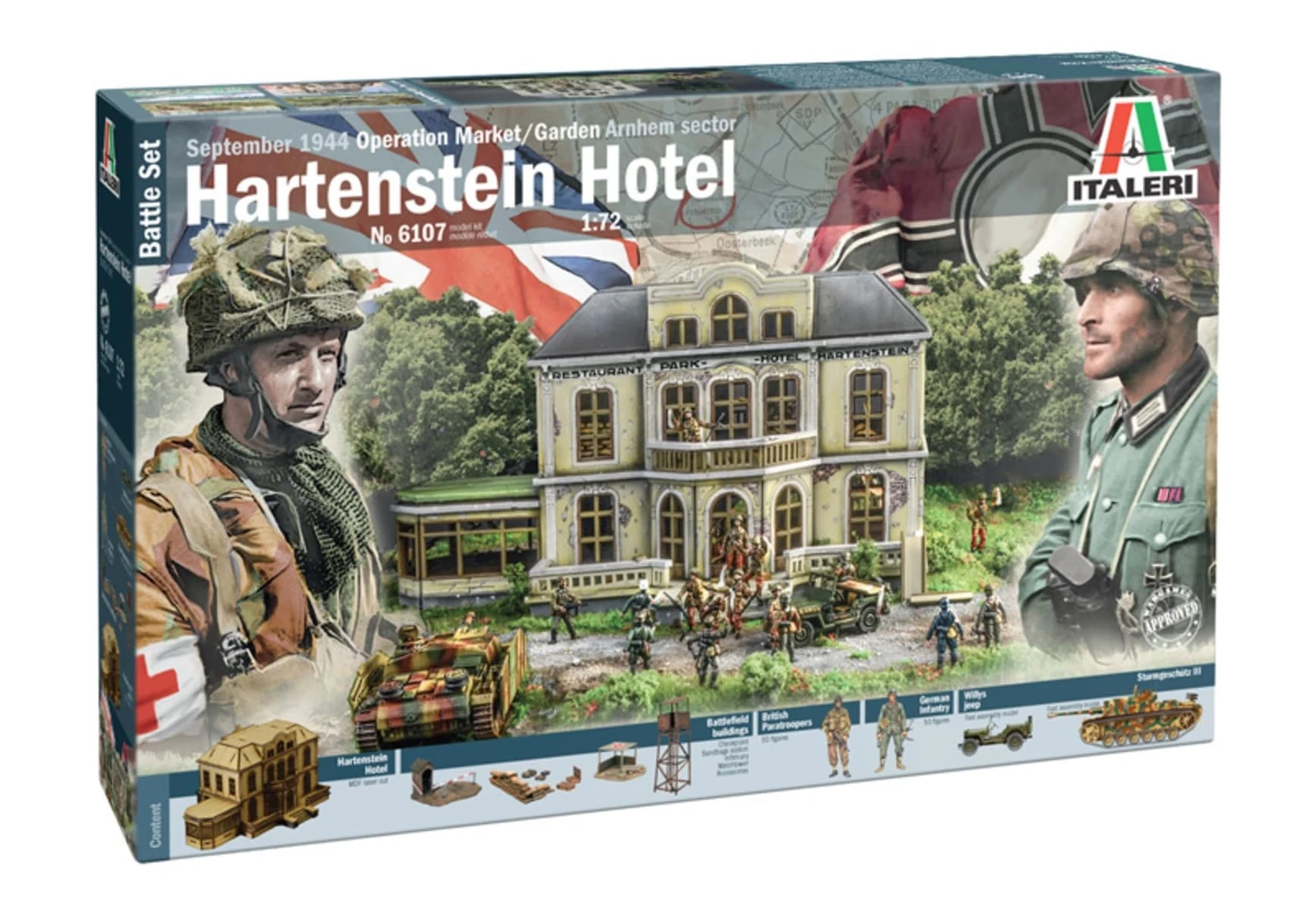
| Sunday 17 September · 23:00 | Communications begin to break down | Hartenstein, Oosterbeek | The airborne radio network performed far below the ranges expected around Arnhem. Wooded ground, urban cover, separation between units and equipment or frequency problems all contributed to unreliable links between divisional headquarters and the advancing brigades. Sources 1, 3, 4 |
| Monday 18 September · About 09:00 | Gräbner's armoured column tries to force the bridge | Arnhem road bridge | SS-Hauptsturmführer Viktor Gräbner's reconnaissance battalion, returning from a sweep toward Nijmegen, attempted to drive across the Arnhem road bridge from south to north through Frost's bridgehead. Sources 1, 3, 5 |
| Monday 18 September · 12:00 | XXX Corps links up at Eindhoven | Eindhoven | The Guards linked with the 101st Airborne in Eindhoven around midday. The route north still stopped at the demolished bridge over the Wilhelmina Canal at Son, where Royal Engineers had to build a replacement. Sources 1, 9, 10 |
| Monday 18 September · Afternoon | Fog in England delays the second lift | Landing zones, Wolfheze | The second lift took off hours late from airfields covered in morning fog and came in over landing zones that were now contested. The weather pattern would repeat for the rest of the operation. Sources 1, 3, 4 |
| Tuesday 19 September · 06:15 | The Bailey bridge at Son is finished | Son | Royal Engineers completed the Bailey bridge at Son after working through the night, allowing the armoured column and its supporting traffic to cross the Wilhelmina Canal. Sources 1, 3, 10 |
| Tuesday 19 September · 08:20 | The corridor reaches Nijmegen | Grave and Nijmegen | The leading armour crossed the Maas at Grave on the bridge the 82nd Airborne had taken intact on the first afternoon, and reached Nijmegen by mid-morning. Sources 1, 3, 9 |
| Tuesday 19 September · Morning | The break-in to the bridge is destroyed | Western Arnhem | Four battalions attacked east along the river and the railway before dawn to reach Frost at the bridge. Caught in the open in daylight on the Onderlangs and the Utrechtseweg, they were cut down by armour and by fire from the high ground. Sources 1, 3, 4 |
| Tuesday 19 September · Afternoon | The Polish glider element lands under fire | Johannahoeve | The glider-borne part of the Polish brigade came down on a landing zone that was being fought over, taking casualties on the ground before the men were out of the aircraft. Sources 1, 3, 4 |
| Wednesday 20 September · 15:00 | The Waal crossing | The Waal, west of Nijmegen | The 3rd Battalion, 504th Parachute Infantry Regiment crossed the Waal a mile downstream of the bridge in twenty-six canvas assault boats, in daylight, against a defended far bank, under smoke that blew clear. Sources 1, 3, 9 |
| Wednesday 20 September · 18:30 | Nijmegen bridge taken intact | Nijmegen road bridge | After the Waal crossing opened the north bank, Grenadier Guards tanks moved onto the Nijmegen road bridge while American paratroopers pressed in from the far side. German demolition charges had been prepared but the span remained intact. Sources 1, 3, 9 |
| Wednesday 20 September · 21:00 | The bridge force is overrun | Arnhem road bridge | Frost's men had held the northern ramp for about eighty hours against tanks, assault guns and mortars, in buildings burning around them, with no resupply and no water. Ammunition ran out. Sources 1, 3, 4 |
| Thursday 21 September · 17:00 | The Polish brigade drops at Driel | Driel | Delayed four days by weather, Sosabowski's brigade dropped south of the river at Driel, opposite the Oosterbeek perimeter. The ferry they were to have used had been destroyed and its operator killed. Sources 1, 3, 4 |
| Friday 22 September · Morning | Black Friday, the corridor is cut | Veghel | German battlegroups attacked the corridor from both sides at Veghel and cut it. Traffic on the single road stopped completely for the best part of a day, at the moment the Oosterbeek perimeter most needed reinforcement. Sources 1, 9, 10 |
| Friday 22 September · Night | The first crossings to Oosterbeek | The Nederrijn at Driel | Polish troops attempted to cross the Nederrijn in small rubber boats under fire. Very few got over on the first night, and the boats and paddles available were nowhere near sufficient. Sources 1, 3, 4 |
| Saturday 23 September · — | The road reopened and the resupply fails | The corridor | The corridor was cleared again and traffic resumed, though the road was now a target along its whole length. Further Polish crossings went in that night. Sources 1, 3, 4 |
| Sunday 24 September · Morning | The decision to withdraw | Driel | At Valburg, commanders concluded that the Oosterbeek bridgehead could no longer be reinforced or supplied at a level sufficient to hold it. The decision was taken to withdraw the surviving 1st Airborne troops across the Nederrijn. Sources 1, 3, 4 |
| Sunday 24 September · Afternoon | The truce for the wounded | Oosterbeek perimeter | A local truce was arranged through the divisional medical officer and Bittrich's staff. Around 1,200 wounded were carried out of the perimeter and handed over to German medical care, many of them from the Hotel Schoonoord dressing station. Sources 1, 2, 3 |
| Monday 25 September · 22:00 | Operation Berlin begins | Oosterbeek to Driel | Operation Berlin began after dark on 25 September. Marked routes led men from the Oosterbeek perimeter toward the river while British and Canadian engineers operated assault boats from the south bank under artillery cover and heavy rain. Sources 1, 2, 3, 4 |
| Tuesday 26 September · 06:00 | The Arnhem bridgehead is gone | Driel | By morning the organised bridgehead north of the Nederrijn had been abandoned. About 2,100 men of 1st Airborne Division had been ferried back during the withdrawal, while roughly 7,500 of the Arnhem force were dead or prisoners according to the National Army Museum's accounting. Sources 1, 3, 4, 5 |
| Tuesday 26 September · After | The northern Netherlands remain occupied | Arnhem and the Netherlands | The Allied salient liberated parts of the southern Netherlands, but Arnhem and much of the country north of the major rivers remained under German occupation. The Dutch railway strike called in support of the Allied advance was followed by German transport restrictions and reprisals. Sources 5, 8 |




-_17_-_25_September_1944_B10113.jpg)


-_17_-_25_September_1944_BU1101.jpg)
-_17_-_25_September_1944_CH13857.jpg)


