Skip to content
WW2 Theatres Theatres of the Second World War
Home / Pacific Theatre / The Marianas
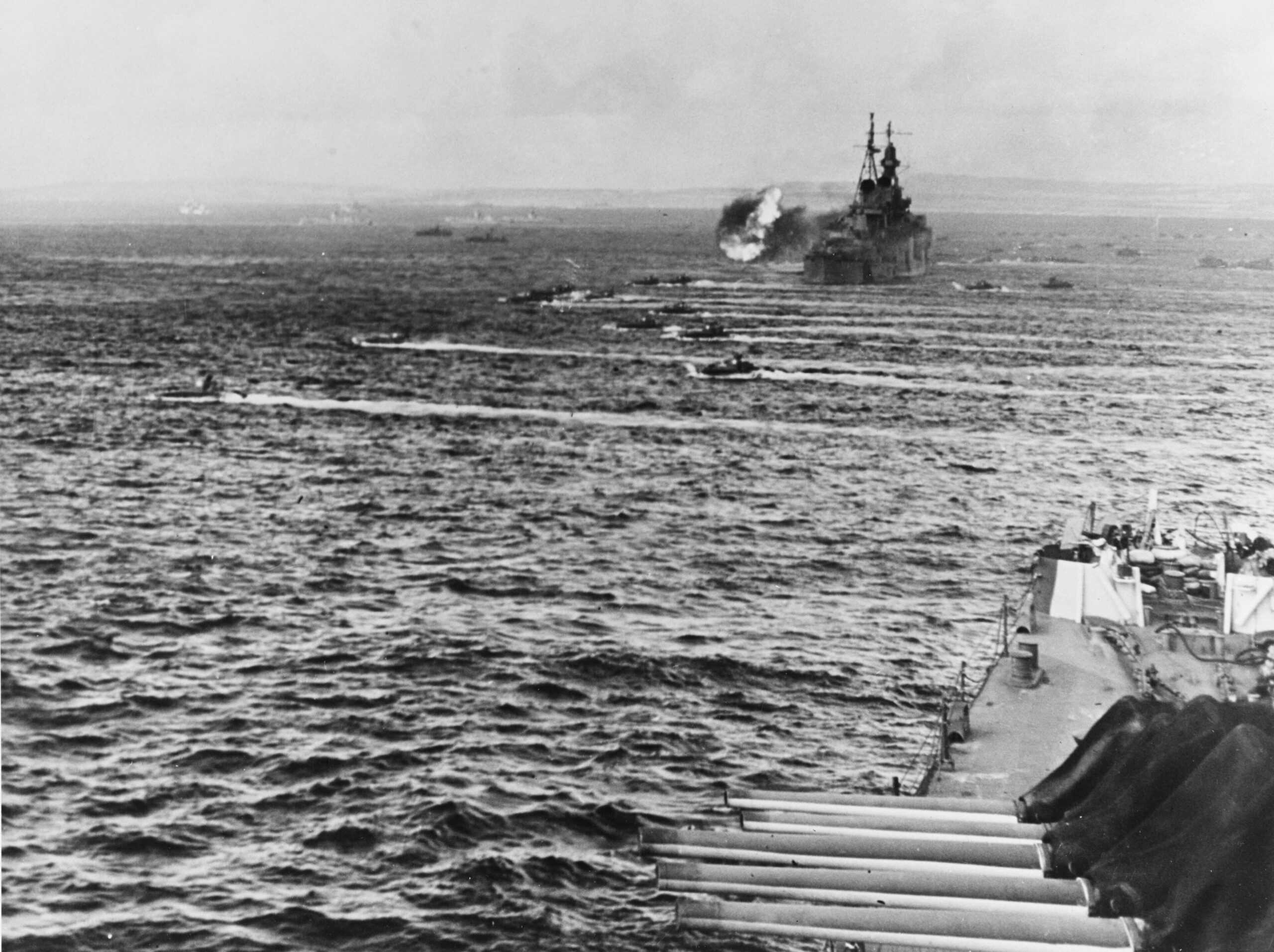
U.S. Navy amphibious tractors proceed toward the Saipan invasion beaches past American cruisers firing naval guns on 15 June 1944.

The Marianas

15 June to 10 August 1944 · Saipan, the Philippine Sea, Guam and Tinian

Operation Forager brought U.S. forces onto Saipan on 15 June 1944 and drew the Japanese carrier fleet into a two-day battle west of the islands. After weeks of fighting on Saipan, American forces landed on Guam and Tinian, securing all three islands by 10 August. Their capture opened airfields and naval bases that carried the Pacific war closer to Japan, at grave cost to combatants and the islands’ civilian populations.

U.S. Navy / NARA 80-G-231838 · Public domain

This operation sits inside Pacific Theatre, where it appears as a single entry. This page carries it in full.

BACK TO PACIFIC THEATRE
CAMPAIGN
15 Jun–10 Aug 1944Saipan, the Philippine Sea, Tinian and Guam
SAIPAN
Secured 9 July2nd and 4th Marines and 27th Infantry Division
PHILIPPINE SEA
19–20 JuneJapan’s carrier counteroffensive defeated west of Saipan
TINIAN
Secured 1 AugustNorthern-beach assault began 24 July
GUAM
Secured 10 AugustU.S. forces landed 21 July after prolonged bombardment
Marker affiliation Allied Axis Other / contested
Map layers

01 / 20

Why the Marianas Became the Next American Objective

The Marianas provided bases along the route from the central Pacific toward Japan.

In 1944 American commanders chose the Mariana Islands because their position combined immediate naval value with a longer-range air objective. Saipan, Tinian and Guam lay far west of the recently captured Marshalls. Capturing them would cut Japanese air and sea communications in the central Pacific while creating harbors and airfields for the next advances toward the Philippines and Ryukyus. The new B-29 bomber could reach Japan from the Marianas once adequate runways and supporting infrastructure existed.

The islands posed different military and political problems. Saipan and Tinian had been governed by Japan since the First World War and held Japanese, Okinawan, Korean and Indigenous communities. Guam had been a U.S. possession before Japan occupied it in December 1941; its Chamorro population had endured occupation and coercion. Fleet and ground commanders had to secure three separated islands, keep enormous landing forces supplied, and meet a Japanese fleet expected to intervene from the west.

Saipan: Beachheads, Central Ridges and the Northern Advance

Japanese coastal fire and defended ridges prolonged the fighting after the June landings.

The 2nd and 4th Marine Divisions landed on Saipan’s southwestern coast on 15 June. Amphibious tractors carried the first waves across the reef, but fire from Japanese batteries fell on craft, beaches and the narrow exits inland. The 27th Infantry Division followed into the expanding perimeter. American naval guns and aircraft could suppress positions, yet Japanese troops used reverse slopes, caves and night movement to force sustained ground combat.

The fight changed character as the attack moved north. The airfield at Aslito was brought under American control in stages, while the central heights and Garapan required repeated attacks through difficult ground. In early July Saitō’s forces were compressed into the north. Their large counterattack on 7 July struck the 27th Division especially hard. Organized Japanese resistance on Saipan ended on 9 July, although clearing isolated defenders and searching for civilians continued.

How the Philippine Sea Battle Protected the Marianas Landings

Japanese carrier attacks on 19–20 June attempted to break American naval cover around Saipan.

Japan launched Operation A-Go with the expectation that its carrier aircraft could attack American ships from greater distance and draw on island airfields in the Marianas. That premise had already weakened under U.S. carrier raids against the air bases. On 19 June the Japanese launched repeated aircraft strikes against Task Force 58. American radar warnings, fighter-control arrangements and superior fighter strength produced catastrophic Japanese losses; U.S. submarines also sank the carriers Taihō and Shōkaku.

On 20 June American carrier aircraft found Ozawa’s withdrawing force and sank Hiyō, but the strike stretched the attackers close to the limit of their fuel. Many aircraft came back after dark; Mitscher ordered ships illuminated for recovery and rescue. Spruance’s decision to maintain cover over Saipan remains debated in naval literature, but his immediate responsibility was to keep the invasion force protected. With the Japanese carrier air arm depleted, the United States sustained the land campaign without a comparable fleet challenge.

Civilians, Coercion and the End of the Saipan Battle

Mass displacement, civilian deaths and Japanese coercion shaped the island’s final days.

Saipan’s civilians included Japanese settlers, Okinawans, Koreans and Indigenous Chamorro and Carolinian residents. Families sought shelter in caves as shelling and ground combat moved across settlements and fields. Japanese authorities and soldiers circulated accounts of what U.S. captivity would mean; some civilians were threatened or coerced into refusing surrender. American Marines used interpreters and other means to try to draw people from hiding, but contact was often made amid active fire.

After the American secure declaration on 9 July, civilians continued to die near the northern cliffs through suicide, Japanese violence and combat. Estimates differ because wartime reports, survivor testimony and postwar studies count populations and causes differently. The devastation extended well beyond the military end date: returning survivors faced destroyed homes, detention or displacement, and uncertain political futures under U.S. occupation.

Guam: Two Landing Areas and the Battle for Fonte Plateau

The landing on 21 July developed into difficult attacks inland and a struggle for the north.

Guam’s assault was postponed when the Japanese carrier force appeared near Saipan. After further reconnaissance and bombardment, the 3rd Marine Division attacked at Asan while the 1st Provisional Marine Brigade landed near Agat on 21 July. High ground immediately dominated the beachheads. On the northern sector, Japanese forces on Fonte Plateau used ridges and prepared positions to resist movement inland, while the southern force worked toward Orote Peninsula.

Takashina ordered a large counterattack on the night of 25–26 July. Japanese troops penetrated portions of the American line but were repulsed after fierce close fighting. The Marines secured Fonte and the Orote Peninsula, and columns moved north through the wreckage of Hagåtña. The terrain became wider, denser and more heavily wooded in northern Guam. Organized resistance ended on 10 August, while some Japanese groups continued to evade capture long afterward. The Chamorro civilian population had suffered under Japanese occupation and through the battle itself.

Why the Northern Beaches Made the Tinian Landing Possible

Amphibious reconnaissance and deception gave the assault an unusually narrow entry point.

Tinian lay only a short distance south of Saipan, making artillery fire, aircraft support and rapid shipping from the captured island possible. The most obvious beaches near Tinian Town were heavily defended. Planners instead selected two very small beaches on the northwest shore and rehearsed how to bring amphibious tractors and cargo through their limited exits. Demonstrations toward the south and a prolonged bombardment helped fix Japanese attention away from the main assault.

The landing on 24 July established a northern perimeter with relatively limited initial resistance. By 26 July U.S. forces held Ushi Point airfield, and the advance moved toward the southern hills. Japanese troops mounted local counterattacks and defended caves as the perimeter contracted. Tinian was declared secure on 1 August; the final clearing and civilian relief continued afterward. The island then became one of the largest U.S. bomber-base construction projects in the Pacific.

How the Captured Islands Changed the Air War against Japan

Existing runways became the nucleus of extensive American base construction.

Airfield construction began before the fighting had entirely stopped. Engineers repaired captured strips and expanded roads, dumps, harbors and air-service facilities under continuing security restrictions. Fighters used Saipan as the land battle continued; over the following months construction units reshaped Tinian’s northern plateau and improved Guam’s airfields and fleet anchorage.

The islands’ long-term significance rested in their combined capacity. Saipan and Tinian could support large B-29 formations, and Guam offered deep-water naval services and additional airfields. By late 1944 the first Marianas-based bombing operations reached Japan. The men fighting in June and July could understand the purpose of the airfields, but the full scope and effects of the later bombing campaign were still in the future.

Fleet and Ground Command Decisions during Operation Forager

Naval cover, landing design and the pace of the ground attacks shaped command choices.

Spruance’s fleet command and Mitscher’s fast carriers had to defeat attacks from the west while the amphibious ships remained near the islands. Turner coordinated the landing groups and their naval support. On Saipan, Holland Smith’s corps headquarters had to integrate Marine and Army formations on a narrowing front; his removal of the 27th Infantry Division commander in June was controversial at the time and afterward.

The Japanese command was divided across naval and army responsibilities and across separate islands. Saitō defended Saipan, Ozawa attempted to defeat the covering carriers at sea, and Takashina fought the Guam campaign from inland high ground. Kakuta’s air command had lost much of the capacity that Japanese fleet plans expected it to provide. These overlapping problems left local defenders increasingly isolated as American island bases expanded.

Raymond A. Spruance
Admiral · U.S. Navy · Fifth Fleet

Raymond A. Spruance

Overall fleet commander

Spruance directed Fifth Fleet during the invasion of Saipan and the Japanese carrier response. During 19 June he kept the fast carriers within supporting distance of the amphibious forces, accepting less opportunity to pursue westward in exchange for protection of the beachhead. The balance between covering the troops and destroying the enemy fleet was his central decision in the Philippine Sea.

U.S. Navy / NHHC 80-G-225341 · Public domain · Source
Richmond Kelly Turner
Vice Admiral · U.S. Navy · Amphibious forces

Richmond Kelly Turner

Landing and naval logistics

Turner coordinated assault shipping, naval gunfire and troop delivery to Saipan, then the subsequent landings on Guam and Tinian. These landings depended on multiple independent beachheads, follow-on waves and fleet protection while Japanese land forces contested narrow approaches. His command converted plans into the landing schedules and ship-to-shore flows on which the campaign depended.

U.S. Navy / NARA 80-G-607995 · Public domain · Source
Marc A. Mitscher
Vice Admiral · U.S. Navy · Task Force 58

Marc A. Mitscher

Fast-carrier air operations

Mitscher commanded the fast carriers screening the Marianas assaults. On 19 June his fighter direction and massed combat air patrols defeated repeated Japanese strikes; on 20 June his aircraft located the Japanese fleet near the limit of operational reach. He authorized recovering returning aircrews after dark with ships illuminated despite the risks of enemy attack.

U.S. Navy 80-G-236831 · Public domain · Source
Holland M. Smith
Lieutenant General · U.S. Marine Corps · V Amphibious Corps

Holland M. Smith

Saipan landing command

Smith directed the land campaign on Saipan, bringing together the 2nd and 4th Marine Divisions and the Army’s 27th Infantry Division. As fighting moved into the central ridges, he sought to keep formations advancing together across rough terrain. His relief of the Army division commander in June became a lasting controversy in accounts of the campaign.

USMC Archives / Holland Smith Collection · CC BY 2.0 · Source
Harry Schmidt
Major General · U.S. Marine Corps · 4th Marine Division

Harry Schmidt

Saipan and Tinian assault commander

Schmidt led the 4th Marine Division at Saipan and then commanded V Amphibious Corps for the Tinian operation. For Tinian his forces approached the two small northwestern beaches while demonstrations and bombardment drew Japanese attention toward other landing areas. His command exploited the nearby Saipan bases for close fire support, supply and rapid reinforcement.

U.S. Navy / NHHC 80-G-K-13946 · Public domain · Source
Yoshitsugu Saitō
Lieutenant General · Imperial Japanese Army · Saipan

Yoshitsugu Saitō

Saipan ground commander

Saitō commanded Japanese army forces defending Saipan. With coastal defenses breached on 15 June, he organized resistance around inland ridges and cave positions that slowed the American advance. Loss of the airfield and central heights reduced the defended area. In early July his final order led to a mass counterattack that destroyed the remaining organized field force.

Japanese historical photograph · Public domain (Japan / U.S.) · Source
Chūichi Nagumo
Vice Admiral · Imperial Japanese Navy · Saipan naval command

Chūichi Nagumo

Senior naval commander on Saipan

Nagumo commanded the Central Pacific Area Fleet from Saipan, where isolated Japanese naval and air personnel were incorporated into local defense. American carrier superiority and the loss of Saipan’s air facilities prevented meaningful outside naval relief. He remained on the island as the perimeter contracted and died during the final fighting, before Saipan was declared secure.

Historical Japanese naval portrait · Public domain · Source
Jisaburō Ozawa
Vice Admiral · Imperial Japanese Navy · Mobile Fleet

Jisaburō Ozawa

Japanese fleet commander in the Philippine Sea

Ozawa took the First Mobile Fleet east under Operation A-Go to attack the American naval forces supporting Saipan. Japanese plans relied on longer-range aircraft and assumed that nearby island airfields could help absorb and replenish strikes. The attack waves suffered severe losses on 19 June; U.S. aircraft struck his carriers on 20 June, and the fleet withdrew.

Japanese naval portrait · Public domain · Source
Takeshi Takashina
Lieutenant General · Imperial Japanese Army · Guam

Takeshi Takashina

Guam defending army commander

Takashina directed the 29th Division and other Japanese forces defending Guam. After the American landings on 21 July, he held the high ground around Fonte and ordered a large night counterattack on 25–26 July against the northern beachhead. The assault failed to break the Marine line. Takashina died on 28 July as the defense withdrew toward the island’s north.

Japanese military portrait reproduced by U.S. military · Public domain · Source
Kakuji Kakuta
Vice Admiral · Imperial Japanese Navy · First Air Fleet

Kakuji Kakuta

Japanese naval air command in the Marianas

Kakuta was responsible for Japanese naval air forces in the Central Pacific during the American offensive. Many squadrons had been depleted in earlier operations, while American carrier raids damaged the surviving island airfields. He became trapped on Tinian as U.S. troops seized Saipan and began the July invasion. His command could not provide the air protection expected in the Japanese counteroffensive.

Japanese period photograph · Public domain in Japan and U.S. · Source

Amphibious Vehicles, Carrier Aircraft and Tanks in the Marianas

Weapons and vehicles used in the landings, at sea and in island defense.

Amphibious tractors carried assault troops over coral approaches where ordinary landing craft could founder. Gun-equipped amphibians and Shermans supported infantry beyond the surf, while naval gunfire and carrier aircraft struck airfields, artillery positions and troop concentrations. At sea the Hellcat fighter and carrier-based strike aircraft were central to the Philippine Sea battle.

On Tinian the 4th Marine Division crossed from Saipan to the narrow White beaches on 24 July. The first waves had little room to unload vehicles; bulldozers opened the exits and pontoon causeways brought across from Saipan increased the rate at which stores could be landed that evening. Heavy guns on Saipan could support the Marines across the strait. The diversion off Tinian Town drew fire from Japanese six-inch guns concealed in caves, whose positions had survived the preliminary naval bombardment.

LVT-4 Water Buffalo
LVT-4 amphibious tractors crowded on Tinian’s landing beach during the July 1944 assault.
U.S. military / National Park Service / NARA · Public domain · Source

LVT-4 Water Buffalo

Tracked amphibious personnel carrier · stern ramp

The LVT-4 carried Marines and supplies across reefs and into landing beachheads where ordinary landing craft could stop short. Its rear ramp helped troops and cargo disembark without climbing over the hull. On Tinian the assault plan depended on bringing loaded amphibious vehicles through narrow northern beaches, then keeping a supply flow moving as the beachhead expanded.

LVT(A)-4 amphibious gun vehicle
Marines establish positions on Saipan’s initial beachhead, with an LVT(A)-4 in the photograph.
U.S. Marine Corps photo 81917 / National Park Service · Public domain · Source

LVT(A)-4 amphibious gun vehicle

Tracked armoured amphibian · 75-mm howitzer

The LVT(A)-4 combined a tracked amphibious chassis with a turret-mounted 75-mm howitzer. Gun-armed amphibians could deliver close support while rifle companies were still crossing exposed surf and establishing a beachhead. On Saipan they supplemented ship artillery where Japanese mortars and coastal guns reached the landing areas and beach exits.

M4 Sherman medium tank
U.S. Marine Corps M4 Sherman tanks deploy inland from Tinian’s invasion beaches, July 1944.
Sgt. T. Hind / USMC 93378 / NARA · Public domain · Source

M4 Sherman medium tank

75-mm gun · tracked medium tank

Marine Sherman tanks supported the advance from the beachheads through villages, open fields and defended approaches to caves. On Saipan and Tinian infantry-tank coordination mattered because tank guns could engage strongpoints that resisted small arms. Tanks also faced mines, concealed antitank weapons and terrain where infantry had to protect the vehicles at very close range.

Grumman F6F-3 Hellcat
A Grumman F6F-3 lands on USS Lexington during the 19 June 1944 carrier battle.
U.S. Navy / NHHC · Public domain · Source

Grumman F6F-3 Hellcat

Carrier fighter · Pratt & Whitney R-2800

Hellcats formed the defensive core of Task Force 58’s fighter cover. Radar warning, fighter direction and experienced squadrons helped intercept Japanese carrier attacks before they reached the ships on 19 June. The resulting destruction of Japanese aircraft reduced the threat to transports supporting the Marianas landings and helped protect carrier strikes on the following day.

Douglas SBD-5 Dauntless
U.S. Navy SBD-5 Dauntless dive bombers of VB-16 over Saipan, 15 June 1944.
U.S. Navy / National Naval Aviation Museum · Public domain · Source

Douglas SBD-5 Dauntless

Carrier dive bomber · 1,200-hp Wright engine

Dauntless dive bombers still served in several carrier squadrons during the Marianas landings. Aircraft from USS Lexington attacked Japanese positions around Saipan’s Aslito airfield on 15 June, directly supporting troops coming ashore. Their presence also shows how Task Force 58 combined fleet defense and attacks on enemy airfields across the island chain.

Essex-class aircraft carrier
Essex-class fleet carrier USS Lexington (CV-16) underway near the Marianas on 13 June 1944.
U.S. Navy / NHHC · Public domain · Source

Essex-class aircraft carrier

Fleet carrier · long-range fast-carrier task force

Essex-class carriers supplied the fighter, search and strike aircraft that screened the landings. USS Lexington served as Mitscher’s flagship during the Philippine Sea battle. The carriers depended on radar-directed combat air patrols and extensive rescue and recovery operations, especially during the exceptionally long 20 June strike against the retreating Japanese fleet.

Type 97 Chi-Ha medium tank
Disabled Japanese Type 97 Chi-Ha on Saipan in July 1944; variant not specified by the archive.
U.S. Marine Corps official campaign history · Public domain · Source

Type 97 Chi-Ha medium tank

Japanese medium tank · 57-mm or 47-mm armament by variant

Japanese armored vehicles on Saipan counterattacked American positions in the opening nights and could threaten infantry where terrain permitted. The Type 97 series was outgunned by many American Shermans, while its thin protection increased vulnerability to concentrated tank and antitank fire. Surviving wrecks became part of the battlefield’s evidence of Japanese attempts to contain the landing perimeter.

Mitsubishi A6M5 Zero fighter
Captured A6M5 Zero photographed at a former Japanese airfield on Saipan in 1944.
U.S. Navy / NHHC · Public domain · Source

Mitsubishi A6M5 Zero fighter

Imperial Japanese Navy fighter · Model 52

The A6M5 represented a late-war version of the Zero used by Japanese naval aviation in 1944. Japanese carrier and island squadrons faced larger numbers of radar-directed American fighters, with severe losses during the Philippine Sea battle. Captured aircraft on Saipan also demonstrate how quickly local air power disappeared once American ground forces reached the airfields.

Military Losses and Civilian Suffering on Saipan, Guam and Tinian

Military casualty returns for Saipan and Tinian, and the civilian losses during the island battles.

The National Park Service’s Saipan account records nearly 3,000 American dead and more than 10,000 wounded among the force of about 71,000 landed. It records 921 prisoners from a Japanese garrison estimated at 30,000. Tinian, where the Marines landed on 24 July, cost the Americans 389 killed and 1,816 wounded according to the park’s separate island account. The Japanese carrier losses in the Philippine Sea were incurred before either the Tinian or Guam landing and belong to the naval battle of 19–20 June.

The American forces found civilians sheltering in caves and moving towards the north of Saipan as the Japanese line contracted. The National Park Service estimates that approximately 26,000 civilians lived on the island at the invasion and that about 18,000 were subsequently interned; the difference suggests roughly 8,000 deaths, though the population estimate is uncertain. At Tinian the park records up to 4,000 civilian deaths through combat, suicide and killings by Japanese soldiers. On Guam the occupation authorities had forced Chamorro people into camps including Manenggon before the American landings, so the civilian history there began well before 21 July.

15 Jun–9 Jul

Saipan land battle

The main U.S. assault began on 15 June and Saipan was declared secure on 9 July. Pockets of armed resistance and the civilian crisis continued after that date.

19–20 Jun

Battle of the Philippine Sea

The Japanese carrier response to the Marianas invasion lost three carriers in two days, two to submarines and a third to American carrier aircraft.

24 Jul–1 Aug

Tinian land battle

The northern-beach assault began on 24 July and the island was declared secure on 1 August, followed by clearing, internment and base construction.

21 Jul–10 Aug

Guam recapture

American landings began at Asan and Agat on 21 July. Guam was declared secure on 10 August, while isolated soldiers continued to resist or hide.

Thousands

Civilian deaths and displacement

Civilians on Saipan, Tinian and Guam suffered combat deaths, coercion, forced labor, displacement and the destruction of homes. Published estimates vary by island and population; this entry does not add incompatible figures.

Naval Reports, Marine Histories and Island Civilian Records

Official operational accounts, archival photography and civilian testimony document different aspects of the campaign.

The U.S. Navy’s wartime reports identify the naval operational sequence, while later Navy and Marine Corps histories reconstruct beachheads and command decisions in greater detail. National Park Service records for Saipan, Guam and Tinian add civilian histories and highlight the limits of military after-action summaries. Archive photographs verify particular locations and dates only when their catalog descriptions support that attribution.

Japanese senior-command portraits and surviving campaign imagery preserve the identity of the participants but rarely explain decisions by themselves. Civilian loss figures and interpretations of command disputes are kept separate from dated battlefield facts, particularly where surviving records and postwar accounts disagree.

  1. Operation Forager: The Battle of Saipan, Naval History and Heritage CommandOperation plans, the beachhead, Japanese defenses, civilians and Saipan’s conclusion
  2. Battle of the Philippine Sea, Naval History and Heritage CommandFleet dispositions and carrier air battle on 19–20 June
  3. Operation Forager Continued: Landings on Guam and Tinian, Naval History and Heritage CommandGuam and Tinian assault planning, landing decisions, Japanese counterattacks and secured dates
  4. Battle of Saipan, National Park Service, American Memorial ParkSaipan fighting, civilian suffering and northern cliffs
  5. Battle of Guam, National Park Service, War in the Pacific National Historical ParkGuam beachheads, Fonte Plateau counterattack, Takashina’s death and secure date
  6. Battle of Tinian, National Park Service, American Memorial ParkNorthern beaches, Ushi Point airfield, civil population and final seizure
  7. US Navy at War: Second Official Report, Secretary of the NavyContemporary naval report of invasion sequence, reinforcement, losses and operational conclusions
  8. Building the Navy’s Bases, Volume 2: The Marianas, Bureau of Yards and Docks, US NavyOfficial naval construction history of airfields, anchorages and logistical conversion
  9. Invasion of Saipan: June–July 1944, National Museum of the United States NavyArchival image catalog for landings and ground combat
  10. Invasion of Tinian: July 24–August 1, 1944, National Museum of the United States NavyOperation and period photographs for Tinian
  11. The Capture of the Mariana Islands, NOAA Ocean ExplorationStrategic rationale, island geography and later base development
  12. Banzai Attack: Saipan, National WWII MuseumJapanese final counterattack of 7 July and 27th Infantry Division fighting
  13. The Capture of Mount Alifan, National Park ServiceGuam’s southern beachhead and the terrain above Agat
  14. The 2nd Marines: History, United States Marine CorpsRegimental account of the attack through Garapan and subsequent Tinian operation
  15. History of the Marine Corps in WWII, United States Marine Corps History DivisionOfficial chronology and units for Saipan, Guam and Tinian
  16. WWII Profiles of Officers in Command, Guampedia, Guam historical encyclopediaJapanese Guam command roles of Takashina and Obata
  17. H-032: Battle of the Philippine Sea, Naval History and Heritage CommandJapanese A-Go carrier sorties, submarines and the US night recovery
  18. Expeditionary Airfields in the Pacific, 1941–1945, Air University, US Air ForceAslito seizure, conversion and expansion for aviation
  19. Death and Duty: Saipan’s Northern Cliffs, National Park ServiceCivilian deaths, Japanese coercion and end-of-battle experience
Operation chronologyDates, locations and sourced event summaries
DateEventLocationSummary
15 June 1944 · 08:40 · Initial assault wavesU.S. Marines Land on Saipan’s Southwest CoastCharan Kanoa, Saipan

At 08:40 on 15 June 1944, American assault waves from the 2nd and 4th Marine Divisions began landing on Saipan’s southwest coast. Amphibious tractors crossed the reef and brought men toward beaches covered by Japanese artillery, mortar and machine-gun fire. By evening the Marines had established a connected, vulnerable beachhead.

Sources 1, 7, 9, 15
16 June 1944 · Follow-on landingThe 27th Infantry Division Begins Landing on SaipanSouthwest beachhead, Saipan

The Army’s 27th Infantry Division began coming ashore on 16 June as the Marine beachhead expanded. The division had been retained as an operational reserve, but the scale and persistence of Japanese resistance made a substantial Army role necessary in the ensuing inland advance.

Sources 1, 7, 15
19 June 1944 · Daylight carrier-air battleJapanese Carrier Air Strikes Meet Task Force 58Philippine Sea west of Saipan

On 19 June Japanese carrier aircraft launched successive strikes against Task Force 58 in the Philippine Sea. American radar pickets, fighter directors and Grumman Hellcats intercepted the formations before most could reach their ships. The losses inflicted on Japanese aircrews were severe, and relatively few attacks achieved meaningful damage.

Sources 2, 17, 7
19 June 1944 · Carrier losses to submarinesU.S. Submarines Sink Taihō and ShōkakuPhilippine Sea

While carrier aircraft fought overhead on 19 June, U.S. submarines Albacore and Cavalla torpedoed the Japanese carriers Taihō and Shōkaku. Damage and subsequent explosions doomed both ships, depriving the Japanese fleet of two major flight decks during its attempt to contest the Marianas landings.

Sources 2, 17
20 June 1944 · Late afternoon and night recoveryU.S. Carrier Aircraft Strike the Retreating Japanese FleetWestern Philippine Sea

Late on 20 June, Task Force 58 aircraft reached the Japanese Mobile Fleet far west of the Marianas. American pilots attacked carriers and escorts, sinking Hiyō and damaging other ships, but distance and fading daylight made the return hazardous. Many aircraft arrived back at the U.S. fleet after dark with little fuel.

Sources 2, 17, 7
20 June 1944 · Airfield secured in stagesU.S. Forces Secure the Aslito Airfield AreaAslito, southern Saipan

By 20 June U.S. Army and Marine troops had completed the seizure of the Japanese airfield at Aslito in southern Saipan. The capture removed an important source of Japanese local air activity and gave American engineers a runway that could eventually support land-based fighter operations.

Sources 1, 8, 18
27 June 1944 · Late-June ridge fightingAmerican Troops Reach Saipan’s Central HeightsMount Tapotchau region, Saipan

By the last week of June American formations fought through the ridges around Mount Tapotchau, Saipan’s commanding central high ground. Japanese troops used rocky outcrops, caves and reverse slopes to delay the advance. Taking the heights gave the attackers better observation and helped compress the remaining defensive area to the north.

Sources 1, 4, 7
2 July 1944 · Urban approachesFighting Reaches the Ruins of GarapanGarapan, Saipan

On 2 July American Marines attacked through the approaches to Garapan, Saipan’s principal town. Buildings and streets already damaged by shelling offered concealment to Japanese defenders. The urban fighting and nearby rocky high ground slowed the advance even after the U.S. had gained control of most of the southern island.

Sources 1, 7, 14
7 July 1944 · Before dawn · Mass counterattackJapanese Final Counterattack on the Tanapag PlainTanapag Plain, Saipan

Before dawn on 7 July, surviving Japanese forces launched a mass counterattack across the Tanapag Plain. The attack struck positions of the U.S. Army’s 27th Infantry Division and nearby Marine units, overrunning several outposts before American troops, artillery and reinforcements stopped the advance. Casualties were heavy on both sides.

Sources 1, 12, 7
9 July 1944 · Secure declarationSaipan Declared SecureMarpi Point, northern Saipan

American command declared Saipan secure on 9 July 1944 after advancing to the island’s northern end. Japanese organized resistance had been broken, though isolated snipers and small parties remained. The conquest opened the Marianas to a major American airfield and base-building effort.

Sources 1, 4, 7
10 July 1944 · 9–12 July · Civilian crisisCivilian Deaths Continue at Saipan’s Northern CliffsMarpi Point cliffs, Saipan

In the days after 9 July, civilians continued to die on Saipan’s northern cliffs. Japanese military propaganda, intimidation and direct violence influenced the refusal of some families to surrender. Other civilians were killed during the fighting or while attempting to escape the contested area.

Sources 4, 19, 1
21 July 1944 · Morning landingU.S. Forces Land at Asan and Agat on GuamAsan and Agat, Guam

American forces returned to Guam on 21 July 1944. The 3rd Marine Division landed on the northern beaches near Asan while the 1st Provisional Marine Brigade struck near Agat to the south. The two beachheads were separated by Japanese-held ground and overlooked by difficult ridges, making rapid consolidation essential.

Sources 3, 5, 13
24 July 1944 · Morning landing · Northwest beachesFourth Marine Division Lands on Tinian’s Northwest BeachesWhite Beaches, northwest Tinian

On 24 July the 4th Marine Division landed on two narrow beaches on Tinian’s northwest coast. Planners had chosen the small approaches because Japanese coastal defenses concentrated on more obvious landing sites near Tinian Town. Naval bombardment and demonstrations helped distract the defenders while amphibious tractors delivered men and equipment through the limited beach exits.

Sources 3, 6, 10
25 July 1944 · Night of 25–26 JulyJapanese Counterattack Breaks Against the Guam BeachheadFonte Plateau, Guam

On the night of 25–26 July Japanese troops descended from the Fonte Plateau against the U.S. 3rd Marine Division’s positions above Asan. The counterattack penetrated several sectors and produced fierce close-range fighting before the Marine line held. Japanese commanders had committed a large share of the remaining troops available near Guam’s western beachhead.

Sources 3, 5, 13
26 July 1944 · Northern airfield seizedUshi Point Airfield Captured on TinianUshi Point, northern Tinian

By 26 July American Marines had captured the Japanese airfield at Ushi Point on Tinian’s northern end. The position gave the landing force a broader operational area and removed another Japanese air facility that might otherwise support counterattacks or reconnaissance against the Marianas operation.

Sources 3, 6, 8
28 July 1944 · Orote secured; command lossOrote Peninsula Falls as Guam’s Japanese Command ChangesOrote Peninsula and Fonte, Guam

On 28 July American troops secured the Orote Peninsula and its former airfield after the southern beachhead advance. On the same day Japanese commander Takeshi Takashina was killed during the retreat from the Fonte positions. The loss of the peninsula and the failure of the earlier counterattack left Japanese forces withdrawing toward Guam’s north.

Sources 3, 5, 16
31 July 1944 · Capital enteredU.S. Marines Enter Hagåtña and Drive NorthHagåtña (Agana), Guam

U.S. Marines entered the ruins of Hagåtña, Guam’s capital, on 31 July 1944. The city had suffered extensive destruction under Japanese occupation, the preliminary bombardment and the ground advance. With Orote and Fonte secured, American columns were able to move onto broader routes leading into northern Guam.

Sources 3, 5, 7
1 August 1944 · Secure declarationTinian Declared Secure After Nine Days of FightingSouthern Tinian

Tinian was declared secure on 1 August 1944 after U.S. Marines reached the southern end and defeated the remaining organized Japanese defense. The northern-beach plan had allowed a steady flow of assault troops, artillery and supplies supported from neighboring Saipan. The island was seized in nine days.

Sources 3, 6, 8
8 August 1944 · Northern-island advanceU.S. Forces Close on Northern Guam’s Final Defensive AreasYigo and northern Guam

By 8 August American Marines and Army troops had reached important points across northern Guam. The Japanese had withdrawn into smaller defensive areas after losing the southern and central portions of the island. American columns advanced through jungle and steep ravines where visibility and communications were limited.

Sources 3, 5, 7
10 August 1944 · Secure declaration · 11:31Guam Declared Secure; the Marianas Invasion Phase EndsNorthern Guam and Hagåtña

On 10 August 1944 Major General Roy Geiger declared Guam secure after the destruction of remaining organized Japanese resistance. The declaration closed the principal invasion battles for Saipan, Tinian and Guam, begun on 15 June, and allowed the expanding U.S. base program to proceed with greater security.

Sources 3, 5, 8

Individual image credits and source links identify rights. U.S. federal wartime photographs are public-domain works; some USMC Archives files carried by Wikimedia Commons are licensed CC BY 2.0 and are credited individually. Map arrows show approximate operational axes, not surveyed unit boundaries.