| 20 November 1943 · Around 05:07 | Japanese Coastal Batteries Open Fire on the Invasion Fleet | Betio lagoon approaches, Tarawa | The Japanese coast batteries on Betio open fire shortly after 05:00 on 20 November as American transports and naval gunfire ships assemble off Tarawa. Rear Admiral Keiji Shibazaki has prepared interlocking positions around the small airfield island, with heavy guns facing the approaches and reinforced strongpoints overlooking the landing beaches. Sources 1, 3, 6 |
| 20 November 1943 · Morning preparatory fire | Air and Naval Bombardment Strikes the Beach Defences | Betio Island, Tarawa | Battleships, cruisers and carrier aircraft bombard Betio to suppress the Japanese guns before the first Marines arrive. The 2nd Marine Division expects the main shoreline defences to be shaken by the fire, but many blockhouses and concealed firing positions withstand the attack. Intervals between bombardment and the approach of landing waves allow surviving defenders to reoccupy their weapons. Sources 1, 2, 3 |
| 20 November 1943 · First assault waves | First Amphibian Tractors Reach the Red Beaches | Red Beaches One, Two and Three, north Betio | The first waves of Marines land on Betio’s three northern Red Beaches in tracked amphibian tractors on 20 November. LVTs cross the coral barrier that stops many conventional landing boats, carrying assault troops into Japanese fire from seawalls, trenches and covered positions. Some vehicles are destroyed or immobilised before the infantry reaches cover. Sources 1, 4, 5 |
| 20 November 1943 · Morning landings | U.S. Army Troops Land on Makin in a Parallel Operation | Butaritari Island, Makin Atoll | The 165th Infantry Regiment of the U.S. Army’s 27th Infantry Division begins its assault on Butaritari in Makin Atoll while Marines are fighting to seize Tarawa. The Northern Attack Force under Rear Admiral Richmond Kelly Turner supports the Army landings as part of the same Operation Galvanic offensive. Sources 3, 7, 11 |
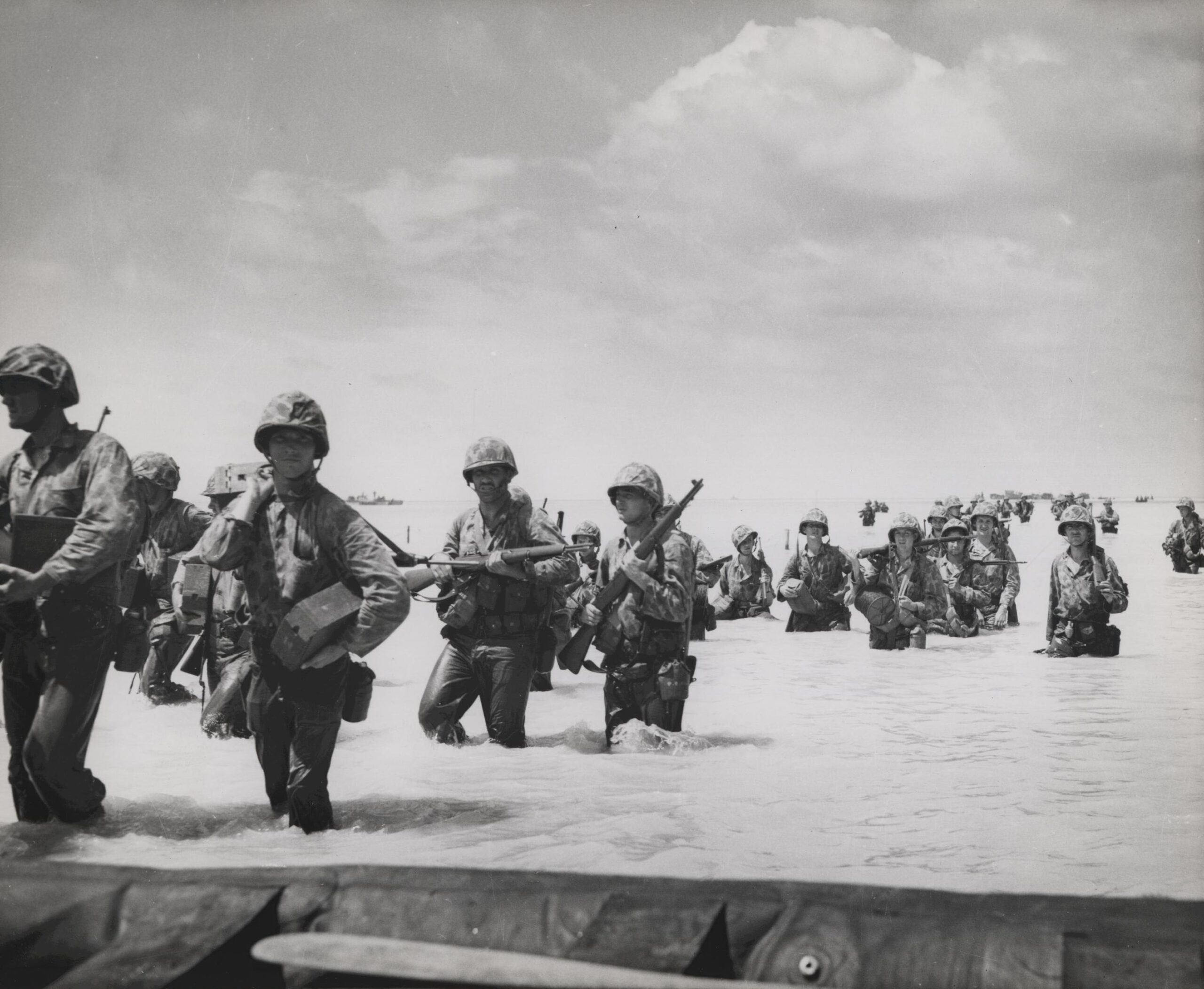
| 20 November 1943 · Late morning | The Reef Stops Landing Boats and Exposes Following Waves | North lagoon reef, Betio | Many follow-on landing craft ground on the barrier reef because the water remains too shallow. Marines disembark and wade several hundred yards toward the Red Beaches under rifle and machine-gun fire. The loss of boat movement sharply reduces the rate at which reserve infantry, ammunition and medical equipment can reach the beachhead. Sources 1, 2, 3, 5 |
| 20 November 1943 · Afternoon | Shoup Establishes His Command Post Ashore | Central Red Beach, Betio | Colonel David Shoup reaches Betio and begins coordinating the isolated Marine battalions from a cramped beach command post. A shortage of working radios and the continuous movement of small groups along the seawall make accurate reporting difficult. Shoup must commit reserves while the division headquarters and naval commanders receive fragmentary accounts. Sources 1, 2, 3 |
| 20 November 1943 · First night | The Marines Hold Disconnected Positions Along the North Shore | Red Beaches One to Three, Betio | At nightfall on 20 November, Marine units remain trapped in narrow positions behind the seawall and around the long pier. Japanese bunkers, automatic weapons and trenches still dominate many routes inland, while wounded men wait for evacuation and some reserves remain beyond the reef. Sources 1, 2, 5 |
| 21 November 1943 · Morning of D+1 | Reinforcement Waves Strengthen the Beachhead | Red Beach Two and Three, Betio | The second morning brings further landing attempts and more troops to the northern beaches. Surviving Japanese positions make the approach dangerous and the shallow reef continues to obstruct conventional boats. Marine commanders concentrate on bringing sufficient infantry, tanks and ammunition ashore to enlarge the small footholds. Sources 1, 2, 4 |
| 21 November 1943 · Late morning | Green Beach Is Secured at Betio’s Western End | Green Beach, west Betio | After naval gunfire suppresses Japanese positions at the western tip, Marine troops open Green Beach on 21 November. The position gives the division an alternative entry point for men and vehicles that could not safely reach the northern Red Beaches. Marine tanks can now support a more organised advance across the western part of Betio. Sources 1, 2, 8 |
| 21 November 1943 · Afternoon | Sherman Tanks Support Attacks Beyond the Seawall | West and central Betio | M4A2 Sherman tanks begin to take a more useful part in the ground fight as the Marines secure passages from the beach. Several vehicles had been lost or disabled during the landing, and infantry commanders must protect the surviving tanks from close assault and concealed antitank guns. Sources 1, 2, 8 |
| 22 November 1943 · Morning of D+2 | The 6th Marines Press Eastward Along the Southern Shore | Southern edge of Betio airstrip | Fresh elements of the 6th Marines join the battle on 22 November and expand the American attack toward the eastern end of Betio. With access from the west and improved coordination of tanks, artillery and infantry, the attackers can isolate fortified sectors that had survived the initial bombardment. Sources 1, 2, 5 |
| 22 November 1943 · Afternoon of D+2 | The Fight Contracts Around Japanese Strongpoints | Eastern airfield and pillboxes, Betio | By the afternoon of 22 November American troops have cleared much of western and central Betio, while Japanese resistance concentrates in protected bunkers and positions toward the east. Marines advance short distances under covering fire, with engineers and flamethrower teams used against shelters that conventional rifle fire cannot penetrate. Sources 1, 2, 4 |
| 22 November 1943 · Afternoon | U.S. Army Forces Advance Through the Main Makin Defences | Butaritari Island, Makin Atoll | On 22 November the U.S. Army’s 165th Infantry Regiment advances through the principal Japanese defended zones on Butaritari. The Army continues clearing positions around the island’s coastal passages and airfield approaches while the separate Marine battle at Betio continues. Sources 7, 11, 12, 14 |
| 22 November 1943 · Night of 22–23 November | Japanese Counterattacks Strike the Eastern Marine Line | East Betio, near the airstrip | During the night of 22–23 November, Japanese forces launch repeated attacks against the Marines near the eastern end of Betio. Elements of the 1st Battalion, 6th Marines bear the heaviest pressure, and close-range fighting continues in darkness along the now-compressed defensive front. Sources 1, 2, 4 |
| 23 November 1943 · Before dawn and morning | Marines Defeat the Final Major Japanese Counterattack | Eastern end of Betio | The American line holds against the last major Japanese night attacks, leaving hundreds of Japanese dead near the Marine positions. Troops from the 6th Marines prepare to resume the advance against the remaining bunkers and isolated defenders. The organized garrison has lost much of its ability to mount another substantial attack. Sources 1, 2, 5 |
| 23 November 1943 · Late morning | Remaining Japanese Positions Are Cleared on Eastern Betio | Eastern tip of Betio Island | American infantry advances through the remaining eastern positions on Betio on the morning of 23 November. The principal Japanese defensive line has collapsed after the failed night counterattacks, but isolated bunkers and dugouts must still be searched and neutralised. Sources 1, 2, 4 |
| 23 November 1943 · Shortly after midday | Betio Is Declared Secured after Four Days of Fighting | Betio, Tarawa Atoll | On 23 November the American command declares Betio secured shortly after midday, ending the main 76-hour battle for Tarawa’s airfield island. The 2nd Marine Division has captured the position despite severe losses in the first landing waves and subsequent fighting along its densely fortified northern shore. Sources 1, 2, 5, 14 |