Skip to content
WW2 Theatres Theatres of the Second World War
Home

World War II calendar

WWII On This Day: November 2

What happened on November 2 during World War II? This date brings together 4 events from 1940, 1942 and 1944, with period photographs and links to the full operations documented across WW2 Theatres.

1940
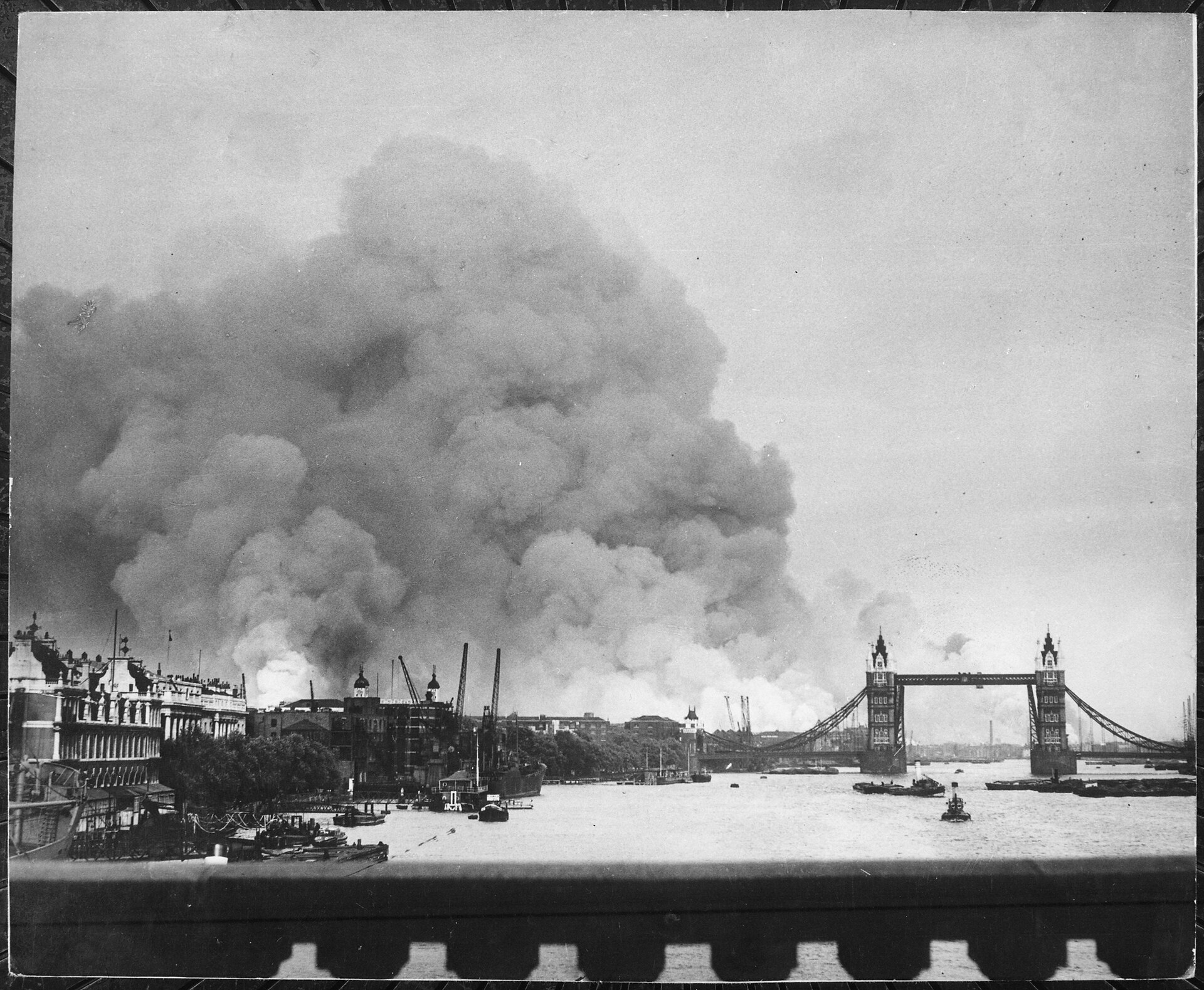
London, 7th September 1940 · London's dock area. Tower Bridge stands out against a background of smoke and fires. New York Times Paris Bureau Collection.
U.S. National Archives and Records Administration (NARA 541917) · Public domain
The Blitz

Fifty-seven nights

The night of 2 November closed the sequence of fifty-seven consecutive nights in which London had been bombed since 7 September. The frequency made air-raid routine part of the city's working life: sirens, shelter, fires, rescue, all-clear and morning travel repeated before damage from the previous night had been fully repaired. Routine did not mean normality. Sleep loss accumulated, families divided between shelters and homes, transport was interrupted and whole streets could disappear in one incident. Contemporary reports show adaptation alongside fear, resentment and exhaustion. The end of the consecutive…

Continue in The Blitz →
1942
A German tank commander in southern Soviet territory in June 1942, shortly before the opening of Case Blue.
Bundesarchiv Bild 101I-218-0528-30 · CC BY-SA 3.0 DE · Source
Case Blue and the Drive to the Caucasus

The spearhead reaches Gizel

By 2 November German armour had reached the Gizel area on the western approaches to Ordzhonikidze. This was the deepest penetration of the final Caucasus offensive. The forward position was a narrow salient rather than an open road to the Transcaucasus. Fuel, infantry support and lateral routes were limited, while Soviet forces could move against the flanks from the surrounding foothills. Grozny still lay well beyond the immediate battle and Baku hundreds of miles farther away. The distance remaining makes clear why the arrival at Gizel was a culmination point,…

Continue in Case Blue and the Drive to the Caucasus →
1944
LVT-4 Alligator amphibious vehicles pass Terrapin amphibious vehicles near Terneuzen during the Battle of the Scheldt, 13 October 1944.
Department of National Defence / Library and Archives Canada · 13 October 1944 · Public domain in Canada · Source
The Battle of the Scheldt

Flushing is cleared

British commandos and troops of the 52nd Division completed the capture of Flushing after close fighting through the town. The force then turned west and north along Walcheren's higher coastal ground. The clearing of the port secured the south-eastern landing area and allowed the Flushing force to converge with troops advancing from Westkapelle and the Sloe approaches.

Continue in The Battle of the Scheldt →
A platoon photographed just before entering the Hürtgen Forest, November 1944.
A platoon photographed just before entering the Hürtgen Forest, November 1944. US Army Signal Corps · NARA · Public domain Source
Aachen and the Hürtgen Forest

The 28th Division attacks

The 28th Infantry Division attacked toward Hürtgen, Vossenack and Schmidt on three separate axes. The operation went ahead despite bad weather and despite postponement of the wider First Army offensive it was intended to support. The Schmidt force would have to cross the Kall gorge and depend on one narrow trail for armour, ammunition, food and evacuation.

Continue in Aachen and the Hürtgen Forest →