Skip to content
WW2 Theatres Theatres of the Second World War
Home

World War II calendar

WWII On This Day: November 1

What happened on November 1 during World War II? This date brings together 7 events from 1940, 1943 and 1944, with period photographs and links to the full operations documented across WW2 Theatres.

1940
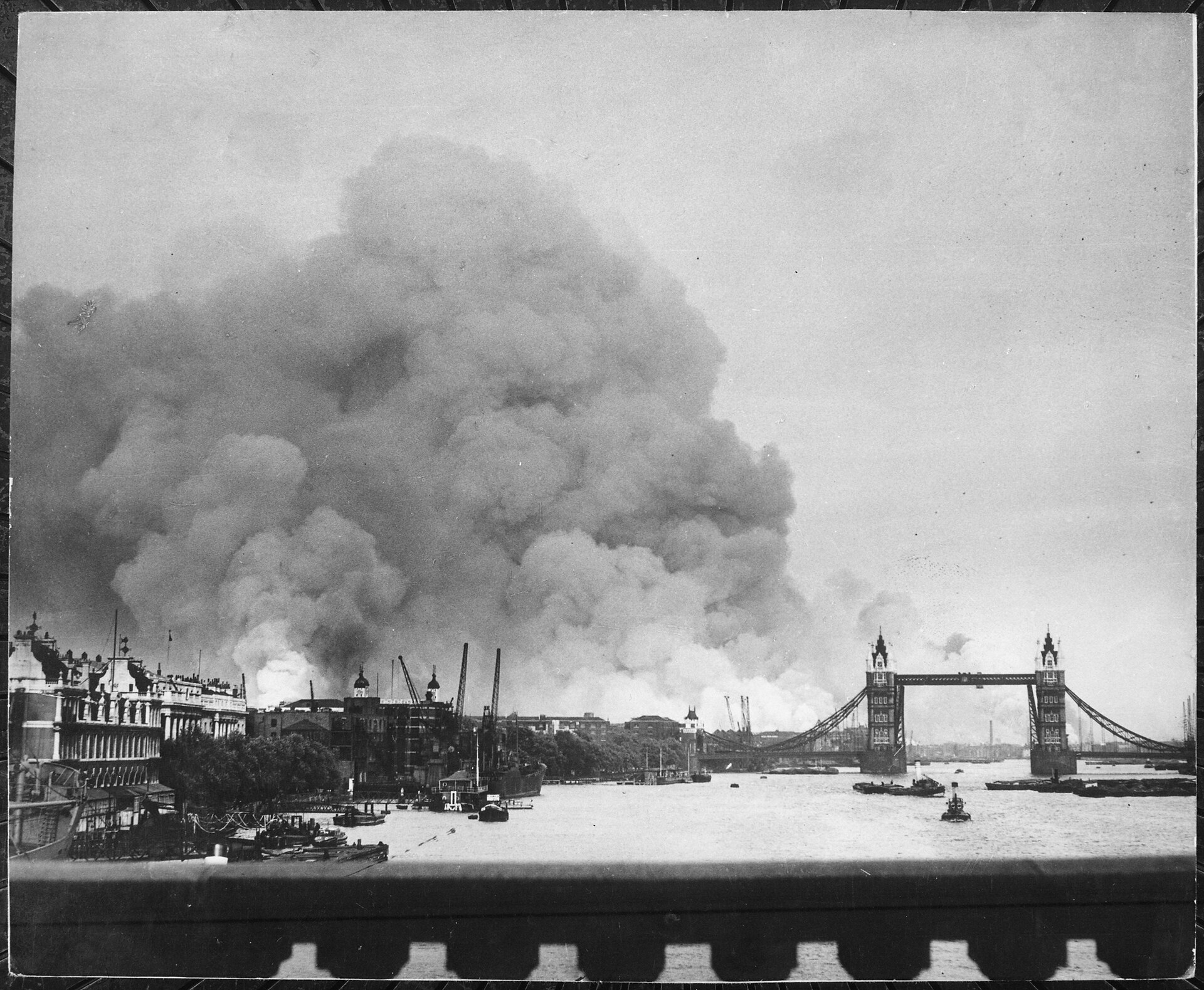
London, 7th September 1940 · London's dock area. Tower Bridge stands out against a background of smoke and fires. New York Times Paris Bureau Collection.
U.S. National Archives and Records Administration (NARA 541917) · Public domain
The Blitz

The beam war becomes operational

British scientific intelligence had identified Knickebein before the Blitz began. By the autumn the contest had moved through successive German navigation systems, including X-Gerät, whose narrow beams and timed signals could place pathfinders over an inland target in darkness. Countermeasures combined listening, technical analysis, jamming and the transmission of misleading signals. R. V. Jones was an important organiser and interpreter of the intelligence, but the work depended on aircrew, radio specialists, the Telecommunications Research Establishment and operational stations that had to turn a scientific deduction into a usable defence. The…

Continue in The Blitz →
1943
A converted cable ship laying pipeline across the English Channel, 1944.
Pipeline laying in the Channel, 1944 ·
Operation PLUTO

Latimer and Sancroft become pipeline ships

The former merchant ships Empire Ridley and Empire Baffin were converted as HMS Latimer and HMS Sancroft. Large cable tanks, guiding machinery and stern gear allowed each ship to carry and lay operational lengths of three-inch HAIS cable.

Continue in Operation PLUTO →
1944
LVT-4 Alligator amphibious vehicles pass Terrapin amphibious vehicles near Terneuzen during the Battle of the Scheldt, 13 October 1944.
Department of National Defence / Library and Archives Canada · 13 October 1944 · Public domain in Canada · Source
The Battle of the Scheldt

Infatuate I lands at Flushing

No. 4 Commando crossed from Breskens before dawn on 1 November and landed at Flushing, followed by the 155th Infantry Brigade of the 52nd Division. The assault established a foothold inside a defended port town at the south-eastern edge of Walcheren. The attackers then fought through streets and buildings while floodwater restricted movement away from the higher ground. Their objective was to clear Flushing and advance around the southern rim toward the forces landing at Westkapelle.

Continue in The Battle of the Scheldt →
LVT Buffalo amphibious vehicles during the invasion of Walcheren, 1 November 1944.
LVT Buffalo amphibious vehicles during the invasion of Walcheren, 1 November 1944. British government / Imperial War Museums B 11628 · Public domain Source
The Battle of the Scheldt

Infatuate II lands through the gap

Royal Marine commandos of 4 Special Service Brigade landed at Westkapelle on 1 November through and beside the breach in the sea dyke. German batteries W13 and W15 covered the approaches and opened fire on the assault and support craft. Amphibious vehicles carried commandos and equipment from landing craft onto the damaged sea wall and higher ground. Once ashore, the brigade split north and south along the coast to reduce the batteries controlling the western Scheldt.

Continue in The Battle of the Scheldt →
Survivors from gun landing craft are recovered by an LCI(S) acting as a hospital ship off Westkapelle during the 1 November 1944 assault.
Survivors from gun landing craft are recovered by an LCI(S) acting as a hospital ship off Westkapelle during the 1 November 1944 assault. R. G. G. Coote / Royal Navy official photographer · IWM A 26235 · Public domain Source
The Battle of the Scheldt

The Support Squadron Eastern Flank

The Support Squadron Eastern Flank closed the Westkapelle batteries with gun-, rocket- and mortar-armed landing craft in order to suppress them during the assault. German coastal fire struck the small vessels at short range. Nine support craft were sunk and many others damaged; 172 crewmen were killed and 286 wounded according to the Bevrijdingsmuseum Zeeland account. Their fire and losses helped keep the coastal batteries engaged while the commandos reached the shore.

Continue in The Battle of the Scheldt →
The Battle of the Scheldt

Warspite's last action

Warspite and the monitors Roberts and Erebus opened heavy naval fire against the Walcheren batteries on the morning of 1 November. Warspite's 15-inch guns engaged the coastal positions while landing and support craft moved toward Westkapelle. The battleship continued firing at targets during the day. The operation became Warspite's final combat action after service from the First World War through the Mediterranean, Normandy and the Walcheren assault.

Continue in The Battle of the Scheldt →
OSS officers with Draža Mihailović at Pranjani on 6 September 1944 during Operation Halyard.
Unknown photographer · Pranjani, 6 September 1944 · Public domain (PD-Yugoslavia)
Operation Halyard

Bunar is used for its first Halyard evacuation

The Boljanić field was used for an evacuation on 1 November. Foundation research identifies three American pilots among those flown out together with members of the separate Ranger mission. Halyard then continued searching farther south for stranded crews before returning to Boljanić. The mission was now operating through winter weather, a moving front and increasingly constrained supply.

Continue in Operation Halyard →