Skip to content
WW2 Theatres Theatres of the Second World War
Home

World War II calendar

WWII On This Day: November 15

What happened on November 15 during World War II? This date brings together 4 events from 1940, 1941 and 1943, with period photographs and links to the full operations documented across WW2 Theatres.

1940
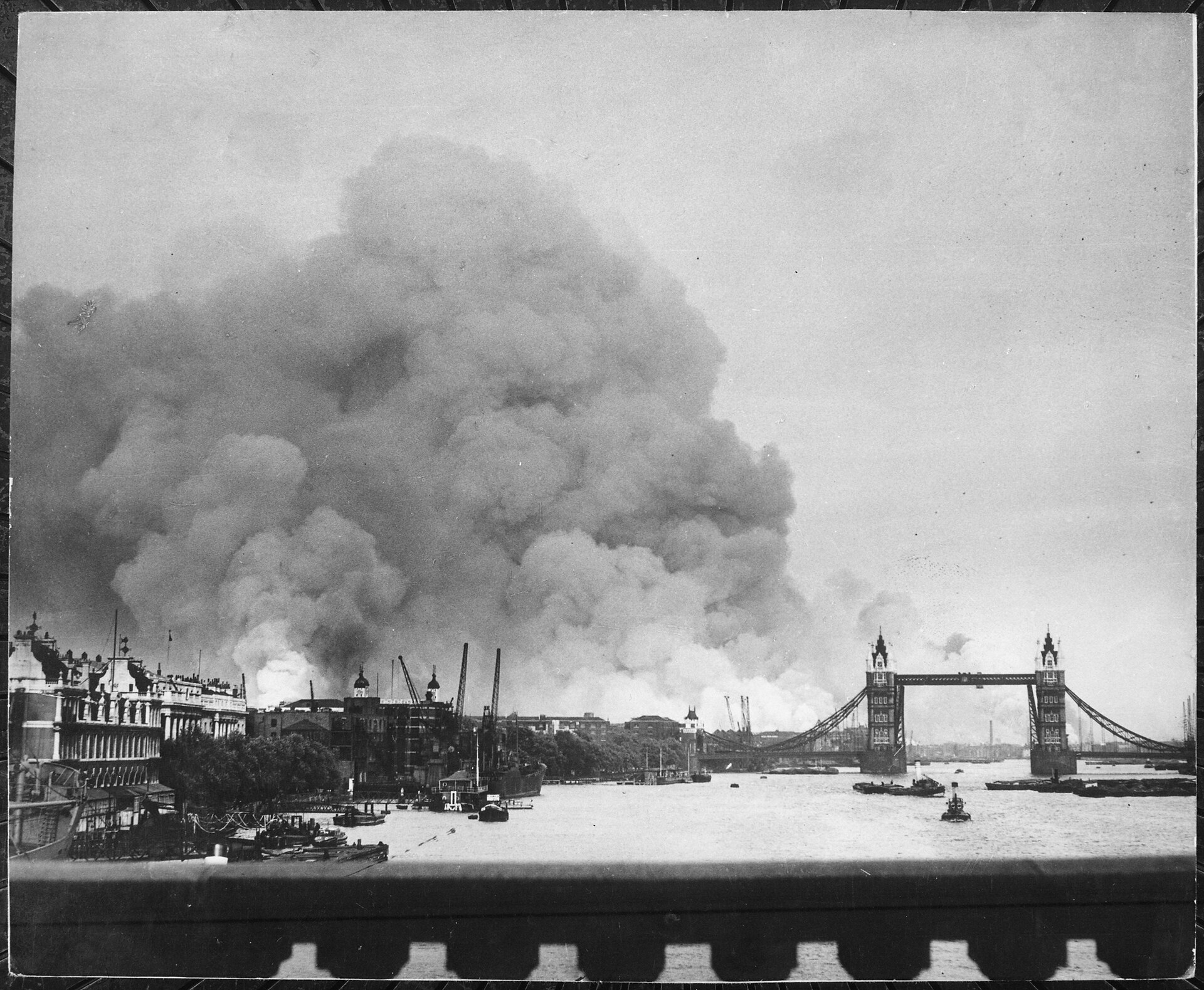
London, 7th September 1940 · London's dock area. Tower Bridge stands out against a background of smoke and fires. New York Times Paris Bureau Collection.
U.S. National Archives and Records Administration (NARA 541917) · Public domain
The Blitz

What Churchill knew about Coventry

The story that Churchill knew Coventry was the target and deliberately allowed the raid to proceed in order to protect Ultra has survived because it gives one secret decision a terrible human price. The surviving records do not support that version. British intelligence knew that a major operation, 'Moonlight Sonata', was approaching and possessed information about German navigation activity. The difficulty was turning fragments of decrypts, beam information and operational warning into a certain target prediction soon enough to act. Defences and countermeasures were not withheld to preserve the existence…

Continue in The Blitz →
1941
A Soviet 122 mm A-19 gun crew firing during the defence of Moscow on 3 December 1941.
RIA Novosti archive #46802 / Viktor Temin · 3 December 1941 · CC BY-SA 3.0 · Source
The Battle for Moscow

The November offensive begins on both flanks of Moscow

The hard freeze restored mobility and Army Group Centre resumed the offensive. The northern attack began on 15 November, with Third and Fourth Panzer Groups driving through the Klin and Volokolamsk sectors toward the Moscow–Volga Canal and the northern approaches. Guderian renewed the southern effort beyond Tula on 18 November. The German plan still sought an envelopment rather than a direct assault on the capital. The attacking divisions now entered the decisive phase with reduced infantry, worn vehicles and a supply system operating near its practical limit, while Soviet command…

Continue in The Battle for Moscow →
1943
Red Army troops crossing the Dnieper on the Kyiv axis in 1943.
Yefim Kopyt · Russian archival photograph · Public domain
The Dnieper Crossings

German armour counterattacks west of Kyiv

Manstein concentrated armoured formations west of Kyiv and counterattacked against the expanding Soviet salient. German forces retook Zhytomyr and forced Soviet formations to give ground, showing that the new bridgehead was still vulnerable while supplies and reserves crossed the Dnieper behind it. The counteroffensive reduced the immediate Soviet advance but did not recover Kyiv or eliminate the bridgehead. By December both sides were preparing for another round of operations in right-bank Ukraine rather than a return to the Dnieper line.

Continue in The Dnieper Crossings →
Heavy seas breaking around HMS Sheffield while she escorts Arctic convoy JW 53 toward Russia in February 1943.
Royal Navy official photographer · Imperial War Museums A 14890 · Public domain
The Arctic Convoys

JW 54A reopens the winter convoy cycle

JW 54A sailed with nineteen merchant ships as the 1943–44 Arctic convoy season resumed after the summer interruption. It reached the Kola Inlet on 24 November without losing a merchant ship. The escort system was now deeper than it had been during the PQ series. Local and ocean escorts, cruiser cover and a distant heavy force were assigned around the sailing, while Allied radar, anti-submarine tactics and air power had improved across the wider Atlantic war. German U-boats and surface ships still mattered, but a convoy no longer entered the…

Continue in The Arctic Convoys →