Skip to content
WW2 Theatres Theatres of the Second World War
Home

World War II calendar

WWII On This Day: March 13

What happened on March 13 during World War II? This date brings together 3 events from 1940, 1941 and 1942, with period photographs and links to the full operations documented across WW2 Theatres.

1940
Foreign Minister Väinö Tanner broadcasting the peace terms on 13 March 1940.
Foreign Minister Väinö Tanner broadcasting the peace terms on 13 March 1940. Otso Pietinen / Finnish Heritage Agency · public-domain status per exact file record Source
The Winter War

The guns fall silent and Finland begins the evacuation

Fighting ended at 11:00 on 13 March. Foreign Minister Väinö Tanner addressed the country by radio with the peace terms as soldiers on the front received orders to disengage and new boundary arrangements began. About 430,000 people from the ceded territories lost their homes and were resettled elsewhere in Finland. The movement represented roughly twelve per cent of the national population and became one of the largest domestic tasks of the post-war months. The Winter War closed with Soviet territorial gains and Finnish sovereignty intact. The Red Army had transformed…

Continue in The Winter War →
1941
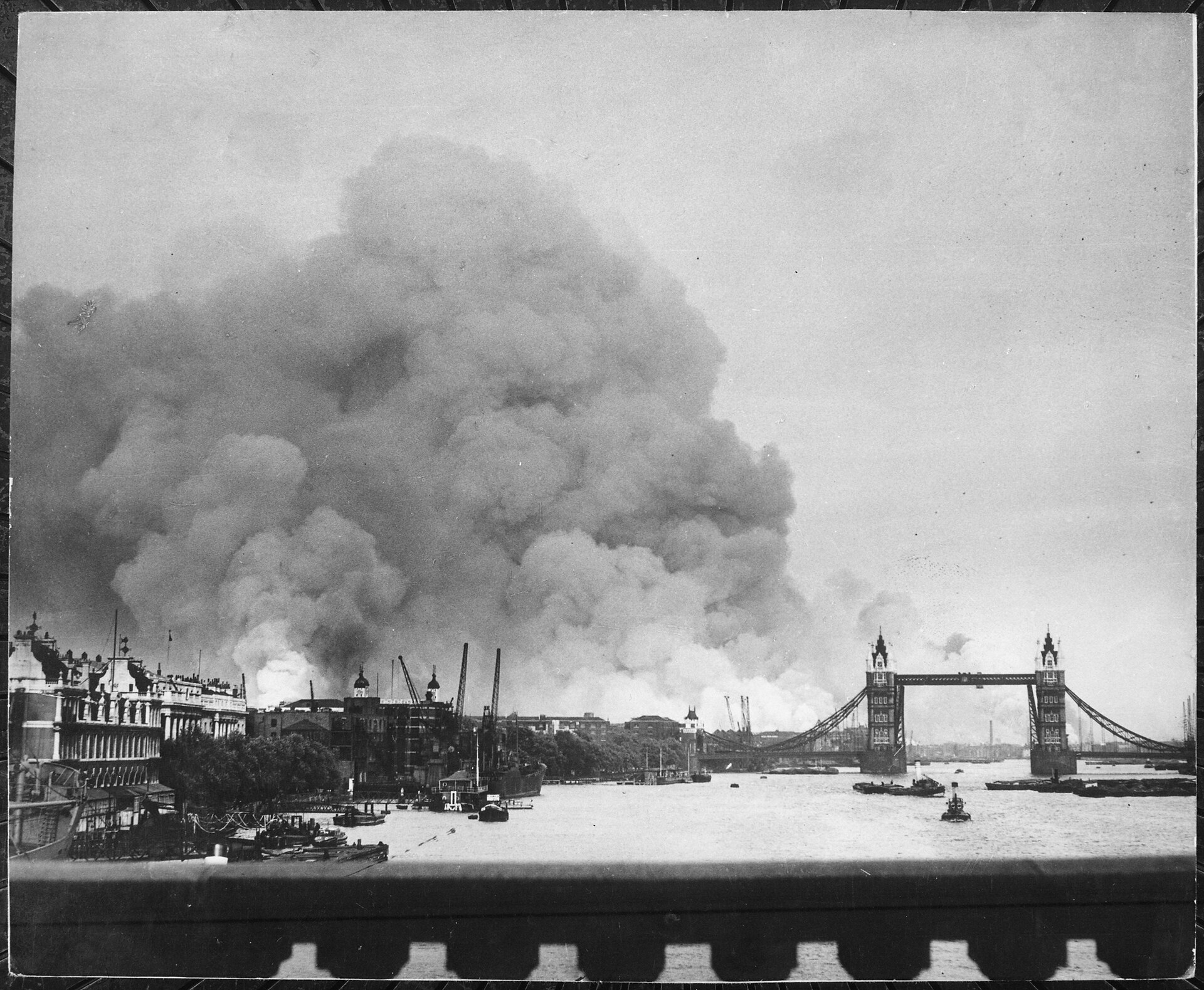
London, 7th September 1940 · London's dock area. Tower Bridge stands out against a background of smoke and fires. New York Times Paris Bureau Collection.
U.S. National Archives and Records Administration (NARA 541917) · Public domain
The Blitz

Clydebank

On the nights of 13 and 14 March several hundred Luftwaffe bombers attacked the Clyde industrial complex. John Brown's shipyard, the Royal Ordnance Factory, Singer and other industrial targets lay beside a densely built burgh whose housing absorbed much of the bombing. West Dunbartonshire records 528 dead and more than 600 seriously injured. Of roughly 12,000 houses, local records state that only seven remained intact; about 4,000 were destroyed and thousands more seriously damaged. The human destruction was disproportionate to the permanent industrial effect. Major plants were damaged but most…

Continue in The Blitz →
1942
Searchlights and anti-aircraft tracer over Cologne during Operation Millennium, 30–31 May 1942.
Royal Air Force official photographer · Imperial War Museums C 2615 · Public domain
Area Bombing Begins

Cologne gives Gee a more convincing result

A follow-up attack on Cologne produced a much clearer concentration than the first Gee raids on Essen. The city was easier to identify under the conditions of the night, while Gee helped navigators reach the area and keep the force together. Photographs showed large fires in the Deutz marshalling yards and built-up districts. Cologne police recorded 237 fires and damage to 1,691 houses. The result did not make the navigation system a precision bombsight, but it showed that an electronic fix combined with favourable visibility and visible fires could create…

Continue in Area Bombing Begins →