Skip to content
WW2 Theatres Theatres of the Second World War
Home

World War II calendar

WWII On This Day: September 8

What happened on September 8 during World War II? This date brings together 6 events from 1939, 1940, 1941 and 1944, with period photographs and links to the full operations documented across WW2 Theatres.

1939
The German battleship Schleswig-Holstein firing on the Polish depot at Westerplatte, September 1939.
Schleswig-Holstein firing on Westerplatte, 1 September 1939 · Public domain · Source
Invasion of Poland 1939

German armour reaches Warsaw and is repulsed

Elements of 4th Panzer Division reached Warsaw's western approaches on 8 September and attempted to enter through the Ochota sector. Polish defenders used anti-tank weapons, barricades and prepared positions to stop the armoured thrust. The action exposed the growing need for infantry, artillery and engineering support once a fast panzer advance reached defended urban ground. German armies were already moving to isolate the capital and destroy Polish forces west of the Vistula. Warsaw's commanders used the temporary success at the approaches to strengthen the defensive perimeter and prepare the city…

Continue in Invasion of Poland 1939 →
1940
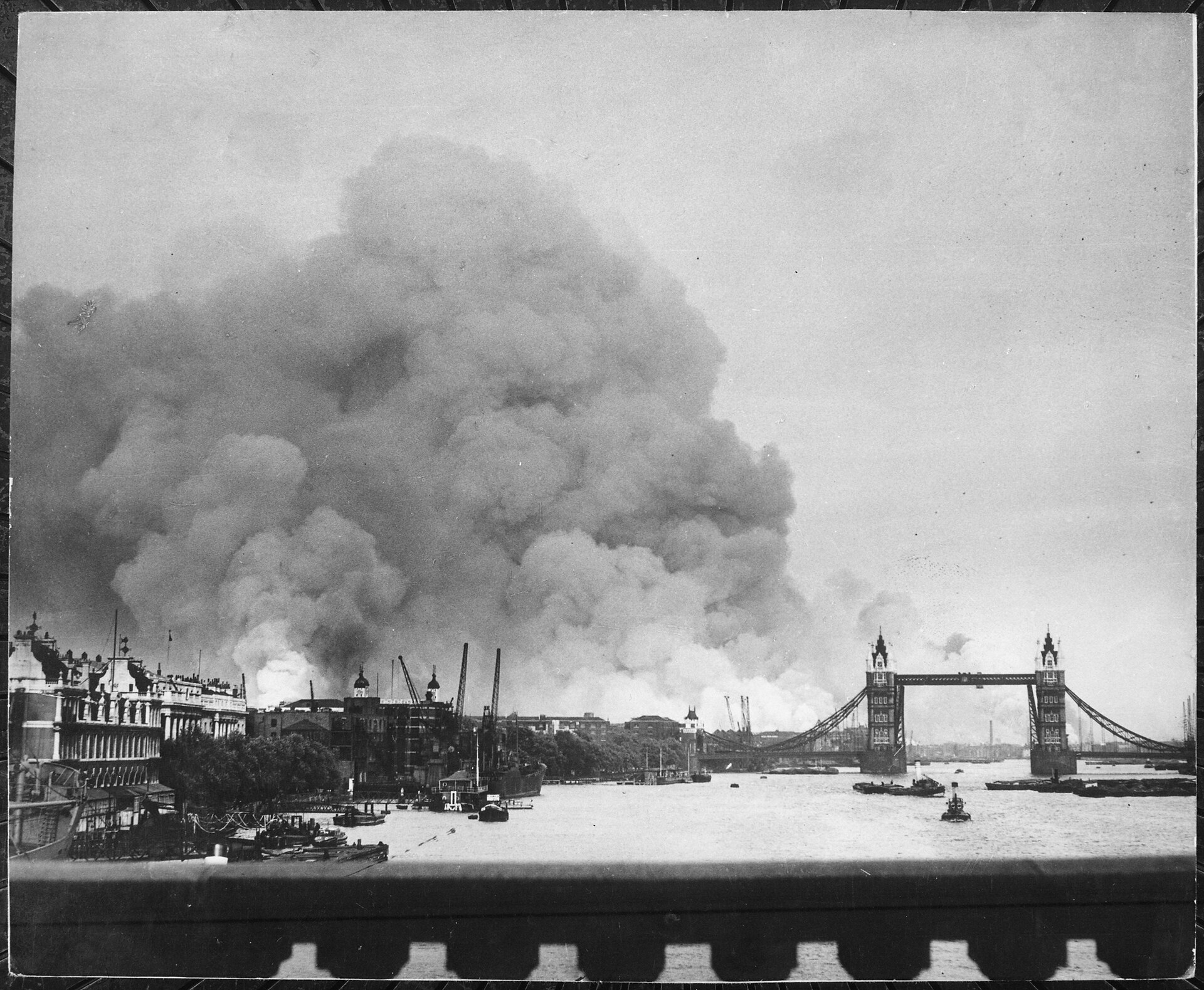
Londoners sheltering on an Underground platform, 1940.
Londoners sheltering on an Underground platform, 1940. IWM D 1568 · IWM Non-Commercial Licence Source
The Blitz

Londoners take the Underground

As the nightly raids continued, Londoners increasingly entered Underground stations with bedding and food whether or not the stations had been formally designated as shelters. The deep platforms offered psychological and physical protection that many surface shelters could not match. Government resistance was based partly on transport requirements and partly on fears that large numbers of people would remain underground and fail to work. Practice forced policy to change. Authorities gradually organised bunks, sanitation, ticketing and medical arrangements while keeping the system operating during the day. The Tube was never…

Continue in The Blitz →
1941
A German panzer officer photographed during the advance toward Leningrad in 1941.
A German panzer officer photographed during the advance toward Leningrad in 1941. Bundesarchiv Bild 101I-210-0112-01A · CC BY-SA 3.0 DE Source
Operation Barbarossa

The land routes to Leningrad are cut

Army Group North reached Lake Ladoga at Shlisselburg on 8 September and severed Leningrad's last direct land connection with the Soviet interior. The city's rail and road links east were cut. Leningrad remained Soviet-held. Supplies and evacuations could still move across Lake Ladoga, while Soviet forces defended the city and the approaches. German plans shifted toward blockade and siege as the mobile forces required for further assault were increasingly tied to wider strategic priorities. The northern campaign had therefore reached a major geographic objective without eliminating the city as a…

Continue in Operation Barbarossa →
Soldiers of the Leningrad Front in trenches before an offensive, 1 September 1941. Used for the opening phase of the siege rather than as a same-day photograph of Mga or Shlisselburg.
Soldiers of the Leningrad Front in trenches before an offensive, 1 September 1941. Used for the opening phase of the siege rather than as a same-day photograph of Mga or Shlisselburg. RIA Novosti archive #58228 / Vsevolod Tarasevich · CC BY-SA 3.0 Source
The Siege of Leningrad

Shlisselburg closes the land ring

Eighteenth Army captured Shlisselburg and reached Lake Ladoga, cutting Leningrad's final land connection to the Soviet interior. A Luftwaffe raid the same day burned warehouses at Badayev. The loss worsened the immediate supply position, while the winter famine grew from the larger blockade, inadequate reserves and repeated failures in the transport system.

Continue in The Siege of Leningrad →
1944
Allied landing craft off the Île d'Or at Le Dramont, Camel Beach, during the landing in Provence, August 1944.
Landing craft off the Île d'Or at Le Dramont, Camel sector, August 1944 · Public domain · Source
Operation Dragoon

The advance slows at the Belfort approaches

The Nineteenth Army, having escaped the Rhône, turned to hold the gap between the Vosges and the Jura. Ground that had been covered at thirty miles a day now took a week per town. Besançon fell on 8 September. Beyond it the country favoured the defender and the weather was turning, and the campaign that had run four hundred miles in three weeks now stopped for the winter in front of Belfort.

Continue in Operation Dragoon →
OSS officers with Draža Mihailović at Pranjani on 6 September 1944 during Operation Halyard.
Unknown photographer · Pranjani, 6 September 1944 · Public domain (PD-Yugoslavia)
Operation Halyard

A damaged B-24 adds another crew to the rescue network

A B-24 of the 455th Bomb Group was hit after a bombing mission on a bridge north of Belgrade. Nine crewmen bailed out; one was captured by German forces, while Chetnik units recovered others, including a badly wounded airman. Sergeant Curtis Diles and surviving crewmates moved through local hands until they reached the new emergency landing ground at Koceljeva. Their experience shows why Halyard was more than the C-47 flights: every extraction depended on a ground chain finding scattered men first.

Continue in Operation Halyard →