Skip to content
WW2 Theatres Theatres of the Second World War
Home

World War II calendar

WWII On This Day: May 1

What happened on May 1 during World War II? This date brings together 9 events from 1941, 1942, 1944 and 1945, with period photographs and links to the full operations documented across WW2 Theatres.

1941
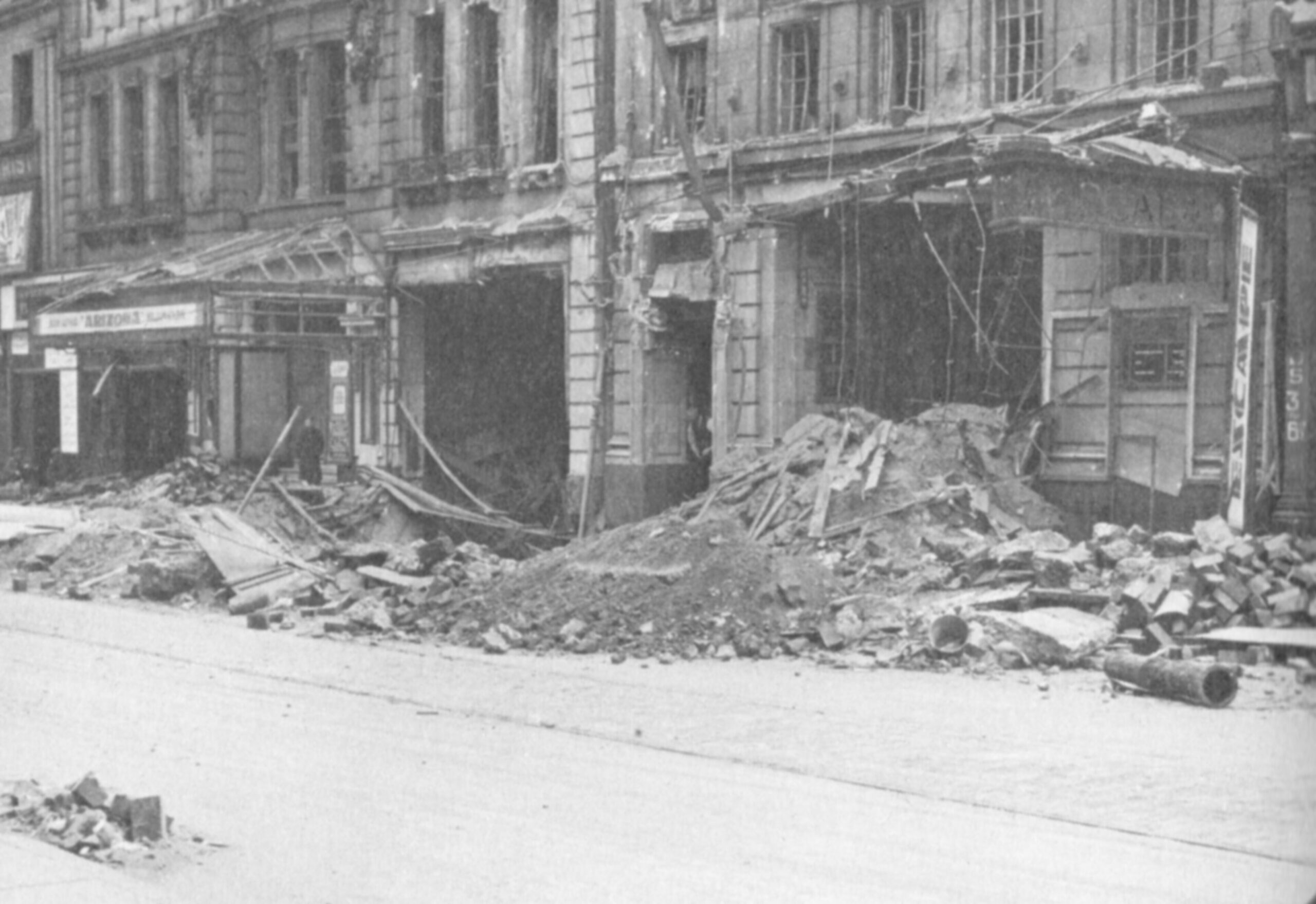
Damage in Liverpool after the May raids of 1941.
Damage in Liverpool after the May raids of 1941. IWM H 9502 · IWM Non-Commercial Licence Source
The Blitz

The May Blitz on the Mersey

From 1 to 7 May Liverpool, Bootle and the Mersey docks endured a sustained sequence of raids aimed at one of Britain's most important Atlantic ports. Warehouses, docks, rail connections, housing and ships occupied the same narrow urban-industrial landscape. National Museums Liverpool records more than 1,450 people killed in Liverpool during the May Blitz; casualty totals for the wider Merseyside area are higher. The port suffered serious disruption and extensive damage but continued to handle the traffic on which Britain's Atlantic supply system depended. The raids show the late Blitz…

Continue in The Blitz →
1942
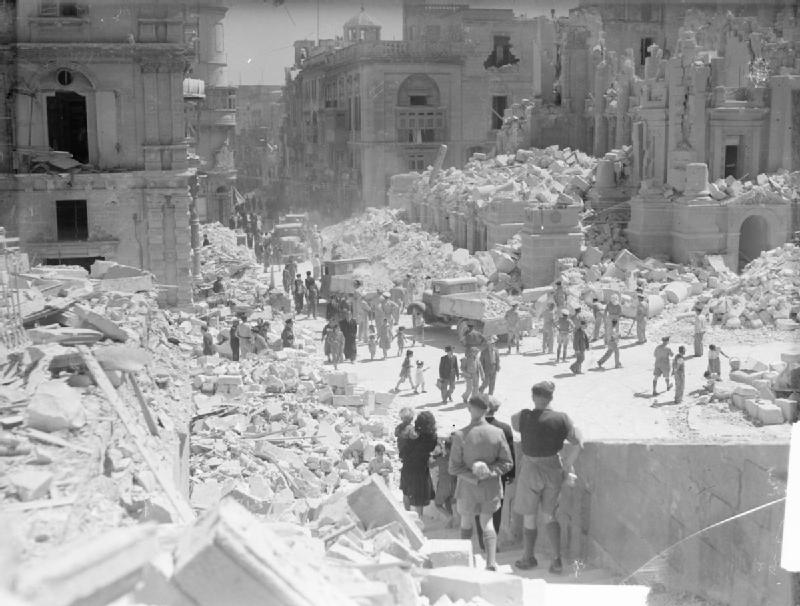
Servicemen and civilians clear bomb damage on Kingsway, Valletta, 1 May 1942, after the peak month of the Axis air offensive.
Servicemen and civilians clear bomb damage on Kingsway, Valletta, 1 May 1942, after the peak month of the Axis air offensive. Lt J. E. Russell, Royal Navy official photographer / Imperial War Museums A 8701 · public domain (UK Government) Source

The island after the April offensive

April closed after 9,599 Luftwaffe sorties and about 6,500 tons of bombs dropped during the month. Airfields, dockyard facilities and towns around the harbour carried extensive damage, while the RAF had lost aircraft both in combat and on the ground. The bombing campaign had driven the island close to the condition German planners wanted: reduced fighter strength and sharply constrained offensive operations. The same pressure reached the civilian population through damaged housing, interrupted utilities and increasingly tight food stocks. Malta still functioned as an air and naval base, but keeping…

Continue in Malta: Air Siege and Convoy War →
Cologne showing extensive bomb and fire damage after Operation Millennium in May 1942.
Cologne after the raid of 30–31 May 1942 · U.S. Department of Defense. Department of the Army.
Operation Millennium

The thousand plan

Bomber Command's normal front-line strength was far below one thousand aircraft. Harris proposed assembling the number by using every available operational bomber, aircraft from conversion units and machines flown by instructors and pupils from Operational Training Units. The figure was both military and political. A thousand aircraft would demonstrate scale even before the damage was known.

Continue in Operation Millennium →
Chinese soldiers defending positions during the Battle of Shanghai, 1937.
Chinese defenders during the Battle of Shanghai, 1937 · Public domain · Photograph pending verification
The Second Sino-Japanese War

The Three Alls policy

Authorised at the highest level of Japanese Imperial Headquarters in December 1941 and applied in North China from May 1942 under General Yasuji Okamura, sankō sakusen, kill all, burn all, loot all, treated entire districts suspected of harbouring Communist resistance as legitimate military targets. The historian Mitsuyoshi Himeta's reconstruction from Japanese and Chinese records puts civilian deaths from the policy at a minimum of 2.7 million, a scale that sits alongside the village-burning campaigns documented on the Reprisal and Massacre page, though the two are not identical in method or…

Lieutenant-General Arthur Percival and the British surrender party walking to the Ford Motor Factory in Singapore on 15 February 1942.
British official photographer / Imperial War Museums HU 2781 · UK Government public domain · Source
The Fall of the Southern Empires

Mandalay Falls

Japanese troops occupied Mandalay on 1 May as the Allied retreat through central Burma continued. The fall of the city removed the principal communications centre around which a renewed central position might have been organized. The armies were now separating according to the routes still open to them. British and Indian forces moved west toward India; Chinese forces faced the problem of returning toward China after Lashio had already been lost. Mandalay’s occupation was therefore less a dramatic last stand than confirmation that the central Burma system had ceased to…

Continue in The Fall of the Southern Empires →
1944
Men of the 16th Infantry Regiment wading ashore from a landing craft at Omaha Beach, 6 June 1944.
“Into the Jaws of Death” · CPhoM Robert F. Sargent, US Coast Guard · NARA 26-G-2343 · Public domain · Source
Omaha Beach

The 352nd Division reinforces the coast

Elements of the 352nd Infantry Division moved into the coastal defence zone shared with the 716th Static Infantry Division. This put field-quality infantry into a sector the invasion plan had initially treated as more lightly held. Allied intelligence knew the division existed, but the timing, strength and coastal deployment were not fully absorbed into the assault picture. The resulting surprise was one factor in the unexpectedly strong defence at Omaha.

Continue in Omaha Beach →
Wrecked rolling stock in the severely damaged marshalling yard at Juvisy-sur-Orge after Allied air attacks in 1944.
Bridge B (Fg Off), Royal Air Force official photographer / Imperial War Museums, CL 4170 · Public domain · Source
The Transportation Plan

The Eighth makes its first major rail-centre effort

The Eighth Air Force dispatched 328 heavy bombers and sixteen fighter groups against six marshalling yards from Brussels to Metz. More than 1,000 tons fell on the target system while Ninth Air Force B-26s, Bostons and Thunderbolts attacked other rail centres across northern France and Belgium.

Continue in The Transportation Plan →
1945
Yevgeny Khaldei's photograph of Soviet soldiers raising a Soviet flag over the Reichstag in Berlin on 2 May 1945.
Yevgeny Khaldei / TASS · 2 May 1945 · CC BY 4.0 via the Russian Ministry of Defence · Source
The Battle of Berlin

Krebs asks for an armistice

At about 01:00 on 1 May General Hans Krebs crossed the lines to Chuikov's 8th Guards Army command post with news of Hitler's death and a proposal for an armistice. The bunker leadership wanted negotiations that might allow the successor government to continue functioning. The Soviet side would not exchange an armistice for anything short of capitulation. Krebs returned around midday without an agreement. The distinction was decisive. The surviving political leadership wanted time and political room; the Soviet command wanted the Berlin garrison to stop fighting. There was no…

Continue in The Battle of Berlin →
The Battle of Berlin

The breakouts begin

During the night of 1–2 May groups from the government district, Waffen-SS sectors and other isolated commands attempted to move west through the Tiergarten, across the Spree and toward Spandau. Some small groups penetrated parts of the Soviet cordon; many more were killed, captured or dispersed. The movement was not a single centrally controlled operation on the scale Weidling had earlier proposed. By then Weidling had concluded that another general breakout would only spend lives without changing the military situation. The remaining issue was how to stop the fighting across…

Continue in The Battle of Berlin →