Skip to content
WW2 Theatres Theatres of the Second World War
Home

World War II calendar

WWII On This Day: April 19

What happened on April 19 during World War II? This date brings together 4 events from 1942, 1943 and 1945, with period photographs and links to the full operations documented across WW2 Theatres.

1942
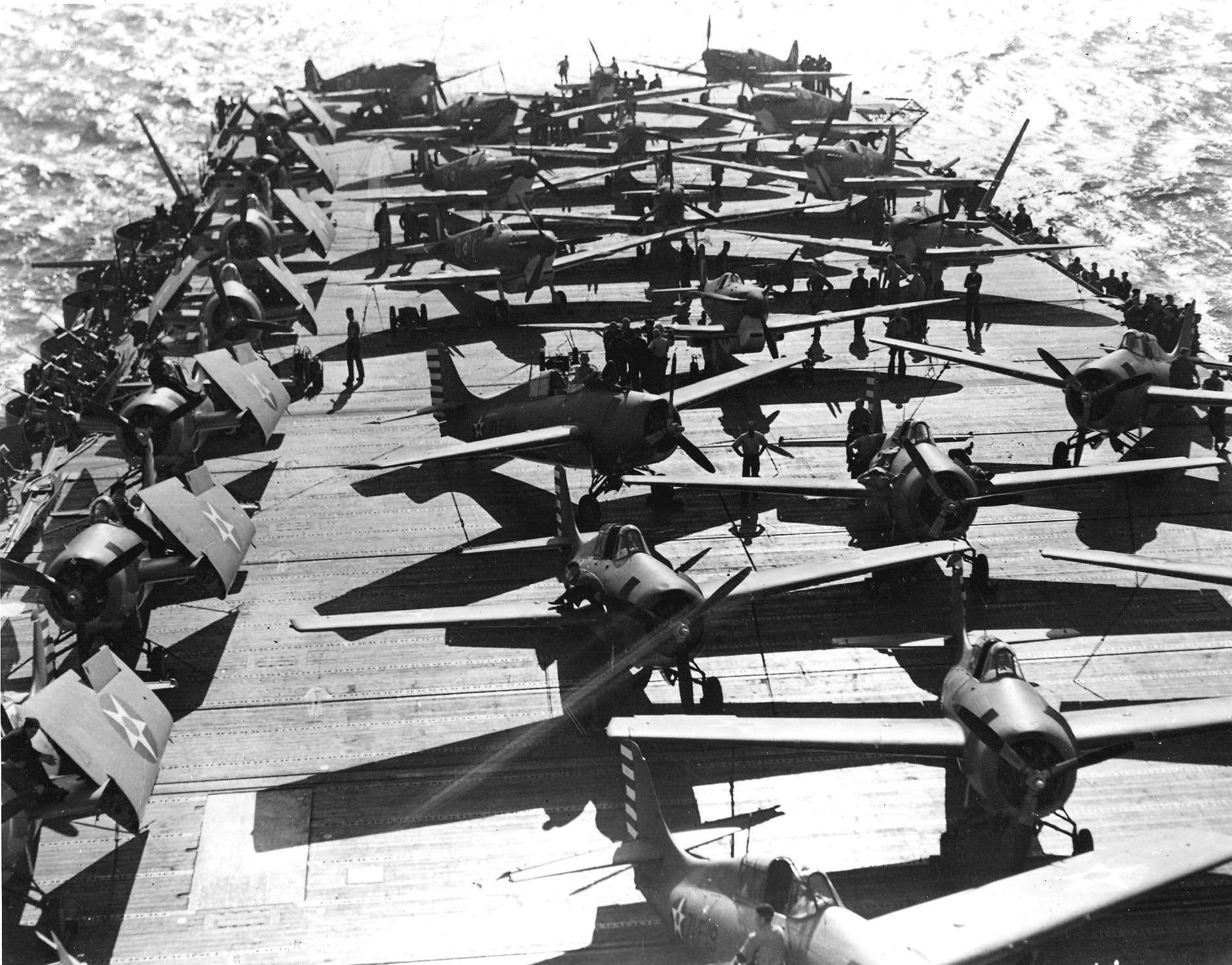
RAF Spitfire Vcs on USS Wasp on 19 April 1942, one day before their launch for Malta during Operation Calendar.
RAF Spitfire Vcs on USS Wasp on 19 April 1942, one day before their launch for Malta during Operation Calendar. U.S. Navy National Museum of Naval Aviation · public domain Source

Wasp carries Spitfires into the Mediterranean

USS Wasp carried RAF Spitfire Vcs through Gibraltar and launched forty-six for Malta on 20 April. The mission answered a crisis in fighter strength during the heaviest month of the air siege, when the Luftwaffe was attacking airfields often enough to damage aircraft soon after they arrived. Calendar delivered aircraft but only a temporary increase in usable strength. By 23 April nine of the newly arrived fighters had been destroyed on the ground and twenty-nine damaged. The experience changed the handling of the next reinforcement: incoming aircraft would be dispersed,…

Continue in Malta: Air Siege and Convoy War →
Lieutenant-General Arthur Percival and the British surrender party walking to the Ford Motor Factory in Singapore on 15 February 1942.
British official photographer / Imperial War Museums HU 2781 · UK Government public domain · Source
The Fall of the Southern Empires

The Breakout at Yenangyaung

At Yenangyaung in mid-April, British and Indian forces trying to protect the oilfields and withdraw north became entangled with Japanese columns. Chinese forces under Sun Li-jen helped reopen the route, allowing trapped elements to break out on 19 April. The breakout saved formations that might otherwise have been surrounded, but it did not restore the position in central Burma. The oilfields had to be denied and the Allied retreat continued. The operation shows the coalition at its most practical: Chinese and British-Indian forces could cooperate tactically even while the larger…

Continue in The Fall of the Southern Empires →
1943
Child survivors of Auschwitz, wearing adult-size prisoner jackets, stand behind a barbed wire fence.
USHMM

The Warsaw ghetto uprising

When German forces entered to liquidate the remaining ghetto, fighters from the Jewish Combat Organisation and Jewish Military Union resisted with a small number of firearms and improvised weapons. Organised and individual resistance continued for almost four weeks as German forces burned and demolished the ghetto. At least 7,000 Jews were killed in the fighting or while hiding; tens of thousands were deported to camps in the Lublin district.

Continue in The Holocaust: Timeline and Evidence →
1945
Yevgeny Khaldei's photograph of Soviet soldiers raising a Soviet flag over the Reichstag in Berlin on 2 May 1945.
Yevgeny Khaldei / TASS · 2 May 1945 · CC BY 4.0 via the Russian Ministry of Defence · Source
The Battle of Berlin

The Oder defence breaks

On 19 April the organised defence west of Seelow gave way. Soviet formations pushed toward Müncheberg and Fürstenwalde while Konev's armour continued north and west beyond the Spree. Seelow had delayed Zhukov and imposed serious losses, but it had not created a new strategic option for Army Group Vistula. Its reserves were spent and the roads behind Ninth Army were increasingly threatened from the south. The battle should therefore be read as a successful delaying defence inside a lost operational situation, not as an opportunity in which Germany stood close…

Continue in The Battle of Berlin →