Skip to content
WW2 Theatres Theatres of the Second World War
Home

World War II calendar

WWII On This Day: November 23

What happened on November 23 during World War II? This date brings together 3 events from 1939, 1941 and 1942, with period photographs and links to the full operations documented across WW2 Theatres.

1939
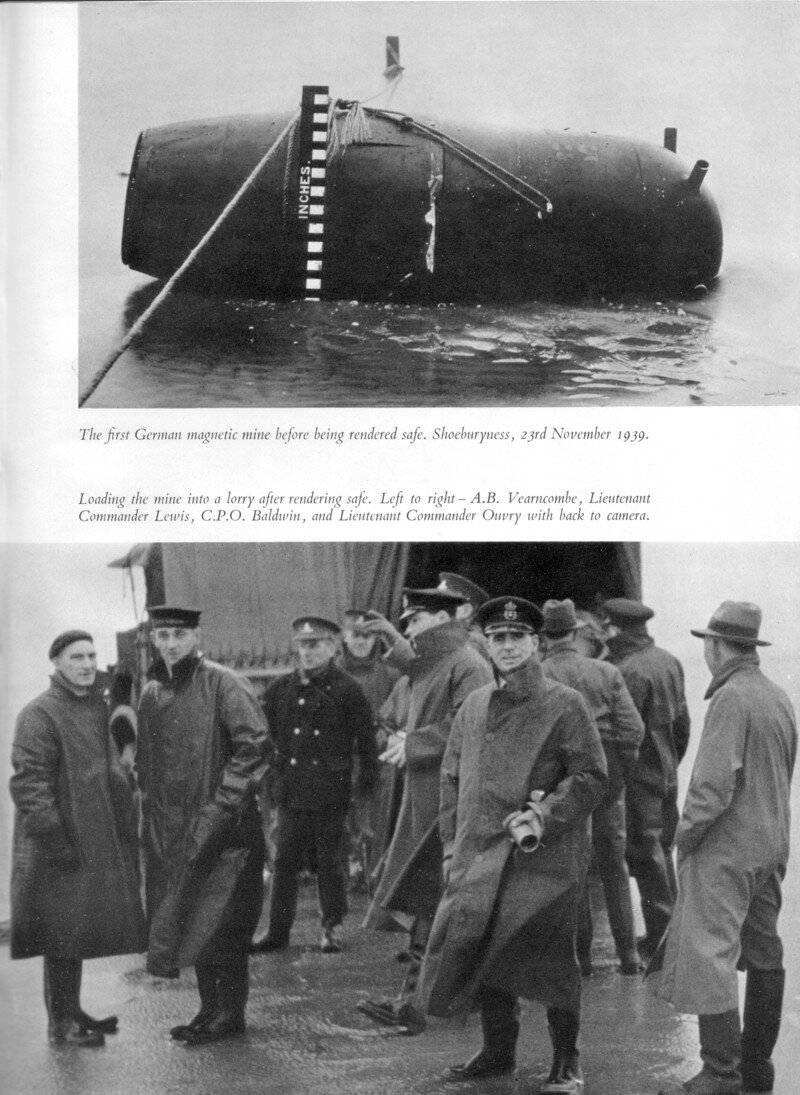
The intact German magnetic mine photographed at Shoeburyness on 23 November 1939 before being rendered safe; lower photograph records the recovery party.
The intact German magnetic mine photographed at Shoeburyness on 23 November 1939 before being rendered safe; lower photograph records the recovery party. HMS Vernon historical collection, via The Vernon Link · reuse status not stated Source
The Opening Convoy War

An intact German magnetic mine is rendered safe

Lieutenant Commander John Ouvry and the HMS Vernon mine team render safe a German Type GA magnetic ground mine exposed on the mud at Shoeburyness. British forces have already suffered serious losses and disruption from magnetic mines. They detonate in response to a ship's magnetic field, and the standard wire sweeps designed for moored contact mines cannot clear them. Two days earlier a magnetic mine disabled the cruiser HMS Belfast in the Firth of Forth. Recovering the mine intact reveals the mechanism and firing characteristics. That information allows British scientists…

Continue in The Opening Convoy War →
1941
New Zealand infantry and Matilda tank crews meeting outside Tobruk during Operation Crusader, photographed 2 December 1941.
Captain Geoffrey Keating / No. 1 Army Film & Photographic Unit · Imperial War Museums E 6918 · UK Government public domain
Tobruk and Operation Crusader

New Zealand troops assault Point 175 as South Africans are hit

The New Zealand 25th Battalion attacked Point 175 on 23 November, making gains at heavy cost before German reinforcements contested the ridge. The same day became especially destructive for the British 5th South African Brigade as Axis armour and guns struck its position near Sidi Rezegh. The offensive was in crisis, but its infantry continued trying to reach the high ground south-east of Tobruk. The fighting left the attackers badly worn down without producing a decisive Axis victory.

Continue in Tobruk and Operation Crusader →
1942
Red Army soldiers carrying a Soviet flag through the ruins of Stalingrad in 1943.
Bundesarchiv Bild 183-R76619 · CC BY-SA 3.0 DE · Source
Battle of Stalingrad

The Soviet pincers meet and close the Stalingrad pocket

On 23 November the mobile formations advancing from north and south met near Sovetskiy east of Kalach. Their junction closed the main land routes behind Stalingrad and enclosed Sixth Army, elements of Fourth Panzer Army, Romanian units and attached Luftwaffe and support personnel in a pocket between the Don and Volga. The ring was still thin in places. German commanders inside the pocket had formations that could move, and Paulus requested authority to abandon Stalingrad and break southwest before Soviet forces consolidated. Such a move required immediate decisions about fuel,…

Continue in Battle of Stalingrad →