Skip to content
WW2 Theatres Theatres of the Second World War
Home

World War II calendar

WWII On This Day: May 20

What happened on May 20 during World War II? This date brings together 12 events from 1940, 1941, 1942 and 1944, with period photographs and links to the full operations documented across WW2 Theatres.

1940
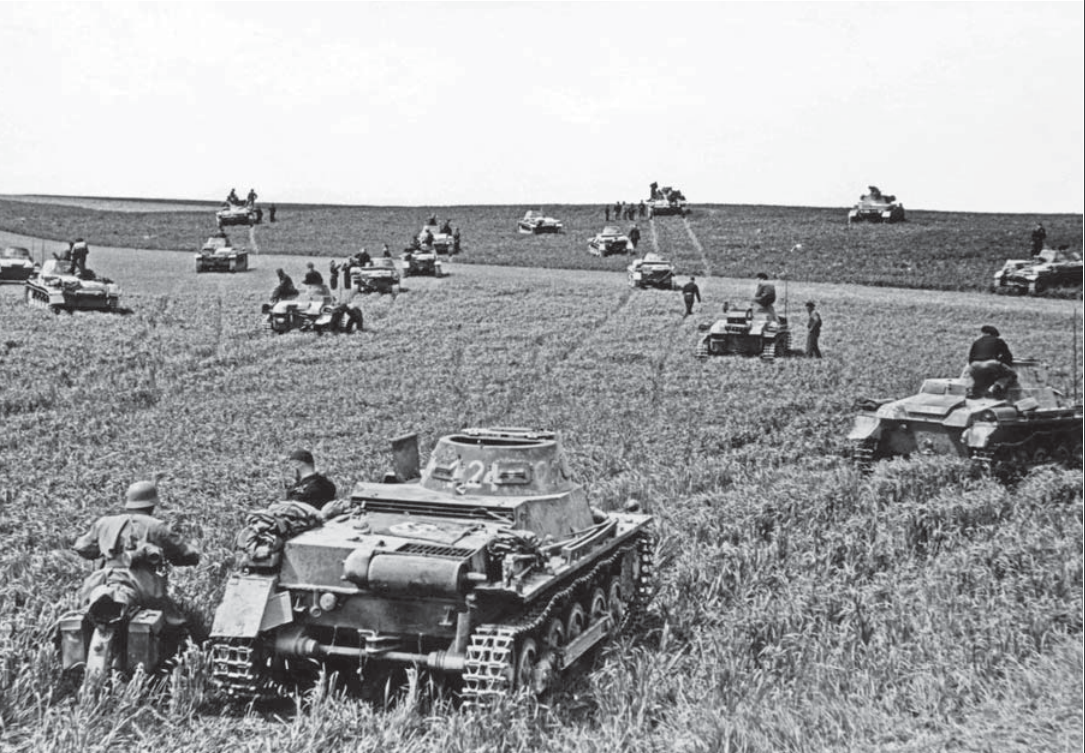
A light-tank company of I./PzRgt 36 in the fields outside Gembloux, Belgium, in May 1940
Dunkirk: Operation Dynamo

The German advance reaches the Channel

German armoured formations reached the Somme estuary near Abbeville and cut the principal land communications between the Allied armies in the north and the rest of France. The British Expeditionary Force, Belgian Army and French First Army were now enclosed on three sides, with the Channel behind them.

Continue in Dunkirk: Operation Dynamo →
German troops in northern France, 1940.
German troops in northern France, 1940. Bundesarchiv Bild 101I-299-1808-10A · CC BY-SA 3.0 DE Source
Battle of France 1940

German armour reaches the Channel

German mobile formations reached the Channel coast near Abbeville on 20 May, completing a corridor from the Meuse to the sea and dividing the Allied armies into northern and southern groups. The British Expeditionary Force, Belgian Army and large French formations remained north of the corridor. French forces south of the Somme faced the task of reopening contact while the German panzer groups turned toward the Channel ports. The movement transformed the campaign from a river breakthrough into a strategic encirclement. Calais, Boulogne and Dunkirk now became critical because sea…

Continue in Battle of France 1940 →
1941
A Ju 52 transport flying low over Crete during the initial airborne assault, 20 May 1941.
A Ju 52 transport flying low over Crete during the initial airborne assault, 20 May 1941. Royal Air Force / Imperial War Museums, E 3042E · Public domain (UK Government) Source
Battle of Crete

The first airborne wave descends on Maleme and Canea

After heavy morning bombing, German gliders and paratroops landed around Maleme, the Tavronitis riverbed, Canea and Prison Valley. Many aircraft delivered men directly into defended areas, and the assault regiment suffered severe casualties before its scattered groups could organise. At Maleme, the Tavronitis riverbed and ground west of the airfield gave surviving German troops cover from some of the fire directed from Hill 107. New Zealand defenders still held the height and the runway area, while German parties pressed against the western perimeter and tried to assemble a viable foothold.…

Continue in Battle of Crete →
German paratroops descending over Crete, May 1941.
Bundesarchiv Bild 141-0864 · CC BY-SA 3.0 DE · Source
The Balkans and Crete

Merkur

The first airborne invasion in history: around 22,000 parachute and mountain troops delivered onto three airfields on one island. The first waves came down among troops who had been warned and were waiting, and in places were shot in their harnesses. At Rethymno and Heraklion the landings failed outright. By the evening of the first day the German command was considering calling the operation off, and Student had committed his reserve.

The Balkans and Crete

The villagers fight

Cretan civilians attacked the landings with shotguns, old rifles from earlier wars, scythes and in some cases their hands. It is one of very few instances in the war of a civilian population attacking an invasion spontaneously and in numbers. Under the laws of war they were irregulars, and German reprisals began within ten days at Kondomari, where villagers were shot beside the road, and at Kandanos, which was destroyed with a sign left saying it had been razed in retribution for the killing of German soldiers by armed civilians.

A German Ju 52 shot down by anti-aircraft fire near Heraklion, 20 May 1941.
A German Ju 52 shot down by anti-aircraft fire near Heraklion, 20 May 1941. Royal Navy official photographer / Imperial War Museums, A 4144 · Public domain (UK Government) Source
Battle of Crete

The eastern airfields hold against the second wave

The afternoon airborne wave attacked Rethymno and Heraklion after delays and confusion disrupted the German timetable. Australian, British and Greek defenders met paratroops in and around both airfield sectors and prevented the attackers from taking either runway. German groups survived in scattered pockets and continued fighting around the towns and airfields, but they could not create the protected landing ground required for large transport aircraft. Their isolation also made resupply difficult while Allied units still controlled the principal objectives. By evening the invasion had failed at two airfields and remained…

Continue in Battle of Crete →
German paratroopers descending on Crete during Operation Merkur in May 1941.
Bundesarchiv Bild 141-0864 · CC BY-SA 3.0 DE · Source
Battle of Crete

22nd Battalion withdraws from Hill 107

Lieutenant-Colonel Leslie Andrew had lost telephone contact with forward companies of 22nd New Zealand Battalion and could not determine how much of the airfield perimeter still held. Reports reaching his headquarters suggested severe losses and German movement around the battalion’s flanks. A local attempt supported by two tanks failed to restore the position, and Andrew asked Brigadier James Hargest for further support. Hargest believed other units were already heavily engaged and agreed that Andrew could withdraw to a shorter line. Reinforcing companies moved toward Maleme during the night but reached…

Continue in Battle of Crete →
The Balkans and Crete

Hill 107

The New Zealand battalion holding the hill that overlooked Maleme airfield had lost its communications, believed itself about to be cut off, and withdrew during the night. Nobody senior knew until morning. It was the single decision that lost Crete. With the hill gone the airfield could not be covered by fire, and once the airfield could not be covered the Germans could land transport aircraft on it.

1942
Cologne showing extensive bomb and fire damage after Operation Millennium in May 1942.
Cologne after the raid of 30–31 May 1942 · U.S. Department of Defense. Department of the Army.
Operation Millennium

Hamburg is considered first

Hamburg was initially preferred because its port, shipyards and dense urban districts offered a large target. Weather repeatedly blocked the plan. Harris could not keep the assembled training and operational force waiting indefinitely. Cologne, easier to identify beside the Rhine and within range of the force, became the substitute.

Continue in Operation Millennium →
1944
Men of the 16th Infantry Regiment wading ashore from a landing craft at Omaha Beach, 6 June 1944.
“Into the Jaws of Death” · CPhoM Robert F. Sargent, US Coast Guard · NARA 26-G-2343 · Public domain · Source
Omaha Beach

Omaha's armour plan is narrower than the British beaches

The American assault relied on DD swimming Shermans, tank-dozers and engineer demolition teams. It did not field the same mixture of Churchill AVREs, flails and bridge-layers used in British assault divisions. The later story that American commanders simply refused every useful British 'Funny' is too simple. Archival reassessment shows a more complicated exchange of equipment, production limits, doctrine and training decisions.

Continue in Omaha Beach →
Three Horsa gliders on the landing ground beside the Caen Canal bridge at Bénouville, photographed in July 1944.
The three Horsa gliders of the coup de main force beside the canal bridge, 12 July 1944 · Imperial War Museums · IWM Non-Commercial Licence · Source
Operation Deadstick

A model of two bridges

A detailed terrain model of Bénouville and Ranville was built from air photographs and resistance reporting, showing the bridges, the café, the pillbox, the anti-tank gun position and the trees. Every man studied it until he could find his way across the ground in the dark. The model survives and is held at Airborne Assault at Duxford. Photographic cover was flown repeatedly, and it is from that cover that the planners knew the ditches and the marshy ground where the gliders would have to stop.

Continue in Operation Deadstick →
Wrecked rolling stock in the severely damaged marshalling yard at Juvisy-sur-Orge after Allied air attacks in 1944.
Bridge B (Fg Off), Royal Air Force official photographer / Imperial War Museums, CL 4170 · Public domain · Source
The Transportation Plan

Wide fighter sweeps against moving trains are authorised

SHAEF intelligence still judged the rail-centre campaign short of the effect expected. Leigh-Mallory authorised wide fighter sweeps against moving trains. The decision was taken when civilian passenger traffic was believed to have ceased. It turned locomotives, rolling stock and movement on open lines into direct targets.

Continue in The Transportation Plan →