Skip to content
WW2 Theatres Theatres of the Second World War
Home

World War II calendar

WWII On This Day: January 1

What happened on January 1 during World War II? This date brings together 5 events from 1940, 1942, 1943, 1944 and 1945, with period photographs and links to the full operations documented across WW2 Theatres.

1940
Destroyed Soviet vehicles and fallen soldiers on the Raate Road, photographed on 1 January 1940 during the Suomussalmi–Raate fighting.
Destroyed Soviet vehicles and fallen soldiers on the Raate Road, photographed on 1 January 1940 during the Suomussalmi–Raate fighting. Unknown Finnish military photographer / SA-kuva · CC BY 4.0 Source
The Winter War

The 44th Rifle Division is broken along the Raate Road

The Soviet 44th Rifle Division advanced west along the Raate Road to relieve the 163rd Division around Suomussalmi. Its vehicles, artillery and supply train stretched for miles through forest in severe winter weather. Siilasvuo's troops cut the road at several points, isolated sections of the column and attacked the resulting pockets from the surrounding woods. Heated Finnish tents, ski mobility and local supply routes gave the attacking detachments greater endurance away from the road. By 7 January the division had suffered thousands of casualties and abandoned large quantities of vehicles,…

Continue in The Winter War →
1942
Citizens of Leningrad queueing for water during the siege.
Leningraders queueing for water during the siege · RIA Novosti archive image 907 · CC BY-SA 3.0 · Source
The Siege of Leningrad

The first winter becomes a mass-death crisis

During the first siege winter, thousands of civilians died from starvation, cold and associated illness. Bodies accumulated in apartments, streets and collection points because families and municipal services often lacked the strength or transport to move them. Registration broke down under the same conditions. Refugees, missing residents and people who died after evacuation were incompletely captured, leaving the official Soviet figure as a documented count within a larger and uncertain civilian death toll.

Continue in The Siege of Leningrad →
1943
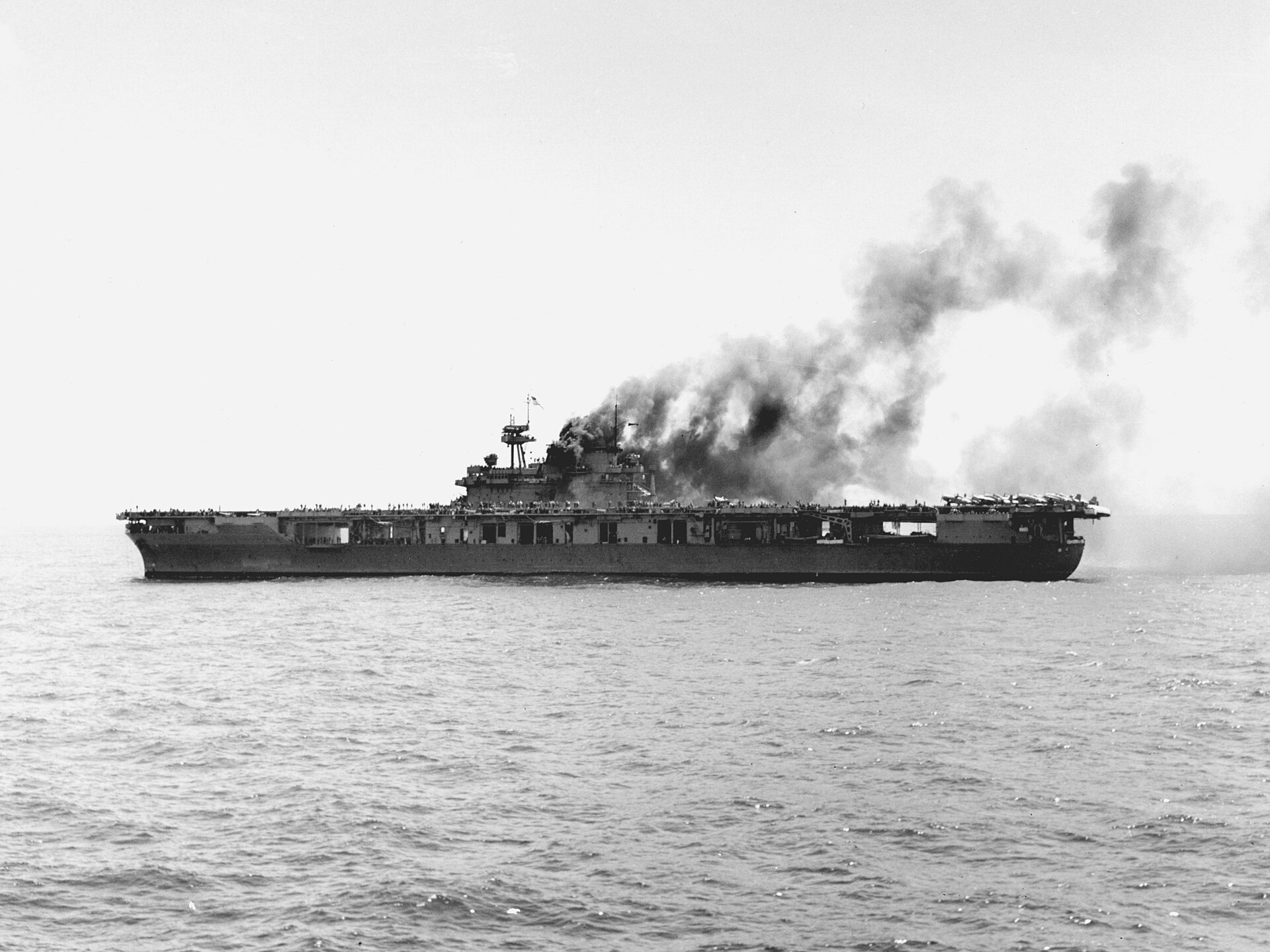
USS Yorktown under attack by Japanese torpedo bombers during the Battle of Midway, 4 June 1942.
USS Yorktown under torpedo attack, 4 June 1942 · US Navy · NARA · Public domain · Source
The Battle of Midway

Rochefort is sent to a dry dock

Nimitz recommended Joseph Rochefort for the Distinguished Service Medal. Washington blocked it. The naval communications establishment in the capital, which had backed the wrong estimate, took the credit for the Midway intelligence, and Rochefort was reassigned in late 1942 to command a floating dry dock in San Francisco. He received the Distinguished Service Medal in 1986, three years after his death, and the Presidential Medal of Freedom in 2000.

Continue in The Battle of Midway →
1944
Chinese soldiers defending positions during the Battle of Shanghai, 1937.
Chinese defenders during the Battle of Shanghai, 1937 · Public domain · Photograph pending verification
The Second Sino-Japanese War

Where this page ends, and what came next

By early 1944 China had fought alone or nearly alone for six and a half years, absorbed the majority of the Japanese army's ground strength for most of that time, and lost more people than any other Allied nation in the war. None of that bought a battlefield victory that ended the occupation of eastern China. The war's final phase in China, Japan's last great offensive and the Allied campaigns to reopen the Burma Road, are covered on the operations that follow this one: Operation Ichi-Go, the largest Japanese ground…

1945
Men of the 101st Airborne Division moving toward Bastogne on 19 December 1944 as Allied reserves enter the Ardennes battle.
101st Airborne Division on the road between Bastogne and Houffalize, 19 December 1944 · US Army Signal Corps SC 329953 · NARA · Public domain · Source
The Battle of the Bulge

Operation Bodenplatte

On 1 January the Luftwaffe launched Operation Bodenplatte against Allied airfields in Belgium and the Netherlands. More than eight hundred German fighters and fighter-bombers took part in the surprise attack. The operation destroyed or damaged hundreds of Allied aircraft, many of them on the ground. Its asymmetry was in replacement. Allied air forces could replace aircraft rapidly and lost relatively few pilots on the ground, while German losses included aircraft and experienced fighter aircrew the Luftwaffe could not easily replace. Bodenplatte was connected to the western offensives but was not…

Continue in The Battle of the Bulge →