| Tuesday 8 August · Midday | Choltitz arrives at the Hôtel Meurice | Hôtel Meurice, rue de Rivoli | Dietrich von Choltitz had been appointed military governor of Paris on 7 August and reached the capital the following day, establishing his headquarters in the Hôtel Meurice on the rue de Rivoli. Sources 1, 2, 12 |
| Thursday 10 August · 06:00 | The railwaymen strike | Gare du Nord and the depots | Railway workers across the Paris region stopped work. The strike closed the network the German army needed to move troops and supplies through the city, and it was the first open act of the rising that followed. Sources 2, 3 |
| Tuesday 15 August · 05:00 | The police strike | Préfecture de Police, Île de la Cité | Around 20,000 Paris policemen stopped work rather than be disarmed by the Germans, who had begun seizing weapons from precincts they no longer trusted. The Métro stopped the same day and the postal workers followed. Sources 2, 3 |
| Tuesday 15 August · 09:00 | The last train leaves Pantin | Pantin station | Around 2,200 prisoners were taken from Fresnes, Romainville and the Cherche-Midi and loaded onto a train at Pantin bound for Buchenwald and Ravensbrück. It was the last mass deportation train to leave Paris. Sources 4 |
| Thursday 17 August · 10:00 | Vichy and the German administration leave | Central Paris | Pierre Laval was removed to Belfort and the Vichy apparatus in Paris dissolved. German civil administration began burning files and loading lorries, and the Gestapo offices on the avenue Foch emptied. Sources 1, 2 |
| Friday 18 August · 18:00 | Rol-Tanguy orders general mobilisation | Denfert-Rochereau | Colonel Henri Rol-Tanguy, commanding the FFI in the Île-de-France, had posters printed calling every Parisian capable of bearing arms to mobilise. His command post was in a disused tunnel beneath the Place Denfert-Rochereau, connected to the surface by the city telephone system the Germans never cut. Sources 2, 3 |
| Saturday 19 August · 07:00 | The police seize the Préfecture | Préfecture de Police | Around two thousand striking policemen occupied their own headquarters on the Île de la Cité at first light and raised the tricolour over it for the first time since June 1940. La Marseillaise was sung in the courtyard. Sources 2, 3 |
| Saturday 19 August · 08:30 | Luizet installed as Prefect of Police | Préfecture de Police | Charles Luizet, appointed by the Provisional Government, took possession of the Prefecture as its lawful head. Alexandre Parodi, de Gaulle's delegate general, and Jacques Chaban-Delmas, his military delegate, were both in the city. Sources 2, 10 |
| Saturday 19 August · 10:00 | The rising spreads | Across the city | Town halls in the eastern arrondissements were taken one after another. Fighting broke out at the Place de la République, on the boulevards and around the German strongpoints. Weapons were taken from the men who had been carrying them. Sources 2, 3 |
| Saturday 19 August · 14:00 | German armour shells the Préfecture | Quai des Orfèvres | Tanks and self-propelled guns came onto the quais and shelled the Prefecture across the river, setting fires in the courtyard. The defenders had rifles, a few automatic weapons and petrol bombs made in the building. Sources 2, 3 |
| Saturday 19 August · 19:00 | Nordling opens negotiations | Swedish Consulate-General | Raoul Nordling, the Swedish consul-general, born in Paris and running a business there, put himself between the garrison and the rising. He proposed a truce to both sides on the argument that neither could win quickly and both would lose the city. Sources 2, 7 |
| Sunday 20 August · 09:00 | The truce is declared | Hôtel de Ville | A ceasefire was announced by loudspeaker car through the streets: the Germans would not attack occupied buildings, the Resistance would not attack German columns leaving the city. Sources 2, 3, 7 |
| Sunday 20 August · 13:00 | Parodi is arrested, and released | Rue de Bourgogne | Alexandre Parodi, the senior representative of the Provisional Government in Paris, was stopped at a German checkpoint carrying documents naming the Free French administration for the city. Sources 2, 7, 10 |
| Sunday 20 August · 17:00 | Nordling secures the prisoners | Fresnes and the Paris prisons | Using the truce, Nordling negotiated the transfer of political prisoners from German custody to the Red Cross and the Swedish consulate. Several thousand people were taken off the deportation lists in the days that followed. Sources 2, 4, 7 |
| Monday 21 August · 10:00 | Rol-Tanguy rejects the truce | Denfert-Rochereau | The FFI command and the Paris committee of liberation repudiated the ceasefire and ordered the fighting resumed. Rol-Tanguy's position was that a rising that stops is a rising that has surrendered its claim. Sources 2, 3 |
| Tuesday 22 August · 08:00 | The barricades go up | The whole city | Fighting resumed and Paris began building. Paving stones came up by hand, trees came down across boulevards, and lorries, buses and furniture filled the gaps. The Musée de la Libération records nearly 600 barricades in Paris and the suburbs by 24 August. Sources 2, 3 |
| Wednesday 23 August · 09:00 | Hitler threatens Paris with destruction | Hôtel Meurice | Orders reaching the Paris command demanded that the capital should not be surrendered intact and threatened bridges and key installations if the city had to be abandoned. Sources 1, 12 |
| Wednesday 23 August · 16:00 | The Grand Palais burns | Grand Palais | German forces set the Grand Palais on fire during fighting on 23 August after clashes involving police and FFI nearby. Smoke from the huge glass-roofed building became one of the most visible signs that the struggle for the city was still active. Sources 2, 3, 11 |
| Thursday 24 August · 09:00 | The advance is held at the southern approaches | Antony and the southern approaches | The 2e Division Blindée met determined German resistance on the roads through Antony, Fresnes and the southern approaches. Progress was slower than Leclerc wanted while columns searched for routes through roadblocks and defended junctions. Sources 1, 8 |
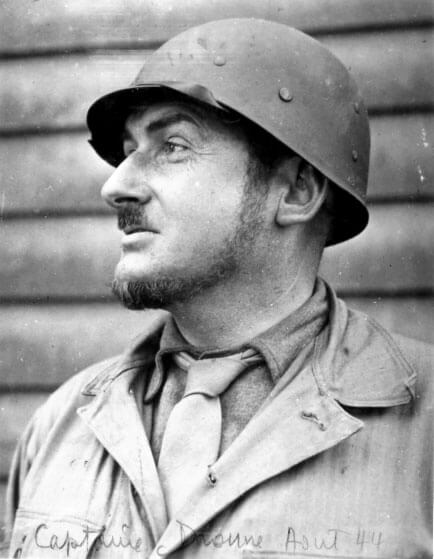
| Thursday 24 August · 19:00 | Leclerc orders a detachment in by any route | South of Paris | With the main columns still delayed on the approaches, Leclerc ordered Captain Raymond Dronne to take a small detachment by back routes and reach the centre of Paris that night. Sources 1, 8, 9 |
| Thursday 24 August · 20:00 | La Nueve enters the city | Porte d'Italie | Dronne's column came through the Porte d'Italie and drove north through streets held or screened by the Resistance, with civilians helping point out routes around German positions. Sources 8, 9 |
| Thursday 24 August · 21:22 | The first troops reach the Hôtel de Ville | Hôtel de Ville | La Nueve halted on the square in front of the Hôtel de Ville. The first regular Allied soldiers to reach the centre of Paris were Spanish exiles in American vehicles wearing French uniforms. Sources 2, 8, 9 |
| Thursday 24 August · 22:22 | The bells | Notre-Dame | The great bell of Notre-Dame began to ring and church bells across Paris followed. The sound carried through a city that was still divided by German strongpoints and Resistance-held streets. Sources 2, 3, 5 |
| Friday 25 August · 07:00 | The main force enters | Porte d'Orléans | The main body of the 2e Division Blindée entered through the southern gates on 25 August, while the US 4th Infantry Division advanced into Paris on another axis. Sources 1, 8 |
| Friday 25 August · 10:00 | German strongpoints fall across the city | Luxembourg Palace | French and American troops, often accompanied by FFI, reduced the remaining German strongpoints around sites including the Luxembourg Palace, the École Militaire, government buildings and military headquarters. Sources 1, 2, 5, 8 |
| Friday 25 August · 13:30 | Choltitz is taken at the Meurice | Hôtel Meurice | French troops reached the Hôtel Meurice and captured Choltitz at his headquarters. He was taken first to the Préfecture de Police and then to Leclerc at Montparnasse. Sources 1, 2, 8 |
| Friday 25 August · 15:30 | The surrender is signed | Gare Montparnasse | Choltitz signed the capitulation of the Paris garrison on 25 August. The written convention was received by Leclerc and countersigned by Henri Rol-Tanguy for the FFI. Sources 1, 2, 8 |
| Friday 25 August · 16:00 | Rol-Tanguy's signature fixes the Resistance into the surrender | Gare Montparnasse | Henri Rol-Tanguy's countersignature placed the FFI command on the written capitulation beside the regular French military authority represented by Leclerc. Sources 2, 8, 10 |
| Friday 25 August · 17:00 | De Gaulle goes to the Ministry of War first | Ministry of War, rue Saint-Dominique | De Gaulle entered Paris and went not to the Hôtel de Ville, where the Resistance was waiting, but to the Ministry of War, into the office he had left in June 1940. He found the furniture where he had last seen it. Sources 10 |
| Friday 25 August · 19:00 | The speech at the Hôtel de Ville | Hôtel de Ville | De Gaulle went to the Hôtel de Ville and addressed the crowd, presenting the liberation as the recovery of a French state that had continued through the war. Sources 2, 10 |
| Saturday 26 August · 15:00 | The march down the Champs-Élysées | Arc de Triomphe to Notre-Dame | De Gaulle laid a wreath at the Arc de Triomphe and then moved down the Champs-Élysées through an immense crowd, accompanied by figures from the provisional government, the Resistance and the armed forces. Sources 5, 8, 10 |
| Saturday 26 August · 15:45 | Gunfire scatters the victory crowd | Place de la Concorde | As the victory procession crossed central Paris, gunfire sent people on the Place de la Concorde flat onto the pavement and scrambling for cover. A US Army photographer caught the moment. Sources 2, 5, 10 |
| Saturday 26 August · 23:00 | The last raid | Eastern arrondissements | German aircraft bombed Paris during the night of 26 to 27 August, striking eastern districts after two days of liberation celebrations. Sources 2, 3, 11 |
| After · — | Liberation gives way to reckoning | Paris | The bridges and major installations had survived, and the new authorities now had to feed, police and govern a capital emerging from occupation while the Allied armies continued east. Sources 1, 2, 3, 10 |






.jpg)