| Sunday 3 September 1939 · 19:40 | U-30 torpedoes Athenia | Northwest of Ireland | Hours after Britain declares war, U-30 torpedoes the passenger liner Athenia northwest of Ireland. The ship is carrying 1,418 passengers and crew, including many civilians leaving Europe. Of these, 117 die. The attack contradicts the German restrictions then governing attacks on passenger ships and immediately creates the impression in Britain and the United States that unrestricted submarine warfare may already have begun. Sources 1, 2, 3, 16 |
| Wednesday 6 September 1939 · Convoy begins | The convoy system is put back into operation | British coastal and ocean approaches | Regular east-coast convoys begin on 6 September, and outward ocean convoys from the Thames and Liverpool follow on 7 September. The Admiralty is applying a system whose purpose is to reduce the number of isolated targets at sea and concentrate scarce escort ships around groups of merchantmen. The first arrangements do not provide continuous protection across the Atlantic, but they change the geometry of the submarine campaign immediately. Sources 1, 2, 4 |
| Saturday 16 September 1939 · HX 1 sails | The first HX convoy leaves Halifax | Halifax, Nova Scotia | HX 1 sails from Halifax with eighteen merchant ships bound for Britain. The Canadian destroyers Saguenay and St. Laurent provide the local escort as the convoy clears the port, and the cruisers Berwick and York meet it in the Atlantic. The convoy reaches Liverpool without loss. The voyage establishes the eastbound HX series that will become one of the principal North Atlantic supply routes for the rest of the war. Sources 4, 5, 22 |
| Sunday 17 September 1939 · 20:20 | U-29 sinks HMS Courageous | Western Approaches, southwest of Ireland | HMS Courageous is torpedoed by U-29 while operating southwest of Ireland as part of a carrier-based anti-submarine hunting group. She sinks within twenty minutes, and the Admiralty War Diary records 518 of her complement lost. The Navy has sent large fleet carriers to search areas where U-boats are expected, but the operation exposes the carrier itself to the weapon it is trying to hunt. Sources 1, 2, 10, 19, 23 |
| Saturday 14 October 1939 · Night | U-47 penetrates Scapa Flow | Scapa Flow, Orkney | Günther Prien takes U-47 through the incomplete blockship defences of Scapa Flow and attacks HMS Royal Oak at anchor. After an initial torpedo causes limited damage, a second attack produces catastrophic explosions. The battleship capsizes and sinks with 835 men and boys dead. The Home Fleet's principal wartime anchorage has been penetrated by a single submarine. Sources 1, 6 |
| 17–18 October 1939 · First group attack | Three U-boats make the first controlled convoy attack | Eastern Atlantic, west of the Iberian approaches | U-46 reports a northbound convoy, HG 3, on passage from Gibraltar to Liverpool. BdU brings U-37 and U-48 toward the contact, producing the first attack of the war in which several U-boats operate against one convoy under central tactical direction. German records credit the three boats with more than 25,000 gross tons sunk during 17 and 18 October, although torpedo failures and confusion limit the attack. Sources 4, 7 |
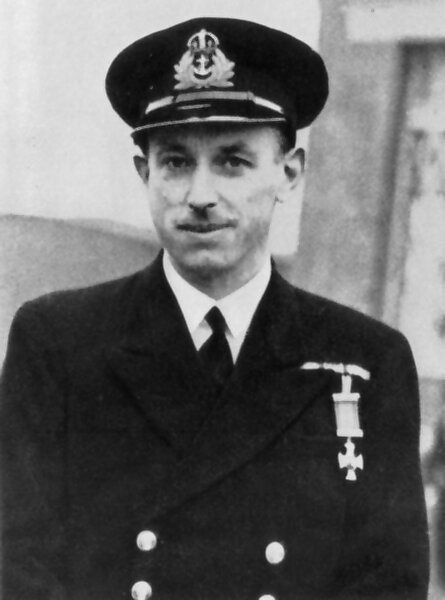
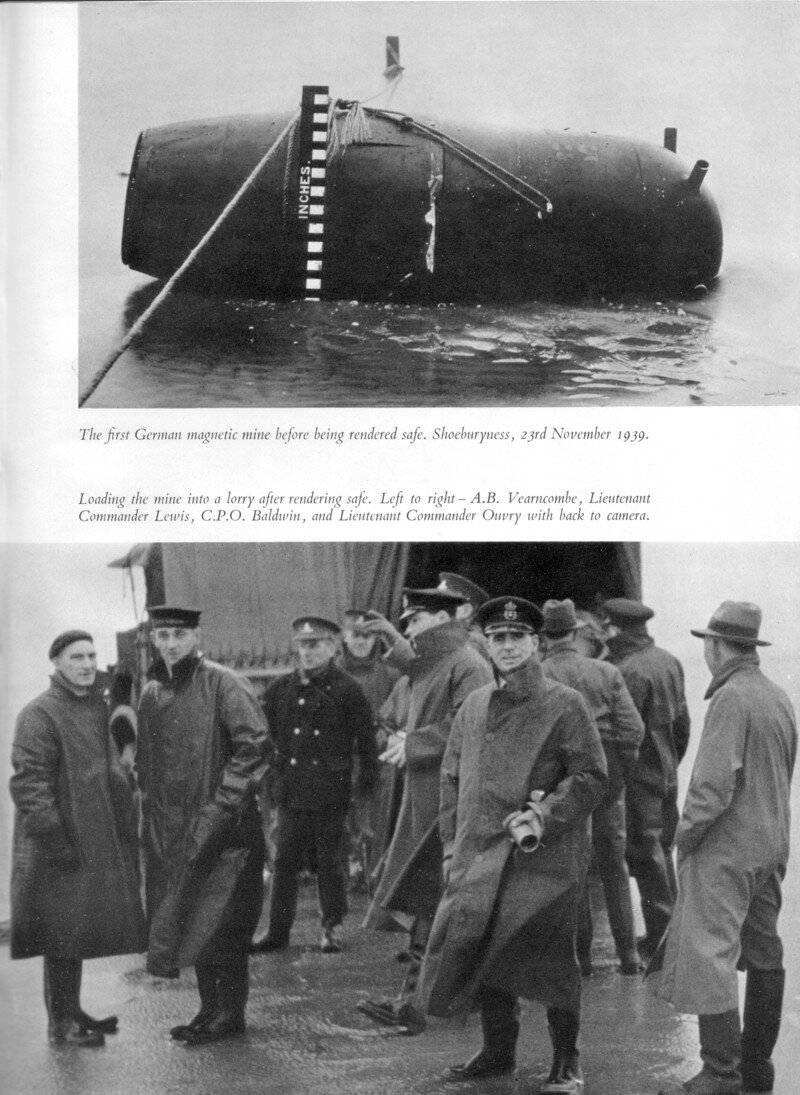
| Thursday 23 November 1939 · Mine recovered | An intact German magnetic mine is rendered safe | Shoeburyness, Thames Estuary | Lieutenant Commander John Ouvry and the HMS Vernon mine team render safe a German Type GA magnetic ground mine exposed on the mud at Shoeburyness. British forces have already suffered serious losses and disruption from magnetic mines. They detonate in response to a ship's magnetic field, and the standard wire sweeps designed for moored contact mines cannot clear them. Two days earlier a magnetic mine disabled the cruiser HMS Belfast in the Firth of Forth. Sources 1, 8, 9, 18, 24 |
| Sunday 18 February 1940 · HN 12 | U-23 sinks HMS Daring beside convoy HN 12 | North Sea, on the Norway–Britain convoy route | Kapitänleutnant Otto Kretschmer brings U-23 toward convoy HN 12 during the night and fires at one of the destroyers covering the formation. HMS Daring is hit and breaks apart. The U-boat's own war diary describes a convoy of roughly twenty ships protected by destroyers and a submarine. An escort screen can itself present valuable targets to a boat that gets into a favourable firing position. Sources 11, 12, 27 |
| Sunday 25 February 1940 · HN 14 | The escort of HN 14 destroys U-63 | Southeast of the Shetland Islands | U-63 has already torpedoed the Swedish merchant ship Santos from convoy HN 14 when the British submarine Narwhal sights the U-boat on the surface the following morning. Narwhal signals the convoy escort. Destroyers Escort, Imogen and Inglefield attack with depth charges, forcing U-63 to the surface and destroying her. Twenty-four of the twenty-five German crew survive and are taken prisoner. Sources 12 |
| March 1940 · Redeployment | U-boats are pulled away from the Western Approaches | North Sea and Norwegian approaches | German U-boats begin withdrawing from the Western Approaches so that they can support the planned invasion of Norway. The decision interrupts the Atlantic merchant-shipping offensive. The winter campaign has shown that Britain can keep convoy traffic moving. It has also shown that Germany is struggling to replace submarine losses quickly enough to build a larger force. Sources 1, 14 |
| Tuesday 16 April 1940 · Vaagsfjord | Eight torpedoes from U-47 fail to hit | Vaagsfjord, northern Norway | U-47 finds British transports at anchor in Vaagsfjord and attacks at close range. Four torpedoes fail to produce a hit. Prien attacks again and another four fail. Dönitz records the report with alarm: eight unsuccessful shots by one of his most experienced commanders make it increasingly difficult to explain the failures as bad firing solutions or isolated crew error. Sources 13, 14, 17 |
| 22 to 25 June 1940 · French armistice | The fall of France changes the U-boat war | French Atlantic coast | France signs an armistice with Germany on 22 June, with hostilities ending on 25 June. The German occupation of the Atlantic coast gives the Kriegsmarine access to ports such as Lorient, Brest and Saint-Nazaire. The bases are not operational for U-boats on the day of the armistice. The strategic change is immediate. Boats will no longer have to begin every Atlantic patrol with the long passage from Germany around the British Isles. Sources 14, 15, 26 |