Skip to content
WW2 Theatres Theatres of the Second World War
Home / The Western Front / Battle of Aachen and the Hürtgen Forest
Infantrymen of the U.S. 4th Infantry Division rest on a slope in the Hürtgen Forest on 18 November 1944.

Aachen and the Hürtgen Forest

19 September 1944 to 10 February 1945 · Aachen, the West Wall and the Roer dams · 145 days

Aachen became the first major German city captured by the Western Allies. Beside it, successive American divisions attacked through the Hürtgen Forest to clear a flank and reach the Roer. The dams that could control the river were recognised as the decisive objective only after the forest had already consumed thousands of casualties.

U.S. Army Signal Corps / National Archives · 18 November 1944 · Public domain · Source

AACHEN SURRENDERS
21 October 1944The first major German city captured by the Western Allies
FOREST CAMPAIGN
145 days19 September 1944 to the capture of the Schwammenauel dam system on 10 February 1945
AMERICAN LOSSES
At least 33,000Battle and non-battle casualties; totals change with the geographical and chronological definition
THE OCTOBER ATTACK
3,000 yardsThe 9th Division lost about 4,500 men during its 6 to 16 October drive toward Schmidt
THE DAMS
Reached 4 to 10 FebruaryThe Germans opened the system before capture and kept the lower Roer flooded for almost two weeks
Marker affiliation Allied Axis Other / contested
Map layers

01 / 33

Why the Hürtgen Terrain Favoured the Defence

A city, two belts of fortification and a forest that cancelled visibility

Aachen lies in a shallow basin immediately behind the West Wall. Pillboxes, industrial suburbs and the surrounding heights made the city difficult to isolate even though the urban area lacked the natural barriers of a fortress. North of Aachen, the Wurm valley and the fortifications around Rimburg channelled the 30th Infantry Division onto a narrow front.

South-east of Aachen, the Hürtgen is a plateau forest broken by steep streams and ravines. Roads and firebreaks were the only routes for tanks, supply vehicles and evacuation. German observers could register artillery on those routes while the canopy concealed positions from American aircraft and ground observers.

The Roer dams stood beyond the forest. The Urft and Schwammenauel reservoirs could be used to raise the river downstream around Düren and Jülich, threatening any Allied bridgehead. American headquarters underestimated that danger through October and November. The dams became a formal ground objective only in December.

Why First Army Kept Attacking Through the Forest

The decisions that shaped Aachen, Schmidt, the November forest fighting and the dams

First Army initially treated the Hürtgen as a threat to the right flank of the advance toward the Roer. Collins considered the forest a possible German assembly area and directed the 9th Division toward the Hürtgen road net. The October plan focused on the road system and commanding ground around Schmidt; the Roer dams beyond it had yet to become an operational objective.

The main First Army offensive scheduled for early November was postponed while the 28th Division's Schmidt attack went ahead. The division advanced on three axes, and the force moving on the principal objective depended on one narrow trail across the Kall. Higher headquarters continued to press the attack after the wider operation that was meant to support it had been delayed.

By February Huebner and Hodges regarded the Roer dams as a prerequisite for a safe crossing of the lower river. Pressure for speed produced repeated changes of mission during the 78th Division's advance. American troops reached Schmidt and the Schwammenauel dam, while German engineers had already damaged the discharge machinery and opened the connected system to sustain a flood downstream.

Courtney Hodges
Lieutenant General, United States

Courtney Hodges

Commanding, US First Army

Continued to treat the forest as a flank problem while the main armies prepared to move toward the Roer. He ordered the 28th Division's Schmidt attack to proceed after the wider offensive had been postponed, then pressed hard for speed when the dams finally became urgent in February. The result was repeated commitment of divisions on constricted approaches and frequent intervention in their tactical execution.

U.S. Army Center of Military History · Public domain · Source
J. Lawton Collins
Major General, United States

J. Lawton Collins

Commanding, VII Corps

Considered the Hürtgen a potential German assembly area threatening his right flank. He directed the 9th Division's October attack and later the 4th Division's part in Operation Queen. On 1 December, after Barton reported the condition of the 4th Division, Collins ordered its offensive halted.

Pvt. H. M. Roberts, 165th Signal Photo Company / U.S. Army Signal Corps · Public domain · Source
Clarence Huebner
Major General, United States

Clarence Huebner

1st Infantry Division at Aachen; V Corps in February

At Aachen he ordered the ultimatum and directed the southern arm of the encirclement before the city was reduced by combined infantry and direct-fire weapons. As V Corps commander in February he controlled the final dam operation, changed regimental missions during the approach to Schmidt and committed the veteran 9th Division when higher headquarters demanded a faster advance.

U.S. Army Signal Corps · Public domain · Source
Leonard T. Gerow
Major General, United States

Leonard T. Gerow

Commanding, V Corps

Received responsibility for Schmidt so VII Corps could remain concentrated for the main First Army offensive. His corps sent the 28th Division forward on 2 November with the operation tied to a wider attack that had already been delayed. He later committed the 8th Division, armour and Rangers to clear the Brandenberg-Bergstein ridge.

U.S. Army Center of Military History · Public domain · Source
Norman Cota
Major General, United States

Norman Cota

Commanding, 28th Infantry Division

Executed a three-direction attack toward Hürtgen, Vossenack and Schmidt. Once Schmidt was lost, he tried to maintain the Kommerscheidt position while armour and supply struggled across the Kall. His late withdrawal prevented further isolation but came after the division had suffered more than 6,000 casualties.

U.S. Army Signal Corps / National Archives, NAID 6928090 · Public domain · Source
Raymond O. Barton
Major General, United States

Raymond O. Barton

Commanding, 4th Infantry Division

Committed all three regiments during Operation Queen and repeatedly adjusted attacks as regiments became exhausted. After the 22nd Infantry reached the eastern forest edge, Barton reported that the division and especially the regiment had lost offensive capacity. That report led Collins to halt the attack and begin relief.

U.S. War Department · Public domain · Source
Edwin P. Parker Jr.
Major General, United States

Edwin P. Parker Jr.

Commanding, 78th Infantry Division

Planned the February attack through the Monschau corridor and toward Schmidt. Pressure from First Army and V Corps produced changing orders on 5 February and an ill-prepared attack the next morning. His division still opened the route, entered Schmidt and supplied the battalion that seized Schwammenauel after dark on 9 February.

U.S. War Department / Signal Corps · Public Domain Mark · Source
Walter Model
Generalfeldmarschall, Germany

Walter Model

Commanding, Army Group B

Ordered Aachen defended and authorised armoured reserves to be committed as the encirclement tightened. The reserves went into separate counterattacks and failed to reopen the city. In November and December his army group used the forest and adjoining front to hold American forces while formations assembled for the Ardennes offensive.

Bundesarchiv Bild 183-J27812 · CC BY-SA 3.0 DE · Source
Erich Brandenberger
General der Panzertruppe, Germany

Erich Brandenberger

Commanding, Seventh Army

Brandenberger commanded Seventh Army during the Aachen and Hürtgen fighting. His headquarters controlled the corps defending the Aachen-Hürtgen sector and had to distribute depleted infantry and armoured reserves between the city, the forest approaches and the Roer while Army Group B prepared the wider western defence.

Bundesarchiv, Bild 101I-209-0086-12 / Lutz Koch · CC BY-SA 3.0 DE · Source
Gerhard Wilck
Oberst, Germany

Gerhard Wilck

Commanding, Aachen garrison

Rejected the American ultimatum under orders to hold Aachen, then surrendered the surviving garrison on 21 October when organised defence had become impossible. His decision ended the city battle despite Hitler's explicit prohibition on capitulation.

Bundesarchiv, Bild 146-2005-0136 / unknown photographer · CC BY-SA 3.0 DE · Source

Direct Fire in Aachen, Restricted Armour in the Forest

Identifiable weapons and vehicles used in the Aachen and Hürtgen operations

Aachen rewarded heavy direct fire. M12 155 mm gun motor carriages, tank destroyers and Shermans were brought forward to engage pillboxes and masonry buildings at close range. Infantry assault teams used flamethrowers, Bangalore torpedoes and demolition charges to open individual fortifications.

The forest reversed those advantages. Shermans and M10 tank destroyers were confined to roads and the Kall trail, where mines, mud and wrecked vehicles could stop an entire column. Five M29 Weasels carried the first rations and ammunition across the cleared trail on 5 November because ordinary trucks could not make the crossing.

German armour was limited but locally decisive. Panzer IVs and Panthers fired from the higher ground around Schmidt and Kommerscheidt, beyond easy bazooka range. Small Panzerfaust teams and machine-gun positions were more common than tanks and were especially effective along roads, firebreaks and the edges of clearings.

M4 Sherman
A U.S. Army M4 Sherman drives through Aachen-Rothe Erde station during the October 1944 battle.
U.S. Army Air Forces photo 342-FH-3A20086-54553AC / National Archives, NAID 204899656 · Public domain · Source

M4 Sherman

United States · medium tank · 75 mm gun · supporting Aachen, Kommerscheidt and the forest clearings

Shermans provided mobile direct fire wherever roads and firm ground allowed it. At Kommerscheidt, three tanks under Lieutenant Fleig helped stop German armour on 4 November. Their value depended entirely on reaching the position; mines, mud and the Kall trail kept most armour away from the infantry when it was needed.

M10 3-inch Gun Motor Carriage
M10 tank destroyers move forward in the Hürtgen Forest on 18 November 1944.
U.S. Army Signal Corps SC 196618 / National Archives · Public domain · Source

M10 3-inch Gun Motor Carriage

United States · 893rd Tank Destroyer Battalion · nine crossed the Kall on 5 November

Nine M10s crossed the Kall after engineers cleared the trail. By midday on 6 November only three remained fully operational. Their open turrets and limited manoeuvre room made them vulnerable, but their 3-inch guns were among the few American weapons beyond the gorge capable of engaging German armour directly.

M12 155 mm Gun Motor Carriage
An M12 155 mm gun motor carriage of the 991st Field Artillery Battalion fires near Kornelimünster, Germany, on 4 November 1944.
Sgt. J. A. Demarco, 165th Signal Photo Company / U.S. National Archives · Public domain · Source

M12 155 mm Gun Motor Carriage

United States · self-propelled 155 mm gun · direct fire against West Wall and Aachen strongpoints

M12s were used at short range against concrete pillboxes and heavy buildings. At Aachen the gun was brought into the urban battle to punch openings or collapse defended structures that smaller tank and antitank guns could not reduce quickly. It was artillery employed as a direct-fire siege weapon.

M29 Weasel
A camouflaged M29 Weasel transports wounded in Belgium in 1944, showing the low-ground-pressure carrier used for difficult supply and evacuation routes.
U.S. Government archival photograph · Public domain · Source

M29 Weasel

United States · tracked cargo carrier · five vehicles carried the first supplies across the Kall

After the blocked trail was reopened early on 5 November, five Weasels carried rations and ammunition across before tanks and tank destroyers moved. Their low ground pressure and compact size let them use a route that ordinary trucks could not negotiate.

Republic P-47 Thunderbolt
A P-47 Thunderbolt of the 353rd Fighter Group in 1944.
United States Army Air Forces / U.S. Air Force Museum · Public domain · Source

Republic P-47 Thunderbolt

United States · fighter-bomber · bombs, rockets and .50-calibre guns

P-47s attacked German armour, artillery and movement routes when weather and visibility allowed. One was credited with destroying a German tank during the Kommerscheidt fighting. For long periods cloud and the forest canopy prevented the aircraft from finding targets or separating them safely from American positions.

Churchill Crocodile
A Churchill Crocodile flamethrower tank in Normandy on 25 August 1944, the same specialised type later attached to the 78th Division's West Wall attack.
Sgt. James Mapham, No. 5 Army Film & Photographic Unit / Imperial War Museums, B 9682 · Public domain (UK Government) · Source

Churchill Crocodile

British · flame-throwing tank · platoon attached to the 78th Division in January 1945

A platoon of Crocodiles supported the 310th Infantry as it rolled up West Wall positions in the Monschau corridor. The first pillboxes were captured so quickly after the shortened bombardment that the flame tanks saw little use, but their presence was intended to force enclosed garrisons out of concrete works.

Panzer IV
A knocked-out Panzer IV in a hull-down position near Caen on 13 July 1944, illustrating the same German medium-tank type used in the Schmidt counterattacks.
Sgt. Christie, No. 5 Army Film & Photographic Unit / Imperial War Museums, B 7056 · Public domain (UK Government) · Source

Panzer IV

Germany · medium tank · 7.5 cm gun · counterattacks at Schmidt and Kommerscheidt

Panzer IVs fired from the higher ground around Schmidt and supported the 4 November counterattack. From covered positions they could engage foxholes, buildings and American vehicles while remaining beyond the most reliable range of infantry bazookas.

Panther
A Panther Ausf. G in northern France in the summer of 1944, the same tank type later committed around Schmidt and Kommerscheidt.
Bundesarchiv, Bild 101I-301-1959-05 / Genzler · CC BY-SA 3.0 DE · Source

Panther

Germany · Panzer V · long 7.5 cm gun · committed around Kommerscheidt

Panthers accompanied the German armoured attacks east of the Kall. One Panther was disabled by an American Sherman after its gun barrel was struck and armour-piercing rounds penetrated the hull. Their armour and range made even a small number tactically important on the open Schmidt-Kommerscheidt spur.

MG 42
A German MG 42 position in France in 1944, showing the general-purpose machine gun used throughout the western campaign.
Bundesarchiv, Bild 101I-582-2106-23 / Reich · CC BY-SA 3.0 DE · Source

MG 42

Germany · general-purpose machine gun · roadblocks, pillboxes and forest strongpoints

The MG 42 was the core of German small-unit defence. Positions covered trails, firebreaks and the exits from wooded ground into clearings. Dense vegetation allowed a few crews to stop or disorganise attacking companies before American artillery observers could identify the exact firing points.

Panzerfaust
A German soldier with Panzerfausts in France in June 1944, illustrating the short-range anti-tank weapon used in the Hürtgen fighting.
Bundesarchiv, Bild 101I-721-0375-28A / Koll · CC BY-SA 3.0 DE · Source

Panzerfaust

Germany · disposable anti-tank launcher · short-range defence along roads and village edges

Panzerfaust teams waited beside roads, houses and forest exits where American tanks had little room to turn or maintain distance. The weapon helped make armour dependent on close infantry protection and contributed to the loss or immobilisation of vehicles around Aachen, the Kall route and the November clearings.

How the Hürtgen Losses Are Counted

No single total covers every definition of the battle

The frequently quoted American total of more than 33,000 combines battle casualties with large numbers removed for trench foot, respiratory illness and combat exhaustion. The total also changes according to whether Aachen, the December operations and the February capture of the dams are included. It is therefore best read as a campaign-scale estimate whose boundary varies between accounts.

The official history gives firmer figures for individual formations. The 9th Division lost about 4,500 men in its 6 to 16 October forest attack. The 4th Division suffered 4,053 battle casualties and about 2,000 non-battle losses between 16 November and early December. The 28th Division's Schmidt operation cost more than 6,000 men and left the 112th Infantry temporarily ineffective.

German totals are less secure because unit records are incomplete and the front changed command repeatedly. Aachen was heavily damaged, while Vossenack, Schmidt, Kommerscheidt, Hürtgen, Grosshau and Bergstein were fought over or shelled until much of their built fabric was destroyed.

About 4,500

9th Division casualties, 6 to 16 October

MacDonald, The Siegfried Line Campaign, gives about 4,500 casualties for the 9th Division's 6 to 16 October advance of roughly 3,000 yards.

More than 6,000

28th Division casualties in the Schmidt operation

MacDonald and Mathews, Three Battles: Schmidt, records more than 6,000 battle and non-battle losses during and immediately after the 2 to 8 November operation.

4,053 + about 2,000

4th Division losses, 16 November to early December

MacDonald, The Siegfried Line Campaign, records 4,053 battle casualties plus about 2,000 non-battle losses from trench foot, respiratory illness and combat exhaustion.

At least 33,000

American campaign losses

U.S. Army historical accounts commonly place the wider American campaign loss at 33,000 or more; the total changes with the geographical boundary and inclusion of non-battle casualties.

Books & Relics

The authenticity of the relics is not verified by WW2 Theatres.
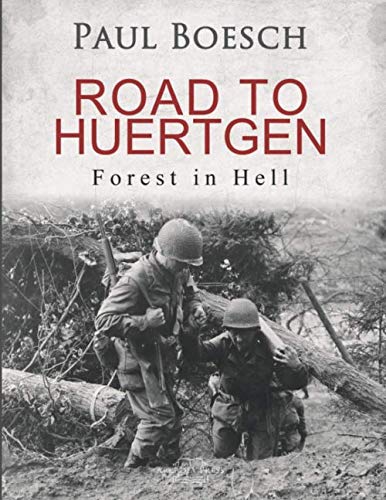
Road to Huertgen: Forest in Hell
Paperback

Road to Huertgen: Forest in Hell

Paul Boesch, leading “G” Company of the 121st Infantry through screaming shells and deadly small arms fire captured a vantage point on the edge of the town of Huertgen. There, completely surrounded, he demonstrated outstanding leadership.

EUR 7.77
The 28th Infantry Division in the Hürtgen Forest: Forgotten Sacrifice
Hardcover Book

The 28th Infantry Division in the Hürtgen Forest: Forgotten Sacrifice

The five-month Battle of the Hürtgen Forest (September 1944–February 1945) cost the U.S. Army more than 34,000 casualties, a tremendous number, and yet historians have rarely given it the attention it deserves, lending it the epithet “the Forgotten Sacrifice.”

EUR 28.48
The Lost Soldier: The Ordeal of a World War II GI from the Home Front to the Hürtgen Forest
Hardcover Book

The Lost Soldier: The Ordeal of a World War II GI from the Home Front to the Hürtgen Forest

Author Chris J. Hartley intricately weaves together all threads—soldier and wife, home front and army life, combat, love and loss, individual and army division—into an intimate, engaging narrative that is at once gripping military history and engaging social history.

EUR 22.95
Hürtgen Forest 1944 (1): The US First Army's Route to the Rhine (Campaign, 412)
Paperback

Hürtgen Forest 1944 (1): The US First Army's Route to the Rhine (Campaign, 412)

This study explores the first phase of this bloody battle, including the 'Aachen Question' facing the Allies. Featuring stunning artwork, detailed maps and diagrams, and period images, this book provides a gripping narrative of the infamous clash in the Hürtgen Forest, concluding with an assessment of the situation in November 1944, and the preparations for the next phase of operations.

EUR 14.52

This collection is curated by WW2 Theatres and not affiliated with our website, with all site photographs licensed to their respective owners.

Sources & Archives

US Army official histories · unit records · German operational records · local archives

Charles B. MacDonald's The Siegfried Line Campaign is the principal operational account for Aachen and the forest through 16 December 1944. Three Battles provides the detailed study of the 28th Division's attack on Schmidt. The Last Offensive covers the renewed drive and capture of the Roer dams in February 1945.

The official histories provide the firmest formation-level chronology and casualty figures used here, while German operational records and local archives help establish the defending command structure, places and physical aftermath. Where campaign boundaries or casualty categories differ between sources, the page retains that uncertainty rather than converting it into a single exact total.

  1. The Siegfried Line Campaign, United States Army in World War II, Charles B. MacDonald, 1963US Army Center of Military History
  2. Three Battles: Arnaville, Altuzzo and Schmidt, Charles B. MacDonald and Sidney T. Mathews, 1952US Army Center of Military History
  3. The Last Offensive, Chapter IV: The Roer River Dams, Charles B. MacDonald, 1973US Army Center of Military History / HyperWar transcription
  4. Signal Corps photographic collection, Hürtgen Forest and Aachen, 1944US National Archives and Records Administration
  5. Army Group B, Seventh Army and LXXIV Corps operational recordsBundesarchiv, Militärarchiv Freiburg
  6. Battlefield and Kall trail collectionsMuseum Hürtgenwald 1944 und im Frieden
  7. Aachen in 1944: destruction, occupation and reconstructionStadtarchiv Aachen
  8. 4th Infantry Division and the Battle of Hürtgen ForestUnited States Army
  9. Combat interviews: The Fight for the Hürtgen ForestUS Army Medical Department Center of History and Heritage
  10. 2nd Ranger Battalion medical detachment history, Bergstein and Hill 400US Army Medical Department Center of History and Heritage
Operation chronologyDates, locations and sourced event summaries
DateEventLocationSummary
Tuesday 12 September 1944 · PreludeA breach south-east of AachenStolberg corridor

VII Corps crossed the German frontier south-east of Aachen and penetrated the outer West Wall in the Stolberg corridor. The advance exposed routes toward the Roer, but under-strength formations and stretched supply lines prevented the rapid breakthrough expected after the pursuit across France.

Sources 1, 5
Tuesday 19 September 1944 · OpeningThe forest becomes an operationWestern Hürtgen Forest

The 60th Infantry of the 9th Division had already tested the western forest and found that small German forces could use the terrain to stop a much stronger attacker. The division now held a broad front from Schevenhütte to the Monschau corridor.

Sources 1
Monday 2 October 1944 · 09:00XIX Corps attacks the West WallRimburg and the Wurm

After a one-day weather delay, the 30th Infantry Division attacked on a front little more than a mile wide north of Aachen. The opening air strike missed many of the pillboxes; more than 400 artillery and mortar tubes then supported the river crossing.

Sources 1
Friday 6 October 1944 · First Schmidt attackThe 9th Division attacks toward SchmidtHürtgen Forest

Two regiments attacked through the forest toward Germeter, Vossenack and Schmidt. The official plan sought the Hürtgen road net and commanding ground on the eastern edge; the Roer dams lay beyond the stated October objective.

Sources 1, 5
Sunday 8 October 1944 · Before dawnThe southern jaw moves northVerlautenheide

The 18th Infantry of the 1st Division attacked before dawn and took Verlautenheide, Crucifix Hill and later Ravels Hill. Direct fire from self-propelled 155 mm guns and tank destroyers supported the assault against pillboxes.

Sources 1
Tuesday 10 October 1944 · Twenty-four hoursThe surrender demandAachen

General Huebner ordered an ultimatum delivered to the Aachen garrison. It demanded unconditional surrender within twenty-four hours and warned that artillery, aircraft and ground forces would otherwise reduce the city.

Sources 1, 7
Wednesday 11 October 1944 · After the ultimatumThe city assault beginsEastern Aachen

The 26th Infantry entered Aachen from the east. Infantry, Shermans, M10 tank destroyers and M12 155 mm gun motor carriages worked as small teams against cellars, factories and masonry strongpoints.

Sources 1, 7
Sunday 15 October 1944 · 10:00The relief counterattack failsVerlautenheide and Eilendorf

The 3rd Panzer Grenadier Division attacked the thin American arc east of Aachen with infantry and Tiger tanks. The aim was to widen the remaining corridor and reconnect with the garrison.

Sources 1, 5
Monday 16 October 1944 · The ring closesAachen is encircledNorth-east of Aachen

The 30th and 1st Infantry Divisions finally made contact north-east of the city. German armoured reserves had been committed in repeated attempts to keep the corridor open, but the American link sealed the garrison inside Aachen.

Sources 1
Saturday 21 October 1944 · MiddayWilck surrenders the garrisonAachen

Colonel Gerhard Wilck surrendered the remaining Aachen garrison despite Hitler's order to hold the city. Approximately 3,500 surviving troops were taken prisoner during the final capitulation; larger totals include men captured during the surrounding operations.

Sources 1, 7
Thursday 2 November 1944 · 09:00The 28th Division attacksVossenack ridge

The 28th Infantry Division attacked toward Hürtgen, Vossenack and Schmidt on three separate axes. The operation went ahead despite bad weather and despite postponement of the wider First Army offensive it was intended to support.

Sources 1, 2
Friday 3 November 1944 · AfternoonSchmidt is occupiedSchmidt

The 3rd Battalion, 112th Infantry entered Schmidt against limited resistance. Its arrival was the deepest American penetration yet achieved in the southern forest.

Sources 1, 2
Saturday 4 November 1944 · MorningThe German counterattackSchmidt and Kommerscheidt

German infantry supported by Panzer IVs and Panthers attacked Schmidt. American bazookas could not reliably defeat the tanks at the ranges from which they fired, and the battalion in the town broke back toward Kommerscheidt.

Sources 1, 2, 5
Sunday 5 November 1944 · 02:30 to noonThe trail is opened to armourThe Kall trail

Engineers removed rock, mud and immobilised vehicles from the Kall trail. Tank crews were ordered to clear the route by daybreak even if disabled vehicles had to be pushed down the slope.

Sources 1, 2
Monday 6 November 1944 · MorningTwo crises at onceKommerscheidt and Vossenack

By midday only six American tanks and three of the original nine M10s remained operational east of the Kall. Colonel Peterson cancelled a proposed attempt to retake Schmidt and ordered a defence in depth north of Kommerscheidt.

Sources 1, 2
Wednesday 8 November 1944 · WithdrawalThe Schmidt bridgehead is abandonedThe Kall gorge

The surviving American units withdrew west of the Kall after the positions at Schmidt and Kommerscheidt became untenable. The 28th Division had failed to hold its eastern objectives and had suffered more than 6,000 casualties during the operation.

Sources 1, 2, 6
Thursday 16 November 1944 · 12:45Operation QueenAachen to the Roer

A large air and artillery preparation opened the First and Ninth Army offensive toward the Roer. The 4th Infantry Division attacked through the northern Hürtgen while the main VII Corps effort operated farther north.

Sources 1, 8
Saturday 18 November 1944 · Third dayThe 4th Division is drawn into a forest battleNorthern Hürtgen Forest

By 18 November the 8th and 22nd Infantry Regiments were grinding forward through woods where mines, registered artillery and machine-gun positions broke the advance into small local fights. Armour and tank destroyers could move only where engineers opened roads and forest tracks.

Sources 1, 8, 9
Wednesday 22 November 1944 · Renewed attackBarton sends the division forward againNorthern Hürtgen

After four days of limited gains, General Barton renewed the 4th Division's attack. The 8th, 12th and 22nd Infantry Regiments fought toward Hürtgen, Grosshau and the eastern forest edge.

Sources 1, 8, 9
Saturday 25 November 1944 · NoonThe first Grosshau attack failsGrosshau

An attempt to combine infantry and armour against Grosshau lost surprise while tanks and tank destroyers struggled along muddy forest routes. Only three tanks and one tank destroyer emerged with the infantry.

Sources 1
Tuesday 28 November 1944 · By eveningThe 121st Infantry captures HürtgenHürtgen village

The 121st Infantry of the 8th Division captured Hürtgen village after several days of fighting. The regiment took the road centre while German defenders withdrew toward the Brandenberg-Bergstein ridge.

Sources 1
Wednesday 29 November 1944 · At duskGrosshau is takenGrosshau

A flanking battalion cut the Grosshau-Gey road while tanks and tank destroyers reached the western approach at dusk. The combined pressure collapsed the defence and more than one hundred Germans surrendered.

Sources 1
Friday 1 December 1944 · NightfallThe 22nd Infantry reaches the far edgeWoods west of Gey

Sixteen days after Operation Queen began, the 22nd Infantry reached the woods line overlooking Gey. It was the first time the regiment had emerged through the width of its assigned forest sector.

Sources 1, 8
Thursday 7 December 1944 · 07:30The Rangers take the observation hillBergstein and Hill 400

Companies D, E and F of the 2nd Ranger Battalion assaulted the Burgberg above Bergstein, known to the Americans as Hill 400. The summit provided observation across the Roer valley and the surrounding approaches.

Sources 1, 10
Wednesday 13 December 1944 · Before dawnThe first ground attack aimed at the damsMonschau corridor

The 78th Infantry Division opened the first ground attack whose operational purpose included the Roer dams. The advance moved through the Monschau corridor while other units fought around Kesternich and the approaches to the reservoirs.

Sources 1, 3
Saturday 16 December 1944 · 05:30The dam attack is suspendedThe Ardennes

The Ardennes offensive opened south of the Hürtgen sector and forced First Army to suspend the ground drive toward the dams. Formations and attention shifted toward the German breakthrough.

Sources 1, 5
Tuesday 30 January 1945 · Before dawnThe approach operation beginsMonschau corridor

The 78th Division attacked to enlarge its holdings north and east of Monschau. The immediate purpose was flank protection, but the operation also created the position from which the Schwammenauel dam could be attacked.

Sources 3
Sunday 4 February 1945 · Late afternoonThe first major dam is reachedUrft dam

A company of the 9th Infantry Division reached the Urft dam after a cross-country movement. The concrete structure remained intact, although artillery had damaged parts of the outlet system.

Sources 3
Monday 5 February 1945 · 03:00The 78th Division starts for SchmidtRoad to Schmidt

The 309th Infantry moved through the pillbox belt before dawn and initially met almost no opposition. Mines, craters and the condition of the roads then prevented rapid movement of supporting weapons.

Sources 3
Wednesday 7 February 1945 · AfternoonAmerican troops enter Schmidt againSchmidt

The 310th Infantry occupied Hill 493 while the 311th advanced toward Schmidt. Infantry crossed the open ground after German antitank fire stopped the leading tanks and reached the northern houses during the afternoon.

Sources 3
Thursday 8 February 1945 · Command interventionThe 9th Division is redirected to the damSchmidt and V Corps headquarters

V Corps redirected the veteran 9th Infantry Division toward the Schwammenauel Dam after the 78th Division's advance toward Schmidt and the reservoirs fell behind the timetable demanded by higher headquarters.

Sources 3
Friday 9 February 1945 · 18:00The final approachSchwammenauel dam

The 60th Infantry advanced toward Hasenfeld while the 311th cleared wooded ground along the reservoir. At 18:00 the 1st Battalion, 309th Infantry passed through and moved toward the dam in darkness.

Sources 3
Saturday 10 February 1945 · After midnightThe dams are held, but the river is releasedSchwammenauel and the lower Roer

American engineers found the Schwammenauel power-room machinery and discharge controls damaged and the connected Urft penstock opened. The dam structures remained standing.

Sources 3

Image rights and editorial standard. Timeline photographs are attached only when the individual Wikimedia Commons file page supports the same calendar day and directly relates to the event. Month-only photographs, later photographs and broad Hürtgen imagery are not used as exact event media. U.S. Army and U.S. federal photographs are public domain. Bundesarchiv photographs are credited from their individual Commons file pages under CC BY-SA 3.0 DE where stated. Broader period photographs may be used in Command & Decision and Ships, Guns & Machines when the caption states what the photograph actually shows.