| Monday 30 January 1933 · Beginning | Hitler is appointed chancellor | Berlin | President Paul von Hindenburg appointed Adolf Hitler chancellor on 30 January 1933 at the head of a coalition government. Conservative politicians who helped arrange the appointment expected to contain him within the existing state. Sources 1, 8 |
| Saturday 1 April 1933 · State boycott | The nationwide boycott of Jewish businesses | Across Germany | SA members stood outside Jewish-owned shops, medical practices and law offices to intimidate customers and mark the businesses as Jewish. The centrally organised boycott lasted one day. Sources 1, 8 |
| Sunday 15 September 1935 · Nuremberg Laws | Citizenship is removed and ancestry becomes law | Nuremberg | The Reich Citizenship Law deprived Jews of full German citizenship. The Law for the Protection of German Blood and German Honour prohibited marriage and sexual relations between Jews and people classified as German or related blood. Sources 1, 6 |
| Tuesday 26 April 1938 · Compulsory registration | Jewish property must be registered | Germany and annexed Austria | The regime ordered Jews to register assets worth more than 5,000 Reichsmarks. The measure gave the state a detailed inventory of property that could be controlled, transferred or confiscated. Sources 1, 8 |
| 6–15 July 1938 · Refugee conference | Thirty-two governments meet at the Évian refugee conference | Évian-les-Bains | Representatives of thirty-two countries met at Évian-les-Bains from 6 to 15 July 1938 to discuss refugees seeking to leave Germany and annexed Austria. Delegates described the worsening persecution and expressed sympathy for those trying to escape. Sources 1, 9 |
| 9–10 November 1938 · State-directed pogrom | Kristallnacht | Germany, Austria and the Sudetenland | Nazi Party and state authorities directed a pogrom against Jewish communities across Germany, annexed Austria and the Sudeten territories on 9–10 November 1938. More than 1,400 synagogues and prayer houses were destroyed, and thousands of Jewish businesses and homes were damaged or looted. Sources 1, 2, 9 |
| Thursday 21 September 1939 · Occupation policy | German authorities order concentration and registration | German-occupied Poland | After the invasion of Poland, Reinhard Heydrich instructed security police commanders to concentrate Jewish communities in larger towns near railway lines and to establish Jewish councils under German control. Sources 1, 7, 8 |
| Saturday 16 November 1940 · Ghetto sealed | The Warsaw ghetto is sealed | Warsaw | German authorities confined about 400,000 Jews within approximately 1.3 square miles, placing almost thirty per cent of Warsaw's population in about 2.4 per cent of the city's area. Sources 1, 5 |
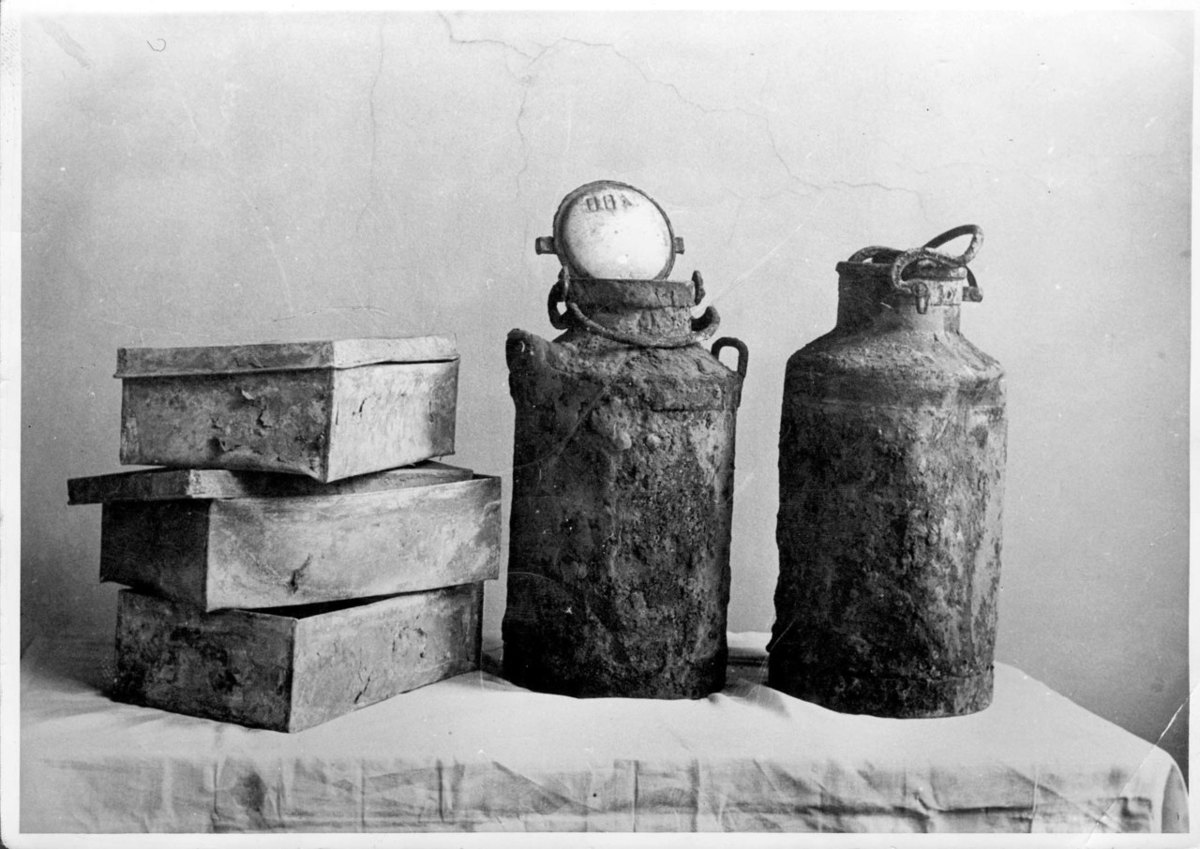
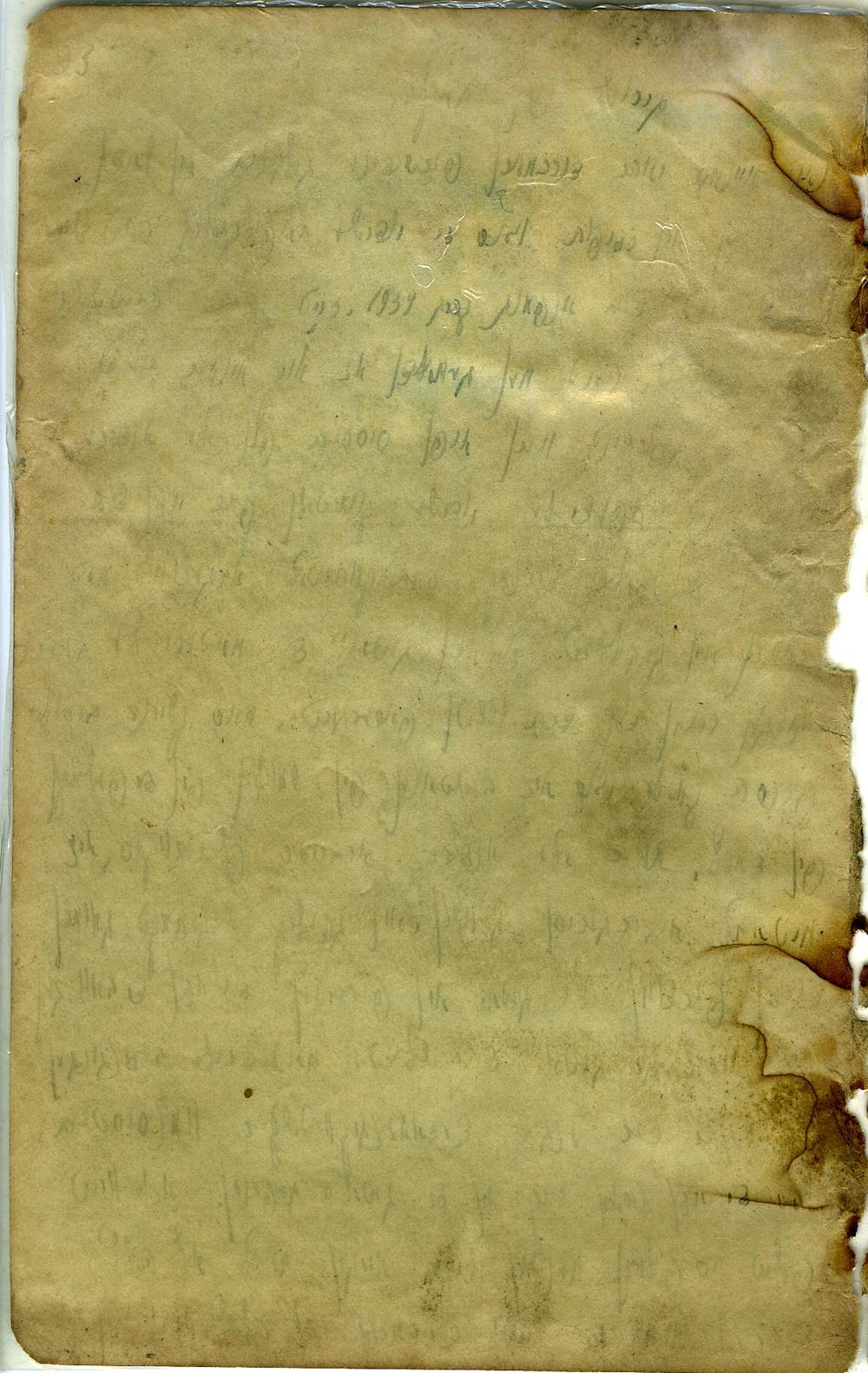
| From November 1940 · Clandestine archive | The Oyneg Shabes archive begins documenting the ghetto | Warsaw ghetto | Historian Emanuel Ringelblum organised a clandestine group to collect diaries, official notices, ration cards, drawings, essays and testimony from across occupied Poland. Sources 5 |
| Sunday 22 June 1941 · Invasion of the Soviet Union | Mass shootings expand behind the invasion of the Soviet Union | German-occupied Soviet territory | Four Einsatzgruppen followed the German invasion together with Order Police battalions and other SS formations. Early shootings concentrated heavily on political officials and adult Jewish men; during the summer of 1941 the killing expanded to women, children and entire Jewish communities. Sources 1, 7 |
| Thursday 31 July 1941 · Written authority | Göring authorises Heydrich to coordinate a Europe-wide solution | Berlin | Hermann Göring authorised Reinhard Heydrich on 31 July 1941 to make the organisational and material preparations for a 'complete solution of the Jewish question' within the German sphere of influence in Europe and to submit an overall plan. Sources 1, 7, 8 |
| Monday 1 September 1941 · Compulsory marking | The yellow star is decreed for Jews in the Reich | The Greater German Reich and annexed territories | Reinhard Heydrich decreed that Jews aged six and over in the Reich and specified annexed territories had to wear a yellow Star of David on their outer clothing in public. Sources 1, 8 |
| 29–30 September 1941 · Two days | 33,771 Jews are murdered at Babyn Yar | Babyn Yar, Kyiv | German notices ordered Kyiv's Jews to assemble with documents, valuables and clothing. SS and German police units, supported by auxiliaries, forced them to the Babyn Yar ravine and shot them. Sources 1, 7 |
| Wednesday 15 October 1941 · Systematic deportation | Systematic deportations from the Reich begin | The Greater German Reich | German authorities began systematic deportations of Jews from Germany, Austria and the Protectorate of Bohemia and Moravia to ghettos and killing sites in occupied eastern Europe. The first transports in October 1941 went toward Łódź, Minsk, Riga and other destinations. Sources 1, 8 |
| 30 November and 8–9 December 1941 · Rumbula | The Riga ghetto is emptied into the Rumbula killing site | Rumbula Forest, near Riga | German SS and police units, assisted by Latvian auxiliaries, marched Jews from the Riga ghetto to prepared pits at Rumbula Forest on 30 November 1941 and murdered them by shooting. A second major action followed on 8–9 December. Sources 1, 7 |
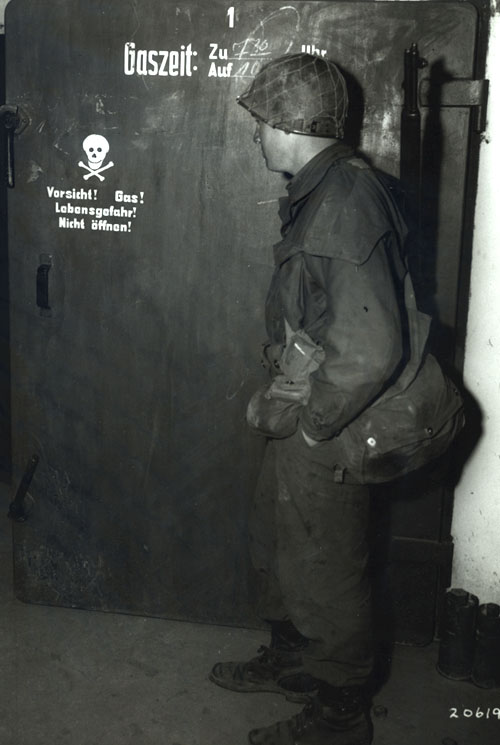
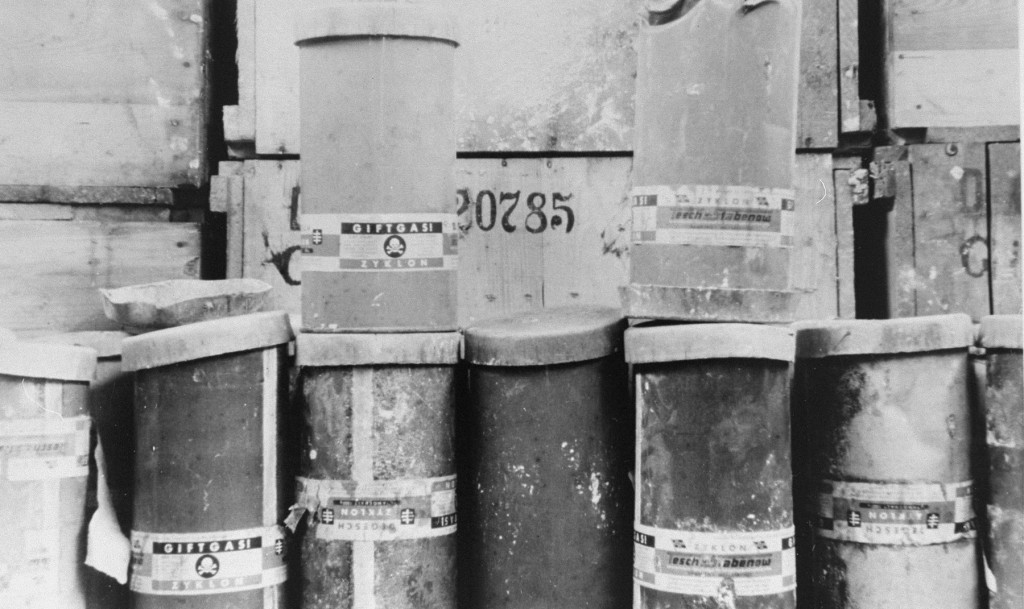
| Monday 8 December 1941 · Killing operations begin | Chełmno begins killing with gas vans | Chełmno nad Nerem | Chełmno became the first stationary site where Nazi authorities used poison gas for the mass murder of Jews. Victims were locked inside sealed vans and killed by carbon monoxide from the vehicle exhaust. Sources 1, 8 |
| Tuesday 20 January 1942 · Approximately 90 minutes | The Wannsee Conference coordinates implementation | Wannsee, Berlin | Fifteen officials representing the SS, Nazi Party and government ministries met under Reinhard Heydrich. The surviving protocol listed an estimated eleven million Jews in Europe and discussed deportation, jurisdiction and definitions. Sources 6 |
| Tuesday 17 March 1942 · Bełżec operations | Bełżec begins killing operations as Operation Reinhard expands | Bełżec, Sobibór and Treblinka | Bełżec began regular killing operations on 17 March 1942. Sobibór followed in May and Treblinka in July. The three purpose-built sites became the principal killing centres of Operation Reinhard. Sources 1, 8 |
| Wednesday 15 July 1942 · Western Europe | Mass deportation from the Netherlands begins | Westerbork, the Netherlands | German authorities began systematic deportations of Jews from the Netherlands, using Westerbork as the principal transit camp. Trains carried deportees to Auschwitz-Birkenau, Sobibór, Theresienstadt and Bergen-Belsen. Sources 1, 8 |
| 16–17 July 1942 · Two days | French police carry out the Vel' d'Hiv round-up | Paris | French police arrested more than 13,000 Jewish men, women and children in Paris on 16–17 July 1942 within a German-directed deportation programme. Thousands of families were confined at the Vélodrome d'Hiver and other collection sites before transfer through transit camps including Drancy. Sources 1, 10 |
| 22 July–21 September 1942 · Mass deportation | The Great Deportation from the Warsaw ghetto | Warsaw | German SS and police forces began the mass deportation of Jews from the Warsaw ghetto to Treblinka on 22 July 1942. By 21 September about 265,000 Jews had been deported and murdered at the killing centre; tens of thousands more were killed in the ghetto or sent to forced-labour sites. Sources 1, 5 |
| Thursday 17 December 1942 · Allied declaration | The Allies publicly condemn the extermination of Europe's Jews | London | The governments of the Allied United Nations issued a joint declaration on 17 December 1942 stating that German authorities were carrying out a policy intended to exterminate the Jewish people in Europe. Sources 1, 9 |
| 19 April–16 May 1943 · Four weeks | The Warsaw ghetto uprising | Warsaw ghetto | When German forces entered to liquidate the remaining ghetto, fighters from the Jewish Combat Organisation and Jewish Military Union resisted with a small number of firearms and improvised weapons. Sources 1, 5, 8 |
| Monday 2 August 1943 · Treblinka | Prisoners revolt at Treblinka | Treblinka | Prisoners organised an underground group, obtained weapons from the camp armoury and set buildings and fuel stores on fire during an uprising on 2 August 1943. Several hundred prisoners broke through or crossed the perimeter under fire. Sources 1, 8 |
| Night of 1–2 October and the following weeks · Denmark | The planned deportation of Denmark's Jews largely fails | Denmark and the Øresund | German police began the planned arrest action against Danish Jews after advance warning had allowed most families to go into hiding. Danish resistance members, fishermen, police officers and other civilians helped people reach the coast and cross to neutral Sweden. Sources 1, 2, 12 |
| Thursday 14 October 1943 · Sobibór | The Sobibór uprising opens a mass escape | Sobibór | Prisoners led by Alexander Pechersky and Leon Feldhendler organised an uprising on 14 October 1943. Members of the underground killed a number of SS personnel and guards before prisoners moved toward the camp perimeter in a mass breakout. Sources 1, 8 |
| 3–4 November 1943 · Operation Harvest Festival | About 42,000 Jewish forced labourers are shot | Majdanek, Trawniki and Poniatowa | SS and police units murdered approximately 42,000 Jewish forced labourers at Majdanek, Trawniki and Poniatowa on 3–4 November 1943 in a coordinated operation known as Aktion Erntefest, or Operation Harvest Festival. Sources 1, 8 |
| Sunday 19 March 1944 · Occupation of Hungary | Germany occupies Hungary | Budapest and Hungary | German forces occupied Hungary on 19 March 1944 after the government of Regent Miklós Horthy sought greater room to manoeuvre as the Axis military position deteriorated. Adolf Eichmann arrived with a small SS deportation staff. Sources 1, 2, 8 |
| Friday 7 April 1944 · Escape begins | Rudolf Vrba and Alfréd Wetzler escape | Auschwitz-Birkenau to Slovakia | Rudolf Vrba and Alfréd Wetzler escaped from Auschwitz-Birkenau on 7 April 1944 after hiding for three days in a concealed space within the outer camp perimeter. They then travelled on foot toward Slovakia and reached Jewish representatives there more than ten days later. Sources 1, 4 |
| 15 May–9 July 1944 · 56 days | About 437,000 Jews are deported from Hungary | Hungary | German SS personnel under Adolf Eichmann worked with Hungarian officials and gendarmerie to concentrate and deport Jews from the provinces between 15 May and 9 July 1944. About 437,000 people were deported in 147 trains. Sources 1, 2, 4 |
| Sunday 23 July 1944 · First major camp liberation | Soviet forces liberate Majdanek | Lublin-Majdanek | Soviet forces reached the Majdanek concentration camp outside Lublin on 23 July 1944 and found fewer than 500 prisoners. The SS had evacuated most prisoners but left extensive physical evidence, records and structures behind. Sources 1, 11 |
| Saturday 7 October 1944 · Sonderkommando revolt | Prisoners destroy Crematorium IV | Auschwitz-Birkenau | Members of the Auschwitz-Birkenau Sonderkommando attacked SS guards and set Crematorium IV on fire during a revolt on 7 October 1944. Explosives used in the action had been smuggled from the Union munitions factory by women prisoners. Sources 1, 4 |
| Sunday 15 October 1944 · Arrow Cross coup | The Arrow Cross seizes power and terror resumes in Budapest | Budapest | Germany forced Regent Miklós Horthy from power after he attempted to leave the war and installed a government dominated by the fascist Arrow Cross movement. The Jews of Budapest, temporarily spared from the summer deportations, were again in immediate danger. Sources 1, 2 |
| 17–21 January 1945 · Camp evacuation | The SS begins the final evacuation of Auschwitz | Auschwitz and Upper Silesia | As Soviet forces approached, the SS began the final evacuation of the Auschwitz camp complex on 17 January 1945. Nearly 60,000 prisoners, most of them Jews, were forced west on foot toward Gliwice, Wodzisław Śląski and other collection points before onward rail transport. Sources 1, 3, 4 |
| Saturday 27 January 1945 · Liberation | Soviet troops liberate the Auschwitz camp complex | Auschwitz | Red Army soldiers reached Auschwitz and found approximately 7,000 surviving prisoners, many of them seriously ill. Sources 1, 3, 4 |
| Sunday 15 April 1945 · British liberation | British forces liberate Bergen-Belsen | Bergen-Belsen | The British 11th Armoured Division and attached units entered Bergen-Belsen after an agreement for the camp's surrender. They found about 55,000 prisoners, many gravely ill, and thousands of unburied dead. Sources 1, 3, 9 |
| Tuesday 8 May 1945 · Defeat of Nazi Germany | Nazi rule ends in Europe | Europe | Germany's unconditional surrender brought the Nazi state and its camp system to an end in Europe. Allied armies had already overrun concentration camps and forced-labour sites across Germany, Austria and occupied territory. Sources 1, 2, 3 |




.png)

.JPG)


