Skip to content
WW2 Theatres Theatres of the Second World War
Home / The Eastern Front / The Siege of Leningrad
Citizens of Leningrad queueing for water during the siege.

The Siege of Leningrad

8 September 1941 to 27 January 1944 · Leningrad, Lake Ladoga and the Volkhov · Eight hundred and seventy-two days

German forces cut Leningrad's last land connection on 8 September 1941 while Finnish forces held the Karelian Isthmus to the north. German orders prescribed blockade, bombardment and rejection of surrender, leaving starvation as a deliberate instrument of the campaign. Lake Ladoga prevented complete isolation.

Leningraders queueing for water during the siege · RIA Novosti archive image 907 · CC BY-SA 3.0 · Source

LAND BLOCKADE
8 September 1941Shlisselburg fell and the city lost its final land connection to the Soviet interior
DURATION
872 daysThe conventional Soviet and Russian count from the closure of the land ring to 27 January 1944
LOWEST CIVILIAN RATION
125 grams of breadFor employees, dependants and children from 20 November to 25 December 1941; industrial workers received 250 grams
ISKRA CORRIDOR
Opened 18 January 1943A narrow land connection south of Lake Ladoga restored rail access but remained under German artillery fire
REGISTERED STARVATION DEATHS
632,253The Soviet commission figure presented at Nuremberg; later scholarship treats it as incomplete for total civilian mortality
Marker affiliation Allied Axis Other / contested
Map layers

01 / 29

How Lake Ladoga Kept Leningrad Connected

The city, the Oranienbaum bridgehead, the German bottleneck and the lake routes

Leningrad lay at the eastern end of the Gulf of Finland. German Eighteenth Army approached from the south and west, while Finnish forces recovered most of the territory lost on the Karelian Isthmus in 1940 and then held north of the city. The Soviet Oranienbaum bridgehead survived west of Leningrad and remained connected by sea.

Shlisselburg stood where the Neva leaves Lake Ladoga. Its capture closed the land route while Soviet forces still controlled most of the lake and its eastern shore. South of Ladoga the German position narrowed through Shlisselburg, Sinyavino and Mga. Soviet relief operations repeatedly attacked this strip because reopening it offered the shortest land connection to the city.

Supply across Ladoga changed with the season. Barges and steamers operated during navigation periods; lorries used surveyed ice routes in winter; rail, road and water cargoes were transferred through several terminals. Weather, shifting ice, air attack and the temporary loss of Tikhvin could interrupt the chain, so the city's survival depended on maintaining an entire transport system.

How Blockade Policy and Relief Operations Changed the Siege

German blockade orders, Soviet relief attempts and the shift from containment to breakthrough

The German naval staff directive of 22 September 1941 ordered Leningrad to be tightly blockaded, bombarded and destroyed, and ruled out accepting capitulation. A further order on 7 October again rejected surrender and cited the burden of feeding the population. The policy placed the civilian population inside a military blockade whose supply routes were already collapsing.

German planning changed again in 1942. Hitler ordered preparations for Operation Nordlicht, an assault intended to use formations and siege artillery transferred after the fall of Sevastopol. The Soviet Sinyavino offensive committed those formations to a defensive battle before the assault could begin; by October the front had been restored at heavy cost, but the planned attack had lost its operational window and was later abandoned as forces were diverted elsewhere.

Soviet command also changed during the campaign. Zhukov stabilised the immediate southern defence in September 1941. Govorov later improved artillery coordination and commanded Leningrad Front during Operation Iskra and the final offensive, while Meretskov's Volkhov Front attacked from the east. In January 1944 the two fronts combined the Oranienbaum bridgehead, the Pulkovo sector and the Novgorod axis to force Eighteenth Army away from the city.

Joseph Stalin
Supreme Commander, Soviet Union

Joseph Stalin

Strategic reserves, evacuation and relief priorities

Replaced commanders during the September crisis, ordered repeated attempts to restore contact and approved the resources used for mass evacuation. He coordinated the January 1943 and January 1944 offensives through Stavka representatives and front commanders.

Franklin D. Roosevelt Library Public Domain Photographs · Source
Georgy Zhukov
General of the Army, Soviet Union

Georgy Zhukov

Leningrad Front, September to October 1941

General of the Army G. K. Zhukov and Marshal S. K. Timoshenko at the maneuvers of the Kiev Military District. 1940

Public domain · via Wikimedia Commons · Source
Andrei Zhdanov
Secretary, Leningrad Party organisation

Andrei Zhdanov

Member of the Leningrad Front Military Council

Shared political authority over defence, rationing, labour mobilisation and internal control. The city administration continued armaments production and imposed distribution priorities while failing to prevent severe inequality and catastrophic civilian mortality.

Bundesarchiv · CC BY-SA 3.0 DE · Source
Leonid Govorov
General, later Marshal, Soviet Union

Leonid Govorov

Commanding, Leningrad Front from June 1942

Reorganised artillery and counter-battery work, commanded the western half of Operation Iskra and planned the attacks from Oranienbaum and Pulkovo that broke the German siege front in January 1944.

SA-kuva · Finnish Defence Forces · Source
Kirill Meretskov
General of the Army, Soviet Union

Kirill Meretskov

Commanding, Volkhov Front

Directed the campaigns east and southeast of Leningrad, including the recapture of Tikhvin, repeated attempts against the German bottleneck, the eastern half of Iskra and the Novgorod attack in January 1944.

The newspaper "Soviet Thought" No. 136 of June 15, 1940 · Source
Vladimir Tributs
Admiral, Soviet Union

Vladimir Tributs

Commanding, Red Banner Baltic Fleet

Provided naval artillery, sailors, aviation and transport support to the defence. The fleet maintained communication with Oranienbaum and supported the Ladoga and relief operations while largely confined to Kronstadt and Leningrad waters.

Ministry of Defence of the Russian Federation · Source
Adolf Hitler
Führer and Supreme Commander, Germany

Adolf Hitler

Blockade, refusal of surrender and later Nordlicht order

Approved the destruction and blockade policy recorded in September and October 1941. In 1942 he also ordered preparations for an assault to take Leningrad, demonstrating that the operational method changed while the civilian population remained a target of starvation and bombardment.

Bundesarchiv Bild 183-S33882 · CC BY-SA 3.0 DE · Source
Wilhelm Ritter von Leeb
Generalfeldmarschall, Germany

Wilhelm Ritter von Leeb

Commanding, Heeresgruppe Nord

Took the city's approaches and then sat down around them under orders not to enter. He recorded his own discomfort at the instruction to fire on civilians attempting to leave the ring, and he passed it on. He asked to be relieved in January 1942 and was.

Bundesarchiv Bild 183-L08126 · CC BY-SA 3.0 DE · Source
Georg von Küchler
Generalfeldmarschall, Germany

Georg von Küchler

Eighteenth Army, then Heeresgruppe Nord

Commanded the army that closed the ring and then the army group that held it for two years. He was tried at Nuremberg in the High Command case and sentenced to twenty years, reduced on review, and released in 1953.

Bundesarchiv Bild 183-R63872 · CC BY-SA 3.0 DE · Source
Carl Gustaf Emil Mannerheim
Field Marshal, Finland

Carl Gustaf Emil Mannerheim

Commanding, Finnish forces

Advanced to roughly the pre-1940 border on the Karelian isthmus and stopped, declining German requests to press on to the city or to cut the Murmansk railway. Finland was a co-belligerent rather than an ally, and that distinction had a measurable effect: the northern side of the ring was never closed as tightly as the southern.

SA-kuva · Finnish Defence Forces · Source

How Trucks, Ships, Guns and Factories Sustained the Defence

The transport and firepower systems that kept the city supplied and militarily active

The first motor convoy across Ladoga consisted of sixty GAZ-AA trucks. ZIS-5 trucks and buses later joined the route, carrying food and ammunition west and civilians east. Ice reconnaissance, traffic control, anti-aircraft positions, medical points and repair teams turned the crossing into an organised military transport system.

Leningrad remained an armaments centre throughout the blockade. The Kirov works assembled and repaired KV heavy tanks, while city workshops produced guns, mortars, shells and small arms. Baltic Fleet warships used heavy naval artillery against German positions, and anti-aircraft batteries defended the city and the Ladoga terminals.

German batteries employed field howitzers, heavy mortars and other long-range weapons against the city and its transport network. Luftwaffe bombers struck warehouses, power facilities, rail junctions and residential districts. Soviet fighters and Il-2 ground-attack aircraft defended the supply system and supported relief offensives.

GAZ-AA
Preserved original GAZ-AA at the Road of Life museum in Kobona.
Ekaterina Borisova · CC BY-SA 4.0 · Source

GAZ-AA

Soviet Union · 1.5-ton 4×2 truck · principal early ice-road vehicle

Sixty GAZ-AA trucks formed the first motor convoy on 22 November 1941. The vehicle was light enough for early ice but carried a limited load and required constant recovery and repair support.

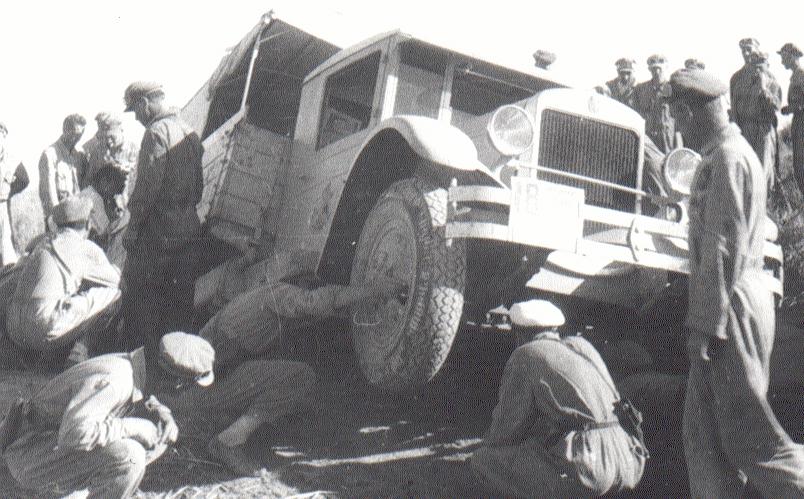
ZIS-5
A captured Soviet ZIS-5 truck photographed in October 1941; used here for vehicle identification.
Bundesarchiv Bild 101I-268-0157-31A · CC BY-SA 3.0 DE · Source

ZIS-5

Soviet Union · 3-ton 4×2 truck · cargo and towing vehicle

ZIS-5 trucks carried food, fuel and ammunition across Ladoga and along the land sections of the military road. Their greater payload required thicker ice and careful route spacing.

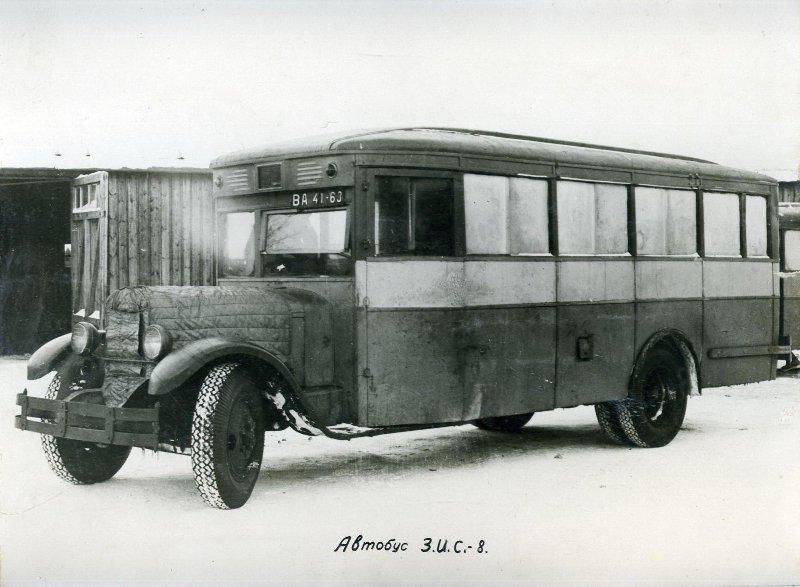
ZIS-8 bus
Preserved ZIS-8 bus; representative identification image.
Pulux11 · reusable Commons photograph · Source

ZIS-8 bus

Soviet Union · passenger bus on ZIS truck chassis · evacuation transport

Forty ZIS-8 buses were sent from Moscow during the first winter. They carried children, medical patients and other evacuees between the city, the lake route and mainland railheads.

KV-1 Model 1941
Soviet tank KV-1 model 1939
SA-Kuva · Source

KV-1 Model 1941

Soviet Union · heavy tank · 76.2 mm gun · assembled and repaired at the Kirov works

KV tanks were built and repaired inside the siege perimeter and used on the city's approaches. Their armour made them valuable in local defence, although mechanical reliability and limited production restricted their numbers.

76.2 mm 3-K anti-aircraft gun
Il-2 aircraft attacking on the Voronezh Front in July 1943; representative identification image.
SA-Kuva · Source

76.2 mm 3-K anti-aircraft gun

Soviet Union · heavy anti-aircraft gun · also used against ground targets

The 3-K defended the city, industrial districts and supply routes from high-altitude aircraft. Batteries could also fire directly at armour and infantry during the emergency defence of 1941.

Battleship Gangut Oktyabrskaya Revolyutsiya
Imperial Russian battleship Gangut in Helsinki, 27 June 1915.
NAROD RU · Source

Battleship Gangut Oktyabrskaya Revolyutsiya

Soviet Union · Gangut-class battleship · twelve 305 mm guns

The battleship used its main battery against German siege positions and supported the January 1944 offensive. Camouflage, anti-aircraft defence and the confined Kronstadt–Leningrad operating area helped it survive repeated air attack.

Ilyushin Il-2
Soviet IL-2 combat aircraft attack an enemy formation. The Kursk Bulge (Operation Citadel), The Voronezh Front, Russia
RIA Novosti archive · image #225 · Source

Ilyushin Il-2

Soviet Union · armoured ground-attack aircraft · cannon, rockets and bombs

Il-2 units attacked artillery, strongpoints and transport around the German bottleneck and supported Iskra and the final offensive. Soviet aviation also defended the Ladoga route.

Junkers Ju 88A-4
15 cm sFH 18 with an RSO tractor on the Eastern Front; representative identification image.
Bundesarchiv Bild 101I-417-1766-03A · CC BY-SA 3.0 DE · Source

Junkers Ju 88A-4

Germany · twin-engine bomber · level and dive-bombing capability

Ju 88 groups struck railways, ports, factories, power stations and residential districts. The type also attacked traffic and transfer points around Lake Ladoga.

21 cm Mörser 18
KV-1 with the L-11 76.2 mm gun; representative identification image.
Bundesarchiv Bild 101I-093-0376-15 · CC BY-SA 3.0 DE · Source

21 cm Mörser 18

Germany · heavy siege mortar · 210 mm

Heavy mortar batteries shelled defensive positions, transport nodes and the city. Their range and destructive shell made them useful in a static siege, but they were difficult to withdraw once the January 1944 front collapsed.

15 cm sFH 18
Soviet Union South (Romania?).- Caterpillar tractor East (RSO) with gun in the mud; PK 637
Bundesarchiv Bild 101I-023-3496-29 · CC BY-SA 3.0 DE · Source

15 cm sFH 18

Germany · standard heavy field howitzer · 149 mm

The sFH 18 formed part of the artillery belt south of Leningrad. Batteries fired on military positions and urban targets and were engaged by Soviet sound-ranging, aerial observation and counter-battery fire.

How Starvation Dominated the Civilian Death Toll

Registered figures, later estimates, evacuation and the limits of the surviving record

The Soviet commission figure presented at Nuremberg recorded 632,253 deaths from hunger and associated causes. The number reflects the registrations available to the commission. Refugees, missing household records and deaths after evacuation leave the total civilian mortality uncertain, and many later studies place it substantially higher.

The same report recorded 16,747 civilians killed by bombing and artillery fire and 33,782 wounded. Bombardment also damaged housing, hospitals, utilities, food storage and the transport system that sustained the population.

More than 550,000 civilians were evacuated during the first ice-road season alone, and evacuation continued by water and later through the land corridor. The movement removed civilians from the siege but exposed many to cold, illness and overcrowded transfer points.

The official Piskaryovskoye memorial records 420,000 civilians and 70,000 military defenders in its mass and individual graves. It represents one major burial site within a city whose wartime death register remains incomplete.

632,253

Registered deaths from hunger

Soviet city commission figure presented at Nuremberg; later scholarship treats it as incomplete for total civilian mortality. Source: Soviet city commission and International Military Tribunal record.

16,747

Civilians killed by bombing and shelling

The same official report recorded 33,782 civilians wounded by German air and artillery attacks. Source: International Military Tribunal transcript.

More than 1.3 million

People evacuated

Evacuation used lake transport, the ice road and later the land corridor, with the first ice-road season alone removing more than 550,000 civilians. Source: State Memorial Museum of the Defence and Siege of Leningrad.

420,000 civilians

Buried at Piskaryovskoye

The official memorial also records 70,000 soldiers, sailors and other military defenders. Source: Piskaryovskoye Memorial Cemetery.

Books & Relics

The authenticity of the relics is not verified by WW2 Theatres.

This collection is curated by WW2 Theatres and not affiliated with our website, with all site photographs licensed to their respective owners.

Sources & Archives

US Army official histories · Glantz · Nuremberg records · Central Naval Museum · city and memorial records

The operational chronology is checked against the U.S. Army official histories and David Glantz's archival study of the battle for Leningrad. These sources are used for the Tikhvin campaign, Sinyavino, Operation Iskra and the Leningrad–Novgorod offensive.

The September and October 1941 German orders come from the documents presented at the International Military Tribunal. Rationing, the Road of Life, the Ladoga pipeline and the Road of Victory use the Central Naval Museum's specialist exhibitions. Civilian totals retain the distinction between the registered Soviet commission figures and later estimates; burial figures follow the Piskaryovskoye Memorial Cemetery.

  1. Moscow to Stalingrad: Decision in the East, Chapters II, III, VII and VIII, Earl F. Ziemke and Magna E. BauerUnited States Army in World War II
  2. Stalingrad to Berlin, Chapters VI and XII, Earl F. ZiemkeUnited States Army in World War II
  3. The Future of the City of Petersburg, 22 September 1941, and the order of 7 OctoberInternational Military Tribunal record
  4. Leningrad in the siege: the winter of 1941–1942Central Naval Museum
  5. The creation and functioning of the ice route, winter 1941–1942Central Naval Museum, Road of Life branch
  6. The breach of the siege of Leningrad, 1943Central Naval Museum
  7. The construction and functioning of the Road of Victory, 1943Central Naval Museum
  8. The Siege of Leningrad museum collectionState Memorial Museum of the Defence and Siege of Leningrad
  9. Nuremberg testimony and Soviet commission figures for LeningradInternational Military Tribunal transcript
  10. Piskaryovskoye Memorial Cemetery burial recordsPiskaryovskoye Memorial Cemetery
  11. The Battle for Leningrad, 1941–1944, David M. GlantzUniversity Press of Kansas, 2002
Operation chronologyDates, locations and sourced event summaries
DateEventLocationSummary
Friday 29 August 1941 · Railway cutMga cuts the last direct railwayMga

German forces captured Mga and severed the Kirov railway between Leningrad and the Volkhov region.

Sources 1, 11
Monday 8 September 1941 · EveningShlisselburg closes the land ringShlisselburg

Eighteenth Army captured Shlisselburg and reached Lake Ladoga, cutting Leningrad's final land connection to the Soviet interior.

Sources 1, 4, 8, 11
Saturday 13 September 1941 · Command changeZhukov takes over the city's immediate defenceLeningrad Front

Georgy Zhukov replaced Kliment Voroshilov as Leningrad Front commander during the crisis on the southern approaches.

Sources 1, 11
Friday 19 September 1941 · Heavy raidThe September air offensive hits LeningradLeningrad

A major Luftwaffe attack struck Leningrad during the September air offensive, hitting transport, industry, public buildings and residential districts.

Sources 4, 8
Monday 22 September 1941 · Secret directiveGerman orders define the blockadeGerman high command

The German naval staff directive of 22 September ordered Leningrad to be tightly blockaded and destroyed by artillery and air attack.

Sources 3
Thursday 16 October 1941 · New German thrustThe Tikhvin offensive threatens the Ladoga lifelineVolkhov and Tikhvin direction

Army Group North opened the drive toward Tikhvin and the lower Svir from the Volkhov sector, extending the fighting east of Leningrad.

Sources 1, 11
Saturday 8 November 1941 · Tikhvin capturedTikhvin cuts the eastern rail approachTikhvin

German troops captured Tikhvin and cut the railway that connected the Soviet interior with the Ladoga transfer system.

Sources 1, 11
Thursday 20 November 1941 · Lowest rationBread falls to 125 gramsLeningrad

Industrial workers received 250 grams of bread per day. Employees, dependants and children received 125 grams.

Sources 4
Thursday 20 November 1941 · First ice movementThe ice route carries its first cargoLake Ladoga

A convoy of sledges and carts crossed from the western shore toward Kobona.

Sources 5
Saturday 22 November 1941 · First motor convoyThe first truck convoy crosses LadogaMilitary Auto Route No. 101

A column of sixty GAZ-AA trucks left the western shore of Lake Ladoga on 22 November, establishing the first regular motor convoy on the developing ice road.

Sources 5
Tuesday 9 December 1941 · CounteroffensiveTikhvin is retakenTikhvin

Soviet forces recaptured Tikhvin and forced the German salient back toward the Volkhov.

Sources 1, 11
Thursday 25 December 1941 · Ration increaseThe first ration increase beginsLeningrad

Improved deliveries allowed the first increase from the minimum bread ration that had been in force since 20 November.

Sources 4, 5
Winter 1941–1942 · Mass mortalityThe first winter becomes a mass-death crisisLeningrad

During the first siege winter, thousands of civilians died from starvation, cold and associated illness. Bodies accumulated in apartments, streets and collection points because families and municipal services often lacked the strength or transport to move them.

Sources 4, 8, 9
Thursday 22 January 1942 · Mass evacuationEvacuation across Ladoga expandsLake Ladoga

The State Defence Committee allocated vehicles and resources for a broader evacuation of children, dependants, the ill and industrial workers.

Sources 5, 8
Friday 24 April 1942 · Ice route closesThe first Road of Life season closesLake Ladoga

Vehicle movement stopped as the ice broke up after 152 days of operation.

Sources 5
Summer 1942 · Lake infrastructureA pipeline and power cables cross LadogaLake Ladoga

The fuel pipeline laid across Lake Ladoga began operating on 18 June 1942, reducing the volume of liquid fuel that had to be carried by boat or road.

Sources 4, 5
Sunday 9 August 1942 · ConcertThe Seventh Symphony is played inside the siegeLeningrad Philharmonia

The Leningrad Radio Orchestra performed the symphony with surviving musicians and players recalled from military units.

Sources 8
Thursday 27 August 1942 · Sinyavino offensiveSinyavino disrupts NordlichtSinyavino and the German bottleneck

Volkhov Front opened the main phase of the Sinyavino offensive on 27 August, following Leningrad Front attacks that had begun on 19 August.

Sources 1, 2, 11
Thursday 15 October 1942 · Offensive containedThe Sinyavino pocket is eliminatedSinyavino salient

By mid-October German counterattacks had destroyed or driven out the remaining Soviet forces trapped west of the Volkhov, restoring the front close to its pre-offensive line.

Sources 2, 11
Tuesday 12 January 1943 · Operation IskraOperation Iskra beginsSouth of Lake Ladoga

The two fronts opened simultaneous attacks across the Neva and westward from the Volkhov side after a massive artillery preparation.

Sources 6, 11
Monday 18 January 1943 · Link-upThe two fronts meet and open a corridorWorkers' Settlement No. 1

Units of the Leningrad and Volkhov Fronts linked near the workers' settlements south of Lake Ladoga on 18 January, opening a narrow land corridor to the city.

Sources 6, 11
Monday 18 January 1943 · Construction orderA railway is ordered through the new corridorLadoga corridor

The State Defence Committee ordered immediate construction of a railway through the newly captured corridor.

Sources 7
Sunday 7 February 1943 · First trainThe first mainland train reaches Finland StationFinland Station

The first train from the mainland arrived after eighteen days of construction.

Sources 7
Thursday 22 July 1943 · Mga offensiveAnother attempt to widen the corridor stallsMga and Sinyavino

Leningrad and Volkhov Fronts attacked again in the Mga and Sinyavino sectors to widen the corridor and push German artillery farther from the new railway.

Sources 1, 2, 11
Friday 14 January 1944 · Opening bombardmentThe final offensive opensOranienbaum and Pulkovo

Second Shock Army opened the offensive from the Oranienbaum bridgehead on 14 January; Forty-second Army joined from the Pulkovo sector on 15 January.

Sources 2, 11
Thursday 20 January 1944 · NovgorodNovgorod is retakenNovgorod

Volkhov Front entered Novgorod on 20 January and opened the route toward Luga from the south-east.

Sources 2, 11
Friday 21 January 1944 · German withdrawalThe siege line collapses south of LeningradMga, Tosno and the southern approaches

German forces withdrew from Mga and the long-held positions south and southeast of Leningrad.

Sources 2, 11
Thursday 27 January 1944 · 20:00Leningrad declares the blockade liftedLeningrad

The Military Council of the Leningrad Front announced that German forces had been driven far enough from the city for the blockade to be declared completely lifted.

Sources 2, 8, 11

Image rights and editorial standard. RIA Novosti archive photographs are credited under CC BY-SA 3.0 where stated on the individual Wikimedia Commons file page. Russian Ministry of Defence files are credited under CC BY 4.0 where stated. Modern operational maps are used only when they document the exact operation or mapped date and carry a reusable licence. Chronology media is attached only when the record supports the same dated event, a tight operational attribution, or an explicitly identified immediate aftermath; otherwise the event remains unillustrated. Front lines are generalised operational reconstructions and do not represent survey-accurate unit boundaries. Civilian death totals are separated by source and accounting boundary.