Skip to content
WW2 Theatres Theatres of the Second World War
Home / The Opening Campaigns / The Winter War
Finnish ski troops moving through forest during the Winter War.

The Winter War

30 November 1939 to 13 March 1940 · Finland and Karelia · 105 days

The Soviet Union attacked Finland with three times the men and a hundred times the armour, and lost somewhere between five and seven soldiers for every Finn. Finland was forced to give up a tenth of its territory and kept its independence. Berlin drew the wrong conclusion and built Barbarossa on it.

Imperial War Museums, HU 52936 · Public domain · Source

DURATION
105 days30 November 1939 to 13 March 1940
OPENING SOVIET FORCE
About 450,000Roughly twenty-one divisions were deployed for the opening invasion; Soviet strength increased substantially during the war
SOVIET IRRECOVERABLE LOSSES
126,875Krivosheev's archival accounting of dead, missing and other irrecoverable personnel; later Russian database studies give higher totals
FINNISH WAR DEAD
More than 25,000Finnish government commemorative accounting; about 44,000 were wounded
PEACE SETTLEMENT
11% of Finland cededAbout 430,000 people, roughly twelve per cent of the population, lost their homes and were resettled
Marker affiliation Allied Axis Other / contested
Map layers

01 / 18

How Finland's Ground Shaped the War

The Karelian Isthmus and the forest-road fronts created two different operational problems.

The Karelian Isthmus formed the main avenue between Leningrad and southern Finland. Lakes, marshes and prepared field works channelled an attacker into a limited number of approaches, while the Viipuri road and railway system carried Finnish reserves and supplies behind the line. The permanent fortifications later grouped under the name Mannerheim Line varied greatly in age and strength. Their value came from their position inside a larger system of trenches, obstacles, artillery positions and terrain.

North of Lake Ladoga, the operational map changed. Roads ran for long distances through forest and between frozen lakes, often with little room for a large column to deploy sideways. Soviet divisions advancing west could gain depth along a road while creating exposed flanks along the entire length of the column. Finnish ski troops moved through the surrounding forest and across frozen ground, giving local commanders routes that the Soviet vehicle columns used far less easily.

Winter magnified those differences. Temperatures fell below minus forty Celsius during parts of the campaign, daylight shortened sharply in the north, engines and weapons demanded constant care, and every unit required heated shelter, food and evacuation arrangements. Finnish familiarity with winter movement gave small formations greater freedom across snow-covered country. Soviet units improved their cold-weather organisation as the campaign continued, especially where the main effort shifted toward the more concentrated battlefield of the Isthmus.

From the October Negotiations to Timoshenko's Offensive

The political objective and the military method changed as the campaign developed.

In October 1939 Moscow sought a frontier farther from Leningrad, islands in the Gulf of Finland, part of the Fisherman's Peninsula and a thirty-year lease at Hanko. Finland offered some territorial concessions on the Isthmus and Gulf islands while keeping Hanko under Finnish control. The negotiations ended in November with the two governments still separated over the naval-base question and the scale of the frontier changes.

The invasion opened across a very broad front. Soviet planning committed forces toward the Karelian Isthmus, Ladoga Karelia, central Finland and the Arctic routes at the same time. The Terijoki government under Otto Kuusinen supplied a political framework for a Soviet-backed Finnish administration, while the Red Army attempted to convert numerical and material superiority into a quick military decision.

December produced heavy Soviet losses and limited progress on the main fronts. In January the Soviet high command reorganised the decisive effort on the Karelian Isthmus under Semyon Timoshenko. Reconnaissance became more systematic, artillery was massed on narrower sectors, engineers prepared lanes through obstacles, and infantry-tank cooperation received greater attention. The renewed February offensive broke through the Finnish main position and forced the government to negotiate from a rapidly worsening military position.

Aarne Juutilainen
Captain, Finland

Aarne Juutilainen

Kollaa sector

A former French Foreign Legionnaire nicknamed the Terror of Morocco, commanding a company on a front where a few thousand Finns held off several divisions for the whole war. Asked whether Kollaa would hold, the answer from that sector became a national phrase: it will hold unless we are ordered to run. It held.

Finnish Wartime Photograph Archive, 2600 · Public domain · Source
Carl Gustaf Emil Mannerheim
Field Marshal, Finland

Carl Gustaf Emil Mannerheim

Commander-in-Chief

A former general of the Russian imperial army, 72 years old, who had spent the 1930s arguing for defences the Finnish parliament would not pay for and then had to fight behind the fraction that was built. He gave his name to a line he had repeatedly said was inadequate.

Finnish Wartime Photograph Archive, 11405 · Public domain · Source
Simo Häyhä
Corporal, Finland

Simo Häyhä

Sniper, Kollaa sector

A farmer from Rautjärvi who shot over 500 Soviet soldiers using a rifle with iron sights, on the reasoning that a telescopic sight glints and forces a man to raise his head. He worked in white overalls with snow packed in his mouth so his breath would not show. Shot through the jaw in March 1940 and lived until 2002.

Finnish Wartime Photograph Archive, 9480 · Public domain · Source
Hjalmar Siilasvuo
Colonel, Finland

Hjalmar Siilasvuo

9th Division, Suomussalmi and the Raate road

Destroyed two Soviet divisions with a force about a third their size by refusing to fight them frontally: cut the road, split the column, surround each piece and reduce them one at a time while the cold did the rest. The motti is his tactic and it is the most studied thing in the campaign.

Finnish Defence Forces / SA-kuva · Free use with attribution · Source
Woldemar Hägglund
Major General, Finnish Army

Woldemar Hägglund

Commander of IV Corps

Took command of IV Corps in December 1939 and directed Finnish operations north of Lake Ladoga. His forces isolated and reduced larger Soviet formations through a series of motti battles.

SA-kuva, 7083 · CC0 1.0 · Source
Risö Ryti
Prime Minister, Finland

Risö Ryti

Head of government from December 1939

A central banker who took the government at the start of the war and had to decide when a country that was winning tactically had to accept terms harsher than the ones it had refused. He signed the Moscow peace and was later convicted by a Finnish court, under Soviet pressure, for the war that followed.

Unknown photographer · Public domain · Source
Otto Kuusinen
Head of the Terijoki government

Otto Kuusinen

Finnish Democratic Republic

A Finnish communist resident in Moscow since 1918, installed in the first captured border town as head of a government the Soviet Union then signed a treaty with, so that it could claim it was not at war with Finland. Nobody in Finland joined him. He was dropped without comment in March 1940 and had a long Soviet career.

Unknown photographer / Kalevala Society · Public domain · Source
Kliment Voroshilov
Marshal, Soviet Union

Kliment Voroshilov

People's Commissar for Defence

Responsible for the state of the army that went into Finland, having been a principal instrument of the purges that produced it. He was blamed for the first three months, removed from the defence commissariat in May 1940, and survived, which most of the officers he had helped to remove did not.

Unknown photographer · Public domain · Source
Semyon Timoshenko
Komandarm, Soviet Union

Semyon Timoshenko

North-Western Front from January 1940

Took over a failed campaign and fixed it in five weeks by doing nothing clever: massed artillery, rehearsal on mock-ups, tanks and infantry trained together, and commissars stripped of their veto on operational orders. The Mannerheim Line broke. Berlin did not include this part in its assessment.

Mil.ru · CC BY 4.0 · Source
Kirill Meretskov
Komandarm, Soviet Union

Kirill Meretskov

Seventh Army on the Isthmus

Commanded the first attack on the Mannerheim Line, which failed for two months at enormous cost. He was not shot, unusually, and went on to command a front against Germany. His memoir on Finland is careful about what it does not say.

Mil.ru · CC BY 4.0 · cropped · Source

Weapons, Vehicles & Aircraft

Finnish local mobility and anti-tank methods met Soviet mass, armour and artillery.

Finnish infantry carried a mixture of rifles, machine guns and a comparatively small number of modern automatic weapons. The Suomi KP/-31 gave assault groups heavy close-range fire, while the 37 mm Bofors anti-tank gun could defeat the light Soviet tanks common in 1939. Availability shaped their effect: useful weapons had to be concentrated where a road, village or prepared position offered a worthwhile target.

Improvised incendiary bottles became part of Finnish close anti-tank defence and were eventually produced in quantity. Their best use came against vehicles that had become separated from infantry or immobilised beside obstacles. Finnish anti-tank teams also relied on guns, mines, satchel charges and terrain that channelled Soviet armour into predictable approaches.

The Soviet armoured force included large numbers of T-26 light tanks together with BT-series fast tanks and heavier T-28s on the Isthmus. By February, artillery and engineering support mattered more than individual tank specifications. The Red Army's second offensive used concentrated fire and repeated combined-arms attacks to open breaches that infantry and armour could widen. In the air, Finnish Fokker D.XXI fighters and Bristol Blenheims operated from dispersed fields and frozen surfaces against a Soviet air force with far greater numerical strength.

Suomi KP/-31
Workers assembling Suomi KP/-31 submachine guns at the Tikkakoski factory on 24 May 1942.
Turo Kartto / Finnish Wartime Photograph Archive · CC BY 4.0 · Source

Suomi KP/-31

Finland · 9×19 mm submachine gun · 70-round drum magazine

The Suomi KP/-31 gave Finnish patrols and assault groups concentrated fire at close range. Its large drum magazine suited sudden engagements in forests and broken ground.

Lahti-Saloranta M/26
A Finnish soldier operating a Lahti-Saloranta M/26 light machine gun during the Winter War in February 1940.
Unknown Finnish military photographer · Public domain · Source

Lahti-Saloranta M/26

Finland · 7.62×54 mmR light machine gun · 20-round box magazine

Finland’s standard light machine gun provided sustained fire for infantry squads. The weapon and its large supply of loaded magazines placed a heavy burden on its crew.

37 mm Bofors 37 PstK/36
A Finnish 37 mm Bofors anti-tank gun in a firing position at Ruhtinaanmäki on 14 January 1940.
Finnish Wartime Photograph Archive · CC0 1.0 · Source

37 mm Bofors 37 PstK/36

Sweden / Finland · 37 mm anti-tank gun · 375 kg in action

Finland’s first purpose-built anti-tank gun could defeat almost every Soviet tank encountered during the Winter War. Limited pre-war deliveries made each available gun especially valuable.

T-26 light tank
A Soviet T-26 model 1937 advancing east of the Kollaa River on 17 December 1939.
Finnish Wartime Photograph Archive, 2398 · CC BY 4.0 · Source

T-26 light tank

Soviet Union · petrol-powered light tank · 45 mm 20-K gun

The T-26 was the Soviet Union’s most common light tank during the campaign. Its effective 45 mm gun was paired with armour vulnerable to Finnish anti-tank fire.

T-28 medium tank
A Soviet T-28 medium tank captured by Finland and photographed at Varkaus on 1 April 1940.
Finnish Wartime Photograph Archive, 7827 · CC BY 4.0 · Source

T-28 medium tank

Soviet Union · multi-turreted medium tank · 76.2 mm main gun

The T-28 was designed to support attacks against fortified defensive lines. Its losses in Finland exposed weak protection and led to the addition of appliqué armour.

Fokker D.XXI
Ground crew preparing a Finnish Fokker D.XXI for combat at Tiiksjärvi airfield on 1 November 1941.
E. J. Paavilainen / Finnish Wartime Photograph Archive, 62801 · CC BY 4.0 · Source

Fokker D.XXI

Finland / Netherlands · single-seat fighter · 415 km/h maximum speed

The Fokker D.XXI formed the core of Finland’s fighter force during the Winter War. Though already becoming outdated, it achieved 130 Finnish aerial victories, mainly against bombers.

Bristol Blenheim Mk I
A Bristol Blenheim Mk I in flight between 1939 and 1941, the same variant operated by the Finnish Air Force during the Winter War.
Royal Air Force official photographer / Imperial War Museums, CH 655 · Public domain · Source

Bristol Blenheim Mk I

Finland / Britain · three-seat light bomber · twin-engine all-metal airframe

The Blenheim gave Finland a modern twin-engine bomber before the Winter War. Its speed and all-metal construction also made the aircraft valuable for reconnaissance and operational bombing.

Polikarpov I-16
A Soviet Polikarpov I-16 Type 5 after a forced landing at Riiska on 10 December 1941.
Viljo Pietinen / Finnish Wartime Photograph Archive, 66681 · CC BY 4.0 · Source

Polikarpov I-16

Soviet Union · single-seat fighter · retractable landing gear

The compact I-16 remained a mainstay of Soviet fighter aviation in 1939. Finnish pilots encountered several subtypes carrying different combinations of machine guns and cannon.

BT-5 fast tank
A wrecked Soviet BT-5, probably from the 34th Light Tank Brigade, photographed at the Lemetti motti on 1 February 1940.
SA-kuva · public-domain status per exact file record · Source

BT-5 fast tank

Soviet Union · fast tank · 45 mm 20-K gun · high road speed

BT-5 tanks supplied Soviet formations with speed on suitable roads and open ground, yet the forest fronts repeatedly reduced that advantage to the width of a road corridor. At the Ladoga motti battles, damaged or abandoned BT-series tanks became evidence of the connection between armour and supply: fuel, recovery vehicles and infantry support had to reach the same pocket.

The Cost

The military totals and the territorial settlement measure different parts of the same campaign.

Krivosheev's post-Soviet archival accounting gives 126,875 Soviet irrecoverable losses and 264,908 sanitary losses for the Winter War. Later Russian database work has produced higher figures for dead and missing, placing the Soviet loss problem inside an active archival history with several published accounting methods.

Finnish government commemorative figures record more than 25,000 dead and about 44,000 wounded, alongside more than one thousand civilian deaths. The country's population was about 3.7 million, so the military loss burden reached deeply into a small mobilisation base during a campaign that lasted only 105 days.

The peace settlement transferred the Karelian Isthmus with Viipuri, Ladoga Karelia, territory around Salla and other areas to the Soviet Union and leased Hanko as a naval base. About 430,000 Finns lost their homes in the ceded territories and were resettled elsewhere in Finland. The territorial loss and the memory of the invasion shaped Finnish security policy during the fifteen-month Interim Peace before the Continuation War.

126,875

Soviet irrecoverable losses

Krivosheev's archival accounting, including killed, missing and other irrecoverable personnel. Later Russian database studies produce higher totals.

More than 25,000

Finnish military dead

Finnish government commemorative accounting; about 44,000 were wounded.

About 430,000

People displaced

Residents of the ceded territories who lost their homes and were resettled elsewhere in Finland, roughly twelve per cent of the population.

11%

Finnish territory ceded

The Moscow Peace settlement transferred the Karelian Isthmus, Ladoga Karelia and other areas and leased Hanko to the Soviet Union.

Books & Artifacts

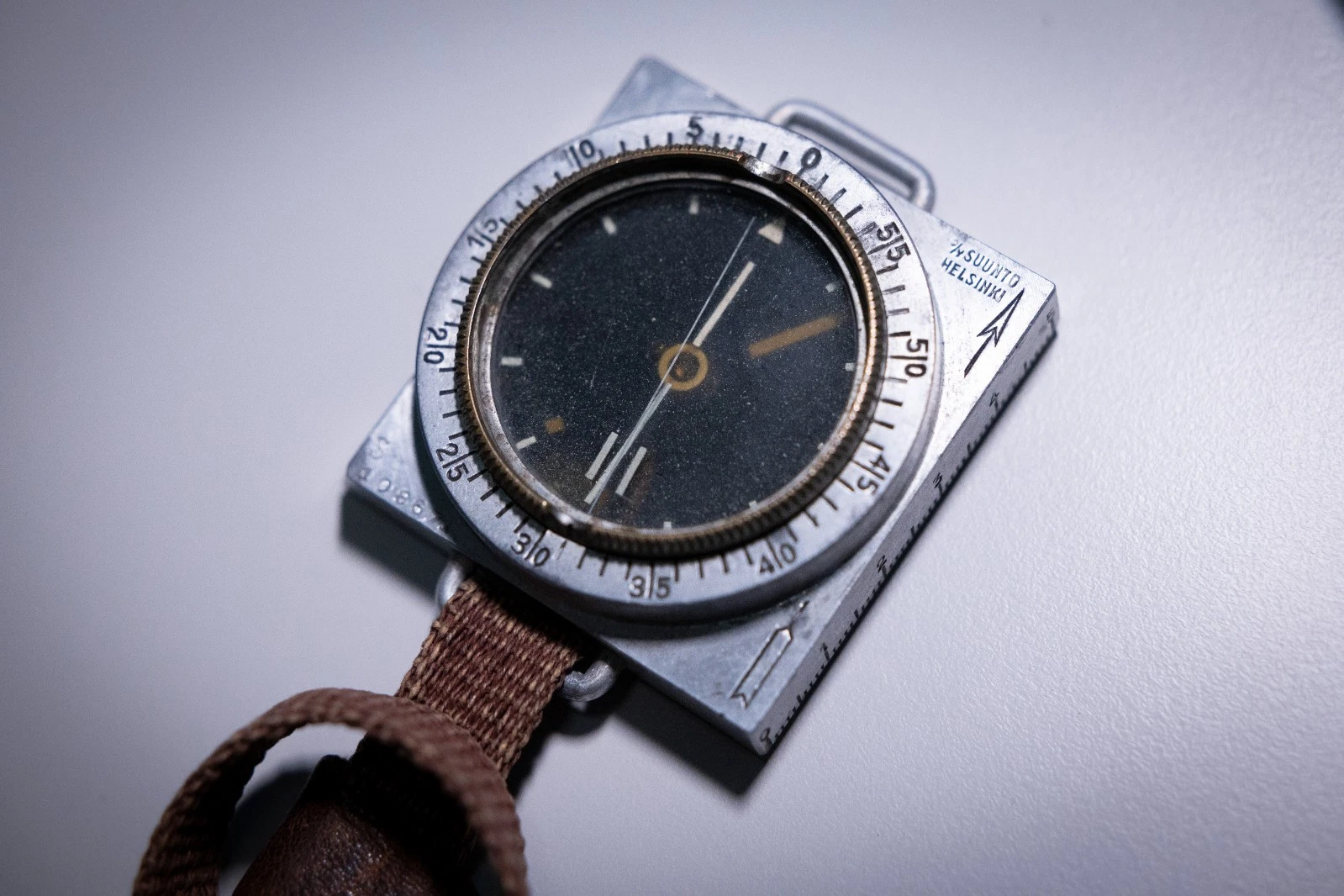
The authenticity of the relics is not verified by WW2 Theatres.

Books & Artifacts About The Winter War

What the Red Army Changed During the War

December 1939 and February 1940 produced very different evidence about Soviet military effectiveness.

The Winter War exposed severe weaknesses in Red Army training, reconnaissance, staff work and combined-arms coordination. The broad opening plan spread Soviet strength across several axes, and individual formations often entered forest-road battles with poor lateral mobility and fragile supply arrangements. Those failures produced the images that travelled most widely abroad: abandoned vehicles, shattered columns and repeated attacks against Finnish positions.

The Soviet response unfolded during the campaign itself. The high command concentrated the decisive effort on the Karelian Isthmus, placed Timoshenko over the North-Western Front, increased artillery density, improved reconnaissance and engineer preparation, and rehearsed cooperation between infantry and tanks. The February offensive then penetrated the Finnish main position and forced successive withdrawals toward Viipuri.

Foreign military observers carried both parts of the campaign into the next war. German estimates of Soviet military quality were influenced by the Red Army's opening failures and by the heavy casualty bill, contributing to the broader underestimation of Soviet military capacity before Barbarossa. German planning also rested on ideology, intelligence estimates, the 1940 campaign in the west and assumptions about Soviet mobilisation and political resilience. The Winter War supplied evidence to that judgment; the February recovery supplied evidence that deserved equal attention.

For the Soviet military, Finland became an immediate case study in organisation and training. The Red Army that entered the German war in June 1941 still carried deep structural problems, yet the institutional response to Finland had already begun. The Winter War therefore belongs in the history of Barbarossa as an observed campaign and as one stage in the Red Army's own pre-war adaptation.

Sources & Archives

Finnish war diaries and photographs · Soviet archival loss studies · diplomatic records · military scholarship.

Finnish operational reconstruction begins with the National Archives of Finland, whose holdings include unit war diaries and collections acquired from Russian archives. SA-kuva supplies a large photographic record with dated locations and captions that can be checked against the chronology. Finnish government and Foreign Ministry material is used for the peace settlement, displacement and the pre-war negotiations.

The Soviet side uses Krivosheev for the published archival casualty series, Russian military-archive material available through Finnish archival guides, and modern scholarship on Red Army effectiveness. Roger Reese's study is especially useful because it treats the December failures and the February recovery as parts of the same military institution. Contemporary diplomatic documents from the United States and League of Nations records anchor the October demands, the Terijoki government and the international response.

  1. Winter War operational records and unit war diariesKansallisarkisto, National Archives of Finland
  2. SA-kuva, Finnish Wartime Photograph ArchiveFinnish Defence Forces
  3. Soviet Casualties and Combat Losses in the Twentieth Century, G. F. Krivosheev, ed., 1997Greenhill Books
  4. Lessons of the Winter War: A Study in the Military Effectiveness of the Red Army, 1939–1940, Roger R. ReeseThe Journal of Military History 72, no. 3 (2008), 825–852
  5. Winter War began 80 years ago todayPrime Minister's Office, Government of Finland
  6. Finnish memorandum on the Soviet demands and Finnish counterproposals, October 1939Foreign Relations of the United States, 1939, General, Volume I
  7. League of Nations membership record: Union of Soviet Socialist Republics, 1934–1939United Nations Treaty Collection / League of Nations records
  8. The Mannerheim Line and Finnish command historyThe Mannerheim Museum, Helsinki
  9. The Soviet-Finnish War, 1939–1940: Getting the Doctrine Right, Maj. Gregory J. BozekU.S. Army Command and General Staff College
  10. History of the Raate Road and the Suomussalmi battlesRaatteen Portti Winter War Museum
  11. Foreign Minister Väinö Tanner and the terms of peace for the Winter WarFinnish Heritage Agency
  12. Russian State Military Archive Winter War collectionsKansallisarkisto archival guide to RGVA holdings
  13. The Soviet-backed Finnish Democratic Republic at Terijoki, December 1939Foreign Relations of the United States, 1939–1940
  14. Helsinki and the first day of the Winter WarCity of Helsinki historical service
Operation chronologyDates, locations and sourced event summaries
DateEventLocationSummary
5 October to 13 November 1939 · Negotiations beginMoscow summons Finland to negotiationsMoscow

The Soviet government invited Finland to Moscow on 5 October as agreements with Estonia, Latvia and Lithuania were reshaping the security system around the Baltic. Formal talks opened on 12 October with Stalin and Molotov pressing for changes intended to move the frontier away from Leningrad and strengthen Soviet control of the Gulf of Finland.

Sources 1, 6
Sunday 26 November 1939 · Four days before the invasionThe Mainila incident ends the diplomatic pauseMainila, Soviet side of the frontier

Explosions were reported near the Soviet village of Mainila on 26 November. Moscow announced that Finnish artillery had killed Soviet soldiers and demanded that Finnish forces withdraw from the frontier.

Sources 1, 4, 6
Thursday 30 November 1939 · Day 1The Red Army invades and Helsinki is bombedFinland and Helsinki

About 450,000 Soviet troops in roughly twenty-one divisions opened operations along the Finnish frontier on 30 November. The principal concentration faced the Karelian Isthmus, with additional armies advancing north of Lake Ladoga, through central Finland and toward the Arctic coast.

Sources 1, 5, 14
Friday 1 December 1939 · Day 2The Terijoki government is proclaimedTerijoki

A Finnish Democratic Republic headed by Otto Kuusinen was proclaimed at Terijoki after Soviet troops occupied the border town. Moscow quickly recognised the new administration and concluded a treaty with it.

Sources 13, 4
December 1939 · The counterstroke developsFinnish forces close around the Suomussalmi roadsSuomussalmi

The Soviet 163rd Rifle Division had pushed west into the Suomussalmi area on roads leading toward central Finland and Oulu. Finnish forces concentrated under Hjalmar Siilasvuo as the Soviet division extended along routes bordered by forest, lakes and deep snow.

Sources 1, 4, 10
Tuesday 12 December 1939 · Day 13The Finnish counterattack succeeds at TolvajärviTolvajärvi

Finnish forces under Paavo Talvela attacked Soviet formations around Tolvajärvi after days of pressure north of Lake Ladoga. The action combined local manoeuvre through forest with attacks against Soviet units separated by lakes, roads and narrow causeways.

Sources 1, 4
Thursday 14 December 1939 · Day 15The League of Nations expels the Soviet UnionGeneva

The League of Nations Assembly and Council acted on Finland's appeal after the Soviet invasion. On 14 December the Soviet Union's membership ended, making it the only state expelled from the League.

Sources 7, 5
Sunday 17 December 1939 · December fightingKollaa becomes a fixed battle on the Ladoga frontKollaa

Soviet forces pressed the Kollaa sector north of Lake Ladoga as Finnish troops organised a defensive line around the river and the limited road approaches. The sector drew repeated infantry and armoured attacks through December and into the new year.

Sources 1, 4
Late December 1939 · First offensive spentThe first Soviet offensive on the Isthmus reaches its limitKarelian Isthmus

Repeated Soviet attacks struck the Finnish main position around Summa and other sectors of the Karelian Isthmus through December. Tanks, infantry and artillery often entered battle on different schedules, giving Finnish anti-tank teams and field artillery opportunities to engage them separately.

Sources 1, 4, 8, 9
1 to 7 January 1940 · Raate RoadThe 44th Rifle Division is broken along the Raate RoadRaate Road

The Soviet 44th Rifle Division advanced west along the Raate Road to relieve the 163rd Division around Suomussalmi. Its vehicles, artillery and supply train stretched for miles through forest in severe winter weather.

Sources 1, 4, 10
Sunday 7 January 1940 · Command reorganisationTimoshenko takes control of the main Soviet effortNorth-Western Front headquarters

Semyon Timoshenko received command of the newly organised North-Western Front with the decisive mission on the Karelian Isthmus. The Soviet high command now concentrated the campaign's main weight against the Finnish fortified zone.

Sources 3, 4, 9
Monday 29 January 1940 · Diplomatic channel reopensMoscow opens a peace channel to the Ryti governmentStockholm

Finnish contacts through Stockholm had created a back channel between Helsinki and Moscow during January. On 29 January Molotov signalled Soviet willingness to make an agreement with the Ryti-Tanner government.

Sources 4, 6, 13
February 1940 · Second offensive opensThe second Soviet offensive opens with concentrated fireSumma and the Karelian Isthmus

The renewed Soviet offensive opened on the Karelian Isthmus with sustained artillery preparation and attacks focused on selected sectors. Fresh formations were fed into a battle whose objectives had been studied during the January pause.

Sources 1, 3, 4, 9
Sunday 11 February 1940 · Main assaultThe Mannerheim Line is penetrated at LähdeLähde and Summa, Karelian Isthmus

The Soviet main assault on 11 February broke deeply into the Finnish position in the Summa-Lähde sector after prolonged artillery preparation and repeated attacks against the same defensive system.

Sources 1, 4, 8, 9
Thursday 15 February 1940 · Withdrawal beginsFinnish forces leave the main positionWestern Karelian Isthmus

Finnish troops began withdrawing from the broken main position toward intermediate defences covering Viipuri. The movement shortened the front and preserved formations that had spent more than two months under pressure on the Isthmus.

Sources 1, 4, 6
Late February to early March 1940 · Final pressureThe battle reaches Viipuri and the frozen bayViipuri and Viipuri Bay

Soviet forces pressed toward Viipuri as Finnish troops occupied their final defensive positions on the western Isthmus. Fighting spread across the approaches to the city and onto the frozen waters of Viipuri Bay.

Sources 1, 4, 6
Tuesday 12 March 1940 · Treaty signedFinland signs the Moscow Peace TreatyMoscow

The Finnish delegation signed the Moscow Peace Treaty in Moscow on the evening of 12 March. The settlement transferred the Karelian Isthmus with Viipuri, Ladoga Karelia, territory around Salla and other areas to the Soviet Union and leased Hanko for a naval base.

Sources 5, 6, 11
Wednesday 13 March 1940 · 11:00The guns fall silent and Finland begins the evacuationFinland

Fighting ended at 11:00 on 13 March. Foreign Minister Väinö Tanner addressed the country by radio with the peace terms as soldiers on the front received orders to disengage and new boundary arrangements began.

Sources 5, 11

Image rights and editorial standard. Finnish SA-kuva photographs retain the reuse status stated on their exact file records. The hero is an Imperial War Museums Ministry of Information press photograph whose underlying UK Government work is public domain. Hero, chronology, PEOPLE and KIT records use exact Wikimedia Commons File pages when Commons is the source. Later equipment photographs remain clearly identified as later type or artifact images. Casualty figures retain the accounting category of the source that produced them, especially the distinction between Soviet irrecoverable and sanitary losses.