
Operation Overlord
6 June to 30 August 1944 · Normandy, France · 86 days
An assault across fifty miles of defended coast, sustained without a captured port, followed by eleven weeks in the bocage that ended with the German army in France destroyed west of the Seine.
“Into the Jaws of Death” · CPhoM Robert F. Sargent, US Coast Guard · NARA 26-G-2343 · Public domain · Source

- ASSAULT DATE
- 6 June 1944H-Hour 06:30 on the American beaches
- LANDED ON D-DAY
- ~156,000Five beaches and three airborne divisions
- NAVAL COMPONENT
- Operation NeptuneClose to 7,000 vessels of all types
- DURATION
- 86 daysTo the Seine crossings on 30 August
- OUTCOME
- Allied victorySeventh Army and Fifth Panzer Army wrecked
The Ground
Bay of the Seine, Calvados and CotentinNormandy was chosen over the shorter crossing to the Pas-de-Calais because it was less heavily defended, lay within fighter range of southern England, and offered beaches sheltered from the prevailing westerlies by the Cotentin peninsula. The assault frontage ran fifty miles from the Vire estuary in the west to the mouth of the Orne in the east.
Two features shaped everything that followed. Caen sat at the eastern hinge, on open ground suited to armour and covering the direct road to Paris. The German command concentrated its panzer divisions there for that reason, and the city took thirty-three days to fall. Behind the American beaches lay the bocage: centuries-old earth banks topped with hedge, dividing the country into thousands of small fields, each one a prepared defensive position invisible from the air. It cancelled the Allied advantage in tanks and aircraft, and cost more casualties than the landings did.
Command & Decision
Allied and German, ranks as held in June 1944Overlord was run by a coalition command with no precedent: an American supreme commander with British deputies at sea, in the air and on the ground, directing forces from a dozen nations under one operational plan. It held together because Eisenhower spent more effort on holding it together than on operations, and the arguments over Caen are still being had eighty years later.
The German command in the West was divided in a way that proved fatal on the day. Armoured reserves were split three ways between Rommel's Army Group B, Rundstedt's OB West, and an OKW reserve only Hitler could release. Hitler was asleep. Rommel wanted the tanks on the coast, Rundstedt wanted them massed inland, and the compromise left neither with what he needed.
Ships, Guns & Machines
Materiel of the operationOverlord was planned around one assumption: that no major port would be captured intact and in working order. Everything below follows from it. Landing craft had to beach and retract on open sand; two artificial harbours had to be built from concrete towed across the Channel; fuel had to come through a pipeline on the seabed.
The second theme is quality against quantity. German armour was individually superior and never available in numbers that mattered; Allied armour was outclassed in a straight exchange and arrived in quantities the defence could not absorb. In the bocage the advantage went to the defender; in open country under clear skies it went to the Sherman and the rocket-firing Typhoon.
Books & Relics
The authenticity of the relics is not verified by WW2 Theatres.
WW2 German Army Barn-Found Tan MG Relic Canister from Battle of Normandy in 1944
Found in the Normandy town of Carentan, (south of the US 'Utah' D-Day Beach), the canister is an 'as found' condition with a good deal of its original tan colour outer paint remaining, amidst an attractive veneer of light rust.
EUR 134.51
US WW2 M2 D-Bale Helmet Normandy D-Day Relic WWII Original For Airborne Relic
S WW2 M2 D-Bale Helmet Normandy Relic WWII Original Paratrooper Airborne Relic Dday with INLAND paratrooper liner. Dug relic from Manche, Normandy (st. Mere Eglise department).
EUR 2,721.21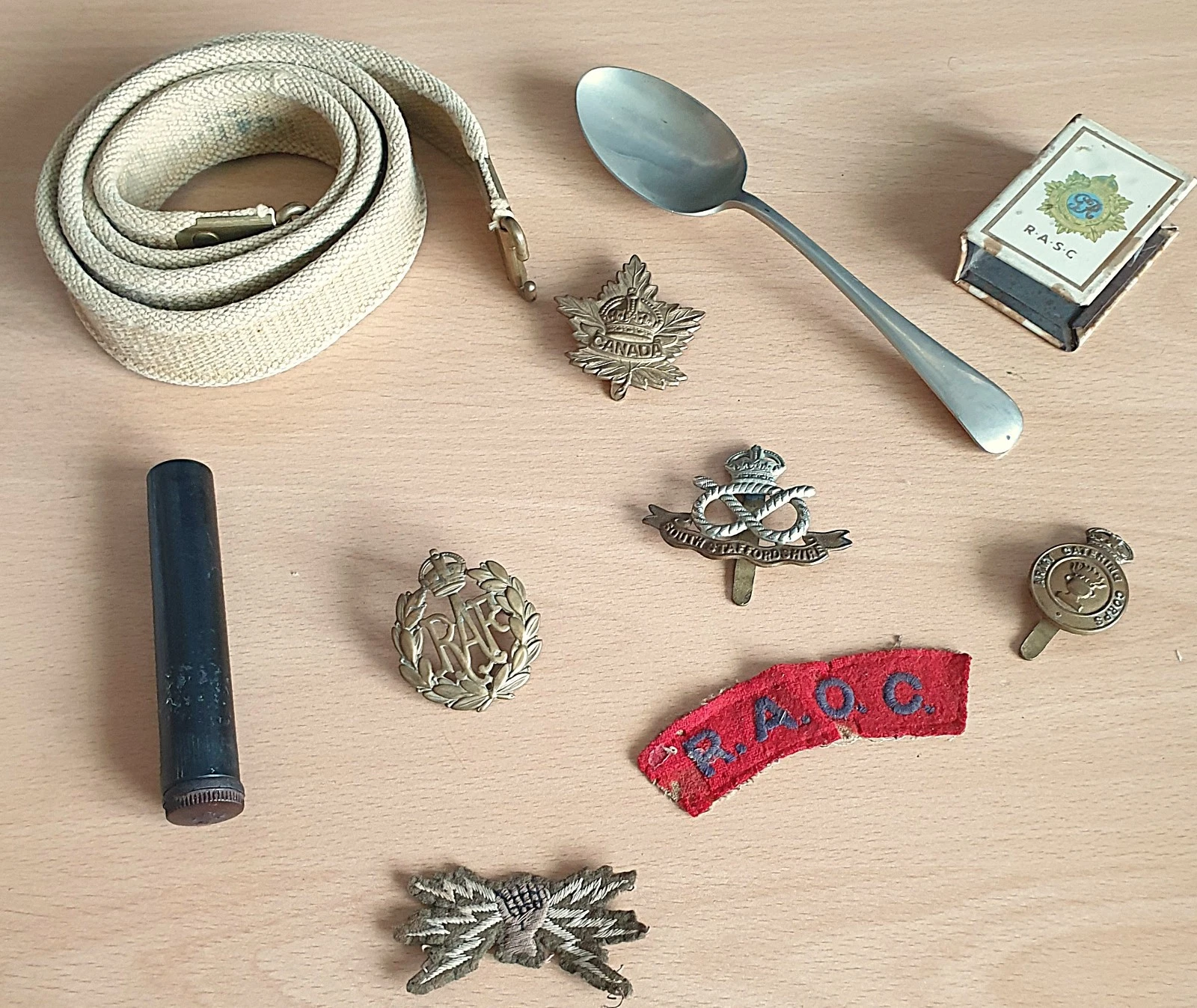
WW2 British-Canadian Relics Found Inland of D-Day Invasion Beaches Normandy 1944
A varied small collection of World War Two British & Canadian Army Artefacts from the 1944 Battle of Normandy.
EUR 187.15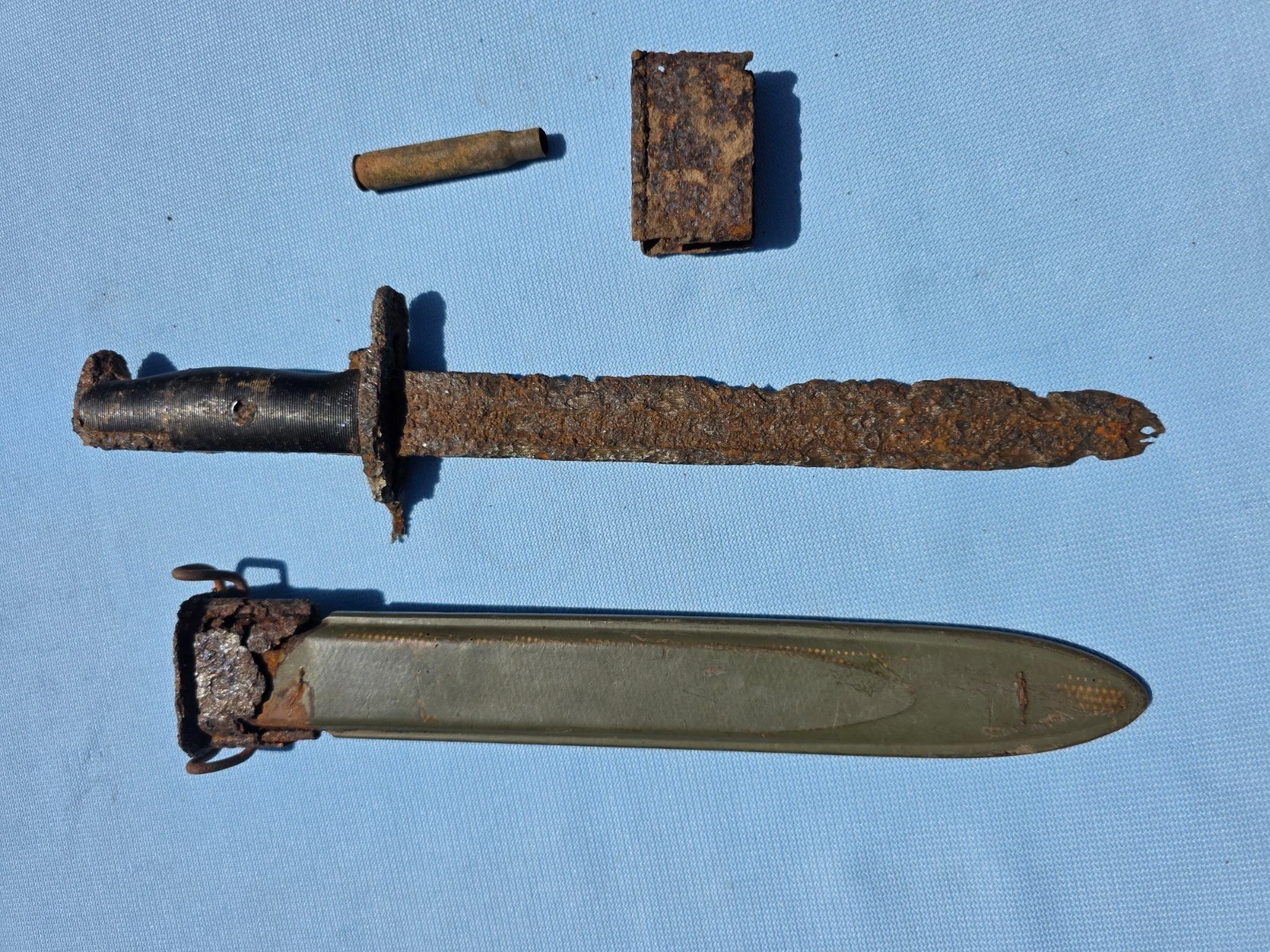
WW2 US Garand relic Saint Mere Eglise Normandy D-Day 101st 82nd Airborne
Discovered via metal detector in the historic battlefields between Sainte-Mère-Église and Neuville-au-Plain during a research trip to Normandy, this authentic M1 Garand relic lot, complete with a clip and casing, offers collectors a unique piece of D-Day history.
EUR 181.31This collection is curated by WW2 Theatres and not affiliated with our website, with all site photographs licensed to their respective owners.
Sources & Archives
External links open the holding institutionThe foundation record is Gordon A. Harrison's Cross-Channel Attack, the US Army's official history, written with access to captured German records and to participants still living. Against it sit the operational papers at the National Archives, the naval action reports held by the Naval History and Heritage Command, and the photographic collections of the Imperial War Museums, NARA, the Bundesarchiv and The D-Day Story.
Accounts conflict on several points: casualty figures at Omaha, the number of men who escaped the Falaise pocket, whether Montgomery's Caen strategy was designed or improvised. Where they do, this record says so rather than choosing a side. Front lines and force areas drawn on the map are approximate, generalised from the daily situation maps, and show shape and movement rather than survey positions.
- Cross-Channel Attack (United States Army in World War II: The European Theater of Operations), Gordon A. HarrisonUS Army Center of Military History
- D-Day and the Normandy Campaign, collections, photographs and oral historiesThe National WWII Museum, New Orleans
- The Normandy Landings, collections and photograph archiveImperial War Museums
- Operation Neptune: the naval assault on Normandy, action reports and photographsNaval History and Heritage Command, US Navy
- Records of the Supreme Headquarters Allied Expeditionary Force (SHAEF), Record Group 331US National Archives and Records Administration
- Pre-invasion papers, the Order of the Day, and the D-Day decisionDwight D. Eisenhower Presidential Library and Museum
- Objects, maps and personal collections from the Normandy landingsThe D-Day Story, Portsmouth
- Group Captain Sir James Stagg's papers, D-Day diary and correspondenceMet Office National Meteorological Archive
- Omaha Beach, 6 June 1944, photographic categoryWikimedia Commons
- Normandy campaign collections and the civilian experience of the battleMémorial de Caen
- Bundesarchiv Bild collection, German forces in northern France, June 1944Bundesarchiv / Wikimedia Commons
- Normandy: the landings, archive film interactiveAmerican Battle Monuments Commission
- D-Day 75th anniversary photograph and map collectionUS Department of Defense
- Mulberry harbour at Arromanches, photographic categoryWikimedia Commons / Imperial War Museums
- D-Day: the story of the Normandy landings, broadcast documentarySky News
Image and film rights. Material credited to the US Army Signal Corps, US Navy, US Coast Guard, NARA, the US Department of Defense and the American Battle Monuments Commission are works of the United States federal government and are in the public domain. Material credited to the Bundesarchiv is licensed CC BY-SA 3.0 DE and reproduced with attribution. Material credited to the Imperial War Museums is reproduced under the IWM Non-Commercial Licence. Material credited to The D-Day Story, the D-Day Center, the Associated Press and West Point Department of History remains the property of those bodies and is reproduced by arrangement. Embedded broadcast material is presented via the publisher's own player.